US Senate Democrats Blame Trump’s Tariffs for Farm Crisis and Rising Grocery Costs
Synopsis
Senate Democrats have accused President Trump of worsening the farm crisis through his tariff policies, which they claim have benefited China while increasing grocery prices for American families. A recent report highlights the challenges faced by farmers amid shifting trade dynamics.
Key Takeaways
Trump's tariffs have strained American farmers financially.
Grocery prices are significantly higher due to these trade policies.
China's response to tariffs has shifted US export dynamics.
Farmers face uncertainty in planting due to surplus commodities.
Consolidation in agriculture is exacerbating economic challenges.
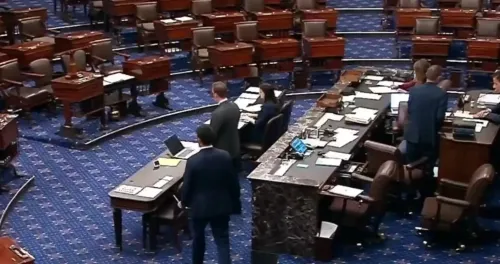
Washington, Feb 28 (NationPress) Senate Democrats in the US have criticized President Donald Trump for exacerbating the crisis in farming and food affordability. They argue that his tariff strategies have granted China significant leverage in the global agricultural market, simultaneously driving up grocery costs for American families.
A newly released report entitled “Trump’s Broken Promises: Devastating America’s Farmers and Working Families” highlights the adverse effects of Trump’s trade conflict with Beijing, which has severely limited US export opportunities and plunged American farmers into economic hardship.
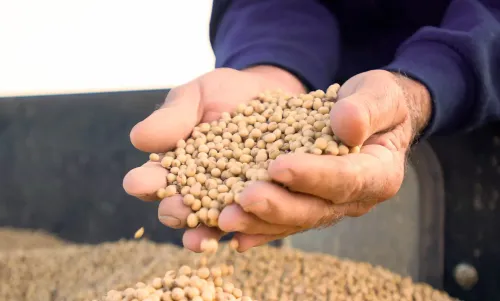
The analysis reveals that China, which was once a major purchaser of US soybeans, halted imports in response to Trump’s tariffs. In 2024, China invested $3 billion in US soybeans, but by 2025, the tariffs prompted China to shift its focus to Argentina and Brazil, leading to a 32% decrease in purchases from the US compared to 2024.
Farmers are now facing a new planting season with excess commodities on hand that they cannot sell, creating uncertainty about their choices for the upcoming year.
The report raises alarms about foreign dominance in the US food sector, citing Smithfield Foods, owned by China’s WH Group, which commands a significant share of the US pork industry, managing a quarter of pork processing.
Moreover, Syngenta Group, a key supplier of agricultural seeds and chemicals, is owned by ChemChina, a state-run Chinese company, thereby giving China control over essential resources for US farmers.
In this context, Democrats argue that Trump’s domestic policies have intensified the challenges faced by farmers.
“Trump’s tariffs have placed immense financial pressure on American farmers and ranchers. Expenses are surging, and markets are disappearing,” stated Senator Maria Cantwell. “The President seems indifferent. Now, we need to see if Republicans genuinely care about these farming communities they represent.”
According to the report, prices for beef have risen by 16.4%, coffee by 19.8%, lettuce by 7.3%, and frozen fish by 8.6% over the last year, with American households spending an additional $310 on groceries during Trump’s first year in office.
“Every statistic represents a family—a senior citizen, a veteran, or a working-class family struggling to make ends meet,” commented Senator Ben Ray Lujan. “Families are facing pressures from all sides.”
Senate Democratic Leader Chuck Schumer remarked: “Trump vowed to reduce prices immediately, but American families are confronted with the stark truth that he has prioritized special interests over consumers.”
The report contends that the consolidation of the meatpacking and seed industries has further escalated the crisis, indicating that farmers receive only 15.9 cents from every dollar spent on food. Additionally, the report mentions that 315 farmers filed for bankruptcy in 2025, marking an over 46% rise from the previous year.
Rob Larew, President of the National Farmers Union, stated: “Erratic trade policies and corporate consolidation are squeezing family farmers on one end and consumers on the other.”
The discussion surrounding tariffs and agricultural exports has been at the forefront of US–China economic relations for several years. Soybeans have frequently acted as a political indicator, especially in Midwestern states where export markets are vital for agricultural income.
Food inflation has also become a critical domestic political matter in the United States. The rise in grocery prices and the increase in farm bankruptcies have garnered bipartisan attention, although lawmakers remain divided over tariffs, antitrust regulations, and the future trajectory of American trade policy.
Point of View
It’s clear that the economic challenges faced by American farmers require urgent attention. The concerns raised by Senate Democrats highlight the broader implications of trade policies on food affordability for families across the nation.
NationPress
23 Sept 2026
Frequently Asked Questions
How have Trump's tariffs affected American farmers?
Trump's tariffs have limited export markets, particularly in China, leading to significant financial distress for American farmers.
What are the current grocery price trends?
Grocery prices have surged, with increases in items like beef (16.4%) and coffee (19.8%) over the last year.
What is the status of US soybean exports to China?
China halted US soybean purchases in retaliation for tariffs, resulting in a 32% decline in imports since 2024.
What do farmers face in the upcoming growing year?
Farmers are entering a new growing season with excess commodities and uncertainty about what crops to plant.
How has corporate consolidation impacted farmers?
Consolidation in the meatpacking and seed markets has worsened the crisis, reducing the share farmers receive from food sales.