Are China-linked Firms Tightening Their Grip on US Food Supply?
Synopsis
In an alarming revelation, Senator Chuck Schumer warns that foreign entities connected to China are tightening their control over the US food supply, impacting prices and raising national security concerns. This piece explores the implications of rising consolidation in the agricultural sector and the need for urgent regulatory measures.
Key Takeaways
Foreign entities are increasingly controlling the US food supply.
This consolidation impacts grocery prices significantly.
Senator Schumer is advocating for immediate regulatory action.
Food security is being viewed as a national security concern.
Dependence on foreign corporations poses strategic vulnerabilities.
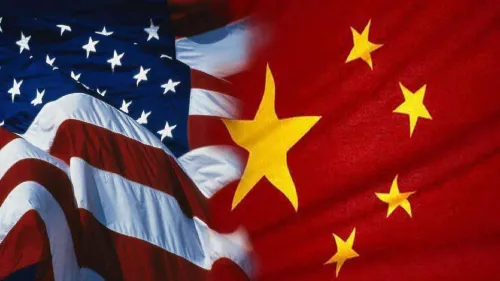
Washington, Feb 20 (NationPress) Entities associated with China are increasingly dominating the food supply in the United States, impacting grocery prices, as highlighted by a prominent Democratic senator. Senator Chuck Schumer expressed concern that the escalating consolidation within the agricultural and food sectors is burdening both consumers and farmers, while also threatening national security.
In a correspondence to senior members of Trump’s Cabinet, Senate Democratic Leader Chuck Schumer called for immediate enforcement actions against what he characterized as anti-competitive practices and growing foreign dominance in crucial segments of the US agricultural supply chain.
“Grocery prices have surged due to Trump’s tariff policies and unpredictable economic strategies—now, costs could rise further as the administration overlooks how foreign-owned companies have manipulated markets, inflating food prices for consumers and jeopardizing American farmers and ranchers already suffering due to Trump's trade war,” Schumer stated.
“This leads to consumers paying more for less, diminishing profit margins for farmers and ranchers, and endangering our food supply as foreign companies monopolize an increasing share of America’s agricultural and food sectors,” he continued.
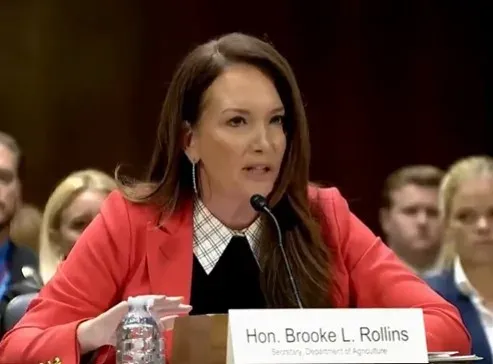
Schumer addressed Agriculture Secretary Rollins, Treasury Secretary Bessent, and Attorney General Bondi, asserting that “a limited number of foreign-owned firms” now control significant portions of the industry, ranging from agricultural inputs to meatpacking and food processing.
“This transcends economic issues. When foreign adversaries wield substantial influence over what Americans consume and what American farmers require, food security becomes a national security risk,” he remarked.
Highlighting the concentration in the meat industry, Schumer pointed out: “Only four companies oversee approximately 85 percent of U.S. beef processing, with two—JBS and National Beef—being subsidiaries of Brazilian conglomerates.”
He mentioned that JBS “has settled over $200 million in various federal price-fixing lawsuits related to beef and pork, while consumers have seen ground beef prices increase by over 13 percent within a single year.”
In addition to beef, he referenced Smithfield Foods, owned by China’s WH Group, noting it “holds a commanding position in U.S. pork processing and recently declared a $450 million acquisition of Nathan’s Famous, one of America’s most cherished food brands.”
“When a company operated by a Chinese parent entity is acquiring beloved American brands while families struggle to make ends meet, something is fundamentally amiss,” Schumer wrote.
He contended that the issue extends to agricultural inputs such as fertilizers, seeds, and chemicals. Citing Syngenta Group, owned by ChemChina, Schumer remarked: “A company that ultimately reports to the Chinese Communist Party is central to supply chains that American farmers rely on, which presents a strategic vulnerability that could be exposed in any serious disruption to the US-China relationship.”
He also pointed out the increase in Russian fertilizer exports to the United States amid the ongoing conflict in Ukraine, warning that reliance on adversaries for essential inputs undermines domestic resilience.
Schumer criticized the administration’s enforcement record, stating that despite directives and executive orders, “not a single enforcement action has been initiated. No company has faced charges. No acquisition has been prevented.”
“Empty promises won't sustain families and support their bills or prevent farmers and ranchers from going bankrupt,” Schumer asserted, advocating for enforcement actions under the Sherman Act, the Clayton Act, and the Packers and Stockyards Act.
He also called for a reassessment of foreign acquisitions via the Committee on Foreign Investment in the United States, and stronger scrutiny of market concentration.
“American families need relief at the grocery store, and rural America deserves fair markets where farmers and ranchers can achieve a reasonable profit,” Schumer concluded. “Food security is national security, and the federal government should regard it as such, starting with robust enforcement of existing laws.”
Point of View
We recognize the significance of food security in the US economy. The increasing control of foreign corporations over the agricultural sector raises concerns that extend beyond economic implications, necessitating a comprehensive review and potential regulatory action to ensure the interests of American consumers and farmers are protected.
NationPress
19 Sept 2026
Frequently Asked Questions
What are the implications of foreign control over US food supply?
Foreign control can lead to increased prices for consumers, reduced profit margins for farmers, and potential national security vulnerabilities.
What actions is Senator Schumer advocating for?
Senator Schumer is calling for immediate enforcement actions against anti-competitive practices and a review of foreign acquisitions in the agricultural sector.
How does this issue affect everyday Americans?
It affects grocery prices, availability of food products, and the economic stability of local farmers and ranchers.
Are there any legal frameworks that can address this issue?
Yes, Schumer is advocating for enforcement actions under the Sherman Act, the Clayton Act, and the Packers and Stockyards Act.
Why is food security considered a national security issue?
When foreign entities control vital food resources, it poses risks to both the economy and the nation's ability to feed its population in times of crisis.