Could the US Tariff Refund Lead to Chaos and Influence Future Policies?

Synopsis
A recent SBI Research report reveals that the US tariffs, estimated between $160-175 billion, could lead to complications in refunds while simultaneously serving as a psychological deterrent for future tariff policies. With President Trump raising tariffs to 15%, the implications for global trade are significant.
Key Takeaways
US tariffs are estimated at $160-175 billion.
Chinese companies likely bear the highest burden.
Section 122 of the Trade Act permits tariffs of up to 15%.
The refund process may turn complex.
Exemptions apply for USMCA-compliant goods.
New Delhi, Feb 22 (NationPress) The tariffs levied by the US government across various regions are estimated between $160-175 billion, with Chinese firms reportedly bearing the largest burden. A recent report from SBI Research suggests that while the potential refund process might turn into a chaotic situation, it may also act as a psychological barrier against future tariff implementations.
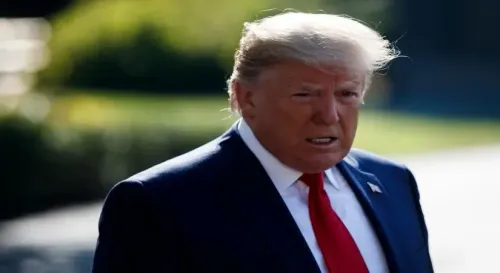
US President Donald Trump has increased global tariffs to 15% by invoking Section 122 of the Trade Act of 1974, a maneuver that intensifies his trade strategy just a day after the US Supreme Court annulled a significant portion of his previous tariffs.
The report warns that the court's decision to undo the current tariff framework could sow uncertainty moving forward, necessitating jurisdictions to engage in counterintuitive negotiations to strategically position themselves during this interim period, with ultimate authority resting with a precariously balanced US Congress.
“The intersection of international treaties and legal entities regarding a functional tariff framework could result in a confusing scenario,” the report noted.
Under the Trade Act, the President has the authority to impose temporary import surcharges (up to 15%) or quotas to address US balance of payment challenges. These measures can last for a maximum of 150 days, unless Congress opts to extend them through legislation.
The new tariffs come with exemptions for goods from Canada and Mexico that comply with the USMCA, as well as certain pre-existing national security tariffs.
“During this period, it is anticipated that the Administration will finalize investigations and impose tariffs under Section 301 and Section 232,” stated the report.
Indian enterprises, along with others globally, are subject to Section 232 tariffs affecting steel, aluminum, automobiles, copper, and more, as this section remains intact.
“It will be fascinating to observe how trade agreements among various nations are interpreted by independent legal and artificial entities, particularly those firms that successfully challenged the tariffs and gained favorable rulings. The evolving nature of bilateral relations could significantly impact the landscape,” the report concluded.
Point of View
My perspective is aligned with the need for transparency in trade policies. The evolving situation surrounding US tariffs necessitates vigilance, as their implications extend beyond national borders and can shape the global economic landscape.
NationPress
30 Sept 2026
Frequently Asked Questions
What are the estimated tariffs collected by the US?
The tariffs collected by the US administration are estimated to range from $160-175 billion.
Who has paid the highest tariffs?
Chinese companies are likely to have paid the highest tariffs.
What is the maximum duration for temporary import surcharges?
Temporary import surcharges can last for up to 150 days unless extended by Congress.
What are the exemptions to the new tariffs?
Exemptions include goods from Canada and Mexico that comply with the USMCA, along with specific national security tariffs.
How might the tariff refunds affect future trade policies?
The refund process could create complications but may also act as a psychological deterrent against future tariff implementations.