What Were the Key Takeaways from President Trump's Press Conference?
Synopsis
In a combative press conference, President Trump reaffirmed his tariff strategy despite a Supreme Court ruling. He declared a new global tariff and criticized the judiciary while linking tariffs to economic growth, diplomacy, and national security. Discover the crucial insights from this impactful briefing that highlight Trump's unwavering stance on trade.
Key Takeaways
10% global tariff announced.
Potential for higher tariffs discussed.
Emphasis on embargo powers highlighted.
Sharp critique of the Supreme Court delivered.
Claims of foreign influence on the judiciary made.
Dismissal of Congressional collaboration reiterated.
Intraparty tensions acknowledged.
Refund uncertainties raised.
Link between tariffs and economic performance emphasized.
Tariffs funding agricultural support mentioned.
Diplomatic leverage through tariffs asserted.
India trade framework clarified.
Fentanyl tariffs discussed.
Criticism of Europe made.
Federal Reserve critique presented.
Assertion of certainty about executive power.
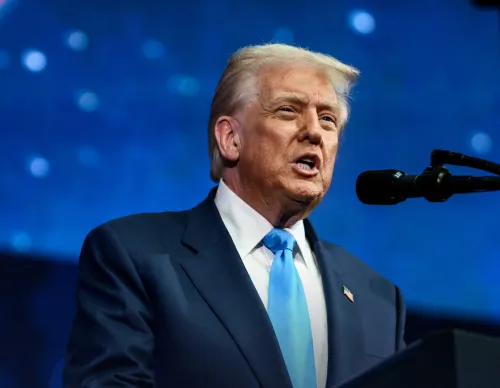
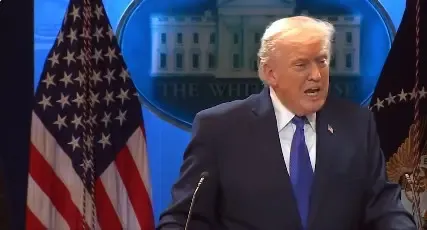
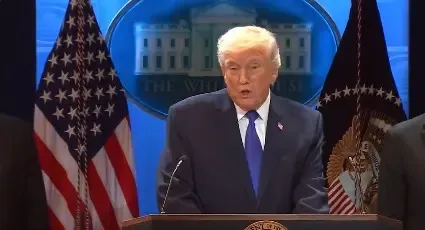
Washington, Feb 21 (NationPress) In a robust and confrontational news briefing, US President Donald Trump addressed a Supreme Court ruling that limited his authority to impose tariffs, transforming a potentially defensive situation into a bold reaffirmation of his trade philosophy.
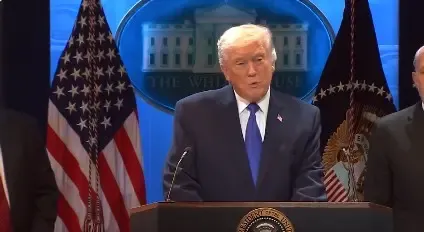
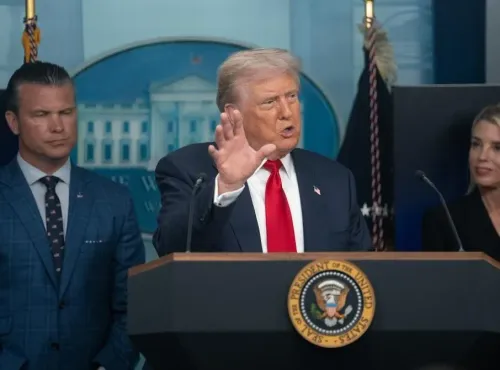
During an extensive session in the James S. Brady Press Briefing Room at the White House on Friday, Trump launched a fierce critique of the highest court, dismissed detractors in Congress, hinted at impending tariff hikes, defended his economic achievements, accused unnamed 'foreign interests' of swaying justices, and framed tariffs as not just trade mechanisms but essential components of diplomacy, border security, and national strength.
This crowded press conference highlighted the pivotal role of tariffs in his presidency, indicating that the Supreme Court's decision has not softened his stance.
Here are the significant insights from the press conference:
- 1. Introduction of a 10% global tariff
Trump declared his intention to sign an executive order to impose "a 10% global tariff under Section 122," supplementing existing tariffs. He asserted that national security tariffs under Section 232 and current Section 301 tariffs would "remain intact, fully operational, and enforced." This indicated a tactical shift rather than a retreat. - 2. Potential for increased tariffs
When asked if tariff rates could rise beyond current levels, Trump responded: "They could be higher... It all depends on what we want them to be." He suggested that alternative statutes would allow for greater charges than he was currently applying, hinting that the Supreme Court's ruling might lead to broader duties. - 3. Focus on embargo powers
Trump emphasized his authority that extends beyond tariffs, stating: "I can embargo. I can do anything I want." He further elaborated: "I’m allowed to destroy the country, but I can't charge them a small fee." Although exaggerated, this language underscored his belief that the court reinforced expansive executive powers to restrict trade entirely. - 4. Strong critique of the Supreme Court
Trump labeled the Supreme Court's decision as "deeply disappointing" and expressed shame regarding certain justices. He commended Justices Thomas, Alito, and Kavanaugh for dissenting, citing their "strength and wisdom and love for our country." He described the ruling as an "embarrassment to their families" but refrained from indicating any regrets about nominating them. - 5. Claims of foreign influence
In a notable moment, Trump suggested: "I believe the court has been influenced by foreign interests." When pressed for evidence, he cryptically responded, "You will find out what?" without providing specifics. He proposed that external forces had "undue influence" possibly affecting justices "through fear or respect or friendships." This marked a significant escalation in rhetoric against the judiciary in the US. - 6. Dismissing Congress
Trump dismissed the idea of collaborating with lawmakers to establish a new tariff framework, stating, "You don't need to -- it's already been approved. I have the right to impose tariffs, and I’ve always had that right." This reflects his long-held belief that existing laws grant the executive broad trade powers. - 7. Intraparty tensions
Addressing Republican critics of his tariff policies, Trump acknowledged losing "three votes" but labeled those dissenters as "not good Republicans." He stressed party unity, noting that a significant majority of Republican lawmakers supported him. - 8. Refund uncertainties
The Supreme Court ruling left unresolved what would happen to the billions collected under the challenged authority. Trump remarked, "They don't even discuss that point" in the ruling and predicted that the issue would be litigated for the next two years, with potential court battles extending to five years. - 9. Tariffs as an economic driver
Trump linked tariffs to economic success, citing stock market achievements. He noted, "Our stock market recently surpassed 50,000 on the Dow... and 7,000 on the S&P." He referenced job and inflation statistics, claiming that January's job report and consumer price indices exceeded expectations, with "real wages increasing." He recounted a conversation with a Georgia steel plant executive who expressed gratitude, saying, "Sir, I want to kiss you," in appreciation for the tariffs reviving the business. - 10. Tariffs supporting agricultural aid
Trump indicated that tariff revenues had financed domestic support programs, stating, "Last week I allocated $12 billion from tariff funds" for farmers. - 11. Tariffs as diplomatic leverage
Trump reiterated that tariffs are used as tools of foreign policy, saying, "Tariffs have been instrumental in ending five of the eight wars that I resolved." He mentioned warning both parties of a "200% tariff," emphasizing that he achieved this largely through tariffs. - 12. Trade framework with India
Regarding a pending trade agreement with India, Trump stated, "Nothing changes," adding that "they will be paying tariffs and we will not be paying tariffs," reversing previous arrangements. - 13. Fentanyl and China
Trump revealed he imposed "a 20% tariff" on China as a penalty for fentanyl trafficking, claiming that fentanyl imports had decreased by "more than 30%." He attributed this success to tariffs combined with a "strong border." - 14. Criticism of Europe
In a broader ideological shift, Trump remarked that "Europe has gone woke" and warned that Europe was "being harmed" by its energy and immigration policies, linking trade disputes to larger cultural and geopolitical narratives. - 15. Federal Reserve critique
Trump criticized the Federal Reserve Chair as "very incompetent" and advocated for significantly lower interest rates, asserting that the US should have "the lowest interest rates in the world." - 16. Assertion of certainty
Despite the legal setback, Trump consistently framed the Supreme Court ruling as clarifying rather than restricting executive authority. He stated, "There will no longer be any doubt," and asserted, "Great certainty has been restored to the economy of the United States and indeed the global economy."
The news conference highlighted Trump's instinct to transform institutional challenges into political momentum. Rather than softening his tariff agenda in light of the Supreme Court's ruling, he presented it as validation of a broader strategy that combines economic nationalism, diplomatic influence, and expansive executive authority. The message from the White House was clear: the tariff initiative is not diminishing; it may be entering a new chapter.
Point of View
President Trump's press conference illustrates a steadfast commitment to his tariff policies, despite legal challenges. While his rhetoric raises concerns about foreign influence and judicial integrity, it also highlights the administration's determination to pursue an aggressive trade agenda. Balancing these narratives is crucial for understanding the implications for both domestic and international relations.
NationPress
2 Oct 2026
Frequently Asked Questions
What did President Trump announce regarding tariffs?
President Trump announced a new 10% global tariff under Section 122 and indicated that existing tariffs would remain fully enforced.
How did Trump respond to the Supreme Court ruling?
Trump described the Supreme Court ruling as 'deeply disappointing' and criticized certain justices while praising dissenting opinions.
What is Trump's stance on Congress regarding tariffs?
Trump dismissed suggestions to collaborate with Congress on a new tariff framework, asserting that he has the right to impose tariffs independently.
How did Trump link tariffs to economic performance?
Trump tied tariffs to stock market performance and job growth, claiming that recent data exceeded expectations and contributed to economic success.
What other topics did Trump address during the press conference?
Trump discussed foreign influence on the judiciary, criticized the Federal Reserve, and addressed issues related to international trade agreements, particularly with India and China.