Did Trump Denounce the US Court's Verdict and Expand His Tariff Strategy?
Synopsis
In a striking press conference, President Trump vehemently defended his trade agenda following a Supreme Court ruling that curtailed his tariff authority. He accused foreign interests of swaying the court while announcing a new global tariff, suggesting that he may pursue even more aggressive trade measures.
Key Takeaways
Trump's defense of tariffs highlights his commitment to trade policies.
The Supreme Court ruling raises questions about executive authority.
Trump's accusations of foreign influence reflect ongoing tensions.
The potential for future tariffs and embargoes could reshape economic relations.
The situation underscores the complex dynamics between the judiciary and the presidency.
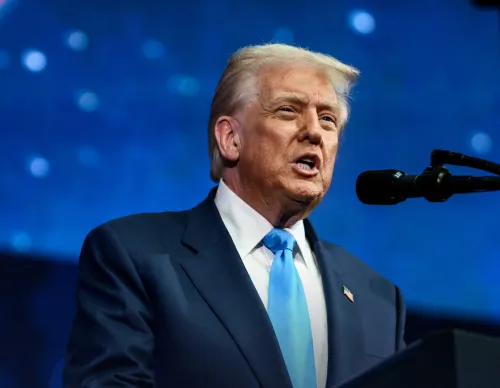
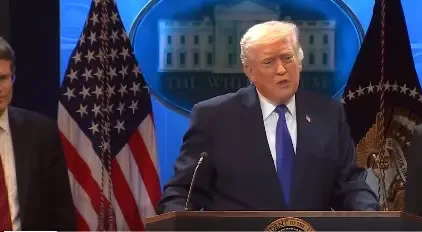
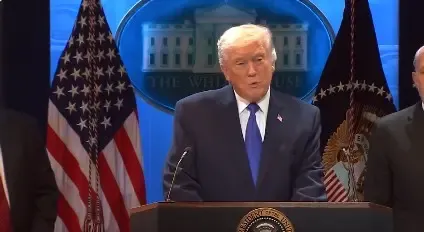
Washington, Feb 21 (NationPress) US President Donald Trump has launched a vigorous and confrontational defense of his trade policies after the Supreme Court restricted his ability to utilize a pivotal tariff authority. He accused unnamed "foreign interests" of swaying the justices, announced a new 10 percent global tariff, and hinted at the potential for even more stringent trade measures, including the possibility of embargoes.
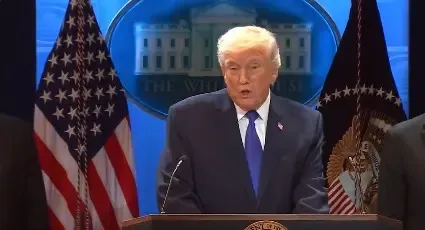
During a White House press conference that combined frustration, policy updates, and political activism, Trump labeled the Supreme Court's ruling as "deeply disappointing", expressing shame towards certain members of the court for lacking the courage to act in the nation's best interest.
He commended Justices Clarence Thomas, Samuel A. Alito Jr., and Brett M. Kavanaugh for demonstrating "strength and wisdom and love of our country", while he harshly criticized the majority opinion.
Regarding the two justices Trump appointed who sided against him, he stated that the ruling was "an embarrassment to their families", but he refrained from expressing regret over their nominations.
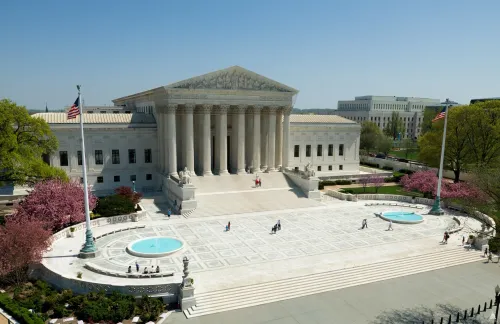
The Supreme Court's decision invalidated Trump's use of a specific emergency economic authority for imposing tariffs. Nevertheless, he asserted that this ruling did not undermine his comprehensive trade strategy.
"The Supreme Court did not overrule tariffs," Trump said, explaining that they merely impacted one specific application of the International Emergency Economic Powers Act (IEEPA).
Shortly after the Supreme Court's decision, President Trump unveiled a new plan, stating, "Today, I will sign an executive order to impose a 10 percent global tariff under Section 122," while asserting that national security tariffs under Section 232 and existing Section 301 tariffs would remain "fully in place and in full force and effect".
When questioned about the legal implications of this new route, Trump suggested that it might actually enhance his flexibility. "Potentially higher," he responded, when asked if tariff rates could surpass current levels. "It depends on whatever we want them to be."
Trump noted, "We can charge much more than I was charging." At various junctures, he indicated that the Supreme Court's ruling had fortified his position by clarifying alternative legal avenues.
"There will no longer be any doubt," Trump stated, asserting that other statutes were "even stronger than our original choice" and could yield "far greater" revenue than the "hundreds of billions of dollars" already collected.
Trump emphasized the extent of executive power he believed the court had validated, declaring, "I can embargo. I can do anything I want." He elaborated, "In other words, I can destroy the trade... I can destroy the country. I'm even allowed to impose a foreign country-destroying embargo."
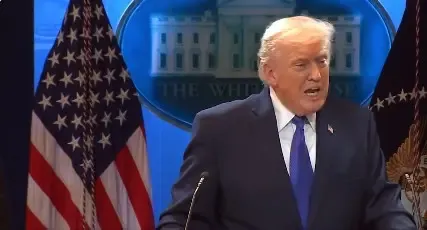
In a particularly striking moment, Trump accused the justices of being influenced by external factors. "It's my opinion that the court has been swayed by foreign interests," he stated. When asked for evidence, he replied, "You're going to find out what?" Trump suggested that "foreign interests are represented by people that I believe have undue influence", adding, "They have a lot of influence over the Supreme Court, whether it's through fear or respect or friendships, I don't know."
Beyond the legal dispute, Trump portrayed tariffs as integral to his economic and foreign policy vision, claiming they had rejuvenated American manufacturing. He recounted a visit to a steel plant in Georgia, where an executive expressed gratitude, saying, "Sir, I want to kiss you," as foreign imports had ceased and hiring increased.
He also connected tariffs to diplomatic successes, stating, "Tariffs have likewise been used to end five of the eight wars that I settled." Trump asserted that the US economy was flourishing under his policies, highlighting stock market achievements and job growth. "Our stock market has just recently broken 50,000 on the Dow... and... broken 7,000 on the S&P," he noted, labeling the country as "the hottest country anywhere in the world right now."
However, the Supreme Court's ruling cast uncertainty over billions of dollars in tariff revenue already collected. When asked about the approximately $175 billion reportedly in limbo and the possibility of companies receiving refunds, Trump critiqued the opinion for neglecting the matter. "They don't even discuss that point," he said. "I guess it has to get litigated for the next two years."
He added, "We'll end up being in court for the next five years." Despite his confrontational stance, Trump framed the situation as a pivotal moment that would foster clarity rather than chaos. "Great certainty has been brought back to the economy of the United States and actually the economy of the world," he asserted. "We're now the strongest by far."
This clash highlighted the increasingly strained relationship between President Trump and the US Judiciary, as well as the significant role tariffs have come to play in his presidency. While Presidents from both parties have historically utilized trade statutes related to national security and unfair trade practices, Trump has aggressively pursued these authorities, often testing the limits of executive power and provoking legal challenges that have transformed the landscape of American trade policy.
Point of View
It's crucial to recognize the impact of President Trump's statements on US trade policy. His strong rhetoric and proposed tariff measures reflect a broader strategy that resonates with many constituents, even as it raises legal and economic questions. The relationship between the executive branch and the judiciary is increasingly contentious, with significant implications for both domestic and international markets.
NationPress
24 Sept 2026
Frequently Asked Questions
What new tariff did President Trump announce?
President Trump announced a new 10 percent global tariff following a Supreme Court ruling that limited his tariff authority.
How did Trump respond to the Supreme Court's ruling?
Trump expressed disappointment with the ruling, accusing the justices of being influenced by foreign interests .
What potential measures did Trump signal could follow the new tariff?
Trump hinted at the possibility of even stricter trade measures, including embargoes .
Did Trump regret appointing justices who ruled against him?
While Trump criticized the ruling justices, he refrained from expressing regret over appointing them.
How does Trump view the impact of tariffs on the economy?
Trump claims that tariffs have revived American manufacturing and contributed to a thriving economy.