Why Did Trump Announce a 10% Global Tariff After the Supreme Court Ruling?
Synopsis
In a surprising move, President Trump expresses his discontent with the Supreme Court's ruling on tariffs, declaring it 'deeply disappointing'. He quickly shifts gears, announcing a new 10% global tariff as part of his ongoing trade agenda, asserting that this will not derail his plans. What does this mean for the US economy?
Key Takeaways
Trump's 10% global tariff aims to preserve his trade agenda.
The Supreme Court's ruling has prompted a swift response from the President.
Existing tariffs under Section 232 and Section 301 remain in effect.
Trade policy continues to be a contentious issue in US politics.
The President emphasizes the positive impacts of tariffs on the US economy.
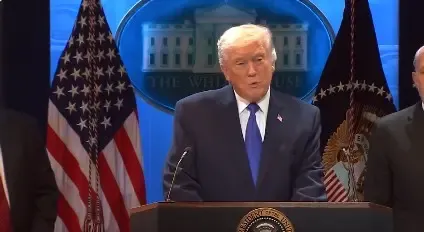
Washington, Feb 21 (NationPress) - US President Donald Trump expressed his frustration with the Supreme Court following its decision that curtailed his ability to utilize a crucial tariff power. He deemed the ruling "deeply disappointing" and announced his intention to immediately pursue alternative legal frameworks, including a new 10 percent global tariff, aiming to preserve his tariff strategy.
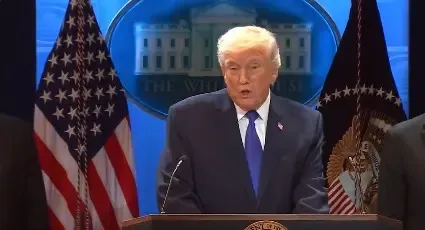
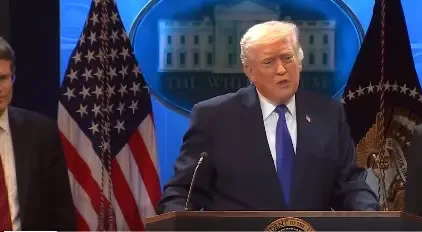
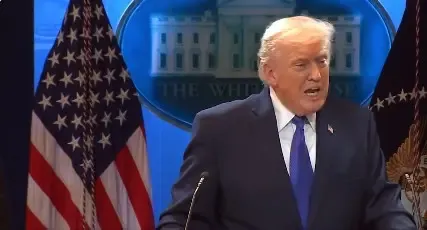
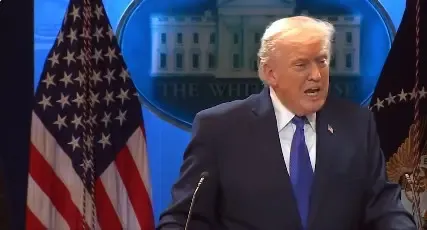
"The Supreme Court's decision regarding tariffs is profoundly disappointing, and I am ashamed of certain justices for lacking the courage to act in the best interests of our nation," Trump stated during a White House press briefing on Thursday, extending gratitude to Justices Clarence Thomas, Samuel Alito, and Brett Kavanaugh for their dissenting opinions.
Trump further asserted that the Supreme Court's ruling would not derail his tariff agenda, but rather highlighted other avenues for action.
"The positive aspect is that there are methods, statutes, and authorities recognized by the entire court in this unfortunate ruling that are even more potent than the tariffs available to me as President of the United States," he remarked.
He maintained that the Supreme Court did not invalidate tariffs, but merely addressed a specific application of IEEPA tariffs and its use for imposing fees, elaborating, "I can exercise any authority I have under IEEPA... I just can't levy fees on anyone."
Trump confirmed that existing tariffs would remain in effect, with new tariffs on the horizon.
"Thus, effective immediately, all national security tariffs under Section 232 and current Section 301 tariffs will continue to be in place, fully operational and effective," he stated.
He added, "Today, I will sign an order to implement a 10 percent global tariff under Section 122, in addition to our standard tariffs already enforced."
Furthermore, Trump indicated that the US government was initiating several Section 301 investigations to safeguard the nation from unfair trade practices by foreign nations and companies.
When questioned about whether Congressional action would be necessary, Trump replied, "You don't need to -- it's already been authorized," later asserting, "I possess the authority to impose tariffs, and this has always been sanctioned by the US Congress."
US Trade Representative Jameison Greer echoed Trump's sentiments, stating, "We are moving forward with Section 122, which will be enacted today... We are also pursuing Section 301 investigations, which are legally robust... ensuring continuity in our tariff program."
Trump acknowledged a significant uncertainty regarding the funds already collected.
When asked if the $175 billion in tariff revenue was now uncertain and if refunds would be necessary, he responded, "It takes months to issue an opinion, and they do not even address that matter."
He asserted that the Supreme Court's decision left the matter open for further legal battles.
"It seems this will require litigation over the next two years," he stated, adding, "We might be entangled in court for the next five years."
Additionally, Trump emphasized the importance of tariffs in his economic narrative.
"Our stock market has recently surpassed 50,000 on the Dow... and 7,000 on the S&P," he noted, claiming that tariffs have revitalized manufacturing, recounting an anecdote about a steel executive who expressed gratitude for his tariff imposition, stating, "Sir, I want to kiss you," because "you stepped in and enforced tariffs, halting all that foreign junk..."
In the United States, tariffs can be imposed under various laws, including those related to national security (Section 232) and unfair trade practices (Section 301), while IEEPA is a distinct emergency powers statute utilized by US Presidents for specific economic restrictions.
Disputes concerning the extent of these powers frequently lead to litigation that may escalate to the Supreme Court in the US.
Trade policy has long been a contentious issue among US Presidents, Congress, and the judiciary, with administrations from both major parties leveraging tariffs and negotiated agreements to exert pressure on trade partners, protect domestic industries, and pursue wider foreign policy objectives.
Point of View
It is essential to recognize the significant implications of President Trump's announcement regarding tariffs. While the Supreme Court's decision may have curtailed certain powers, the President's immediate response showcases the ongoing complexities and contentiousness surrounding trade policy in America. This move could have far-reaching effects on domestic industries and international relations.
NationPress
3 Oct 2026
Frequently Asked Questions
What is the new global tariff announced by Trump?
President Trump has announced a new 10% global tariff to maintain his tariff agenda following the Supreme Court's ruling that limited his previous tariff authority.
How does the Supreme Court's ruling impact Trump's tariffs?
The Supreme Court's ruling was viewed by Trump as a limitation on his tariff authority, but he asserts that it does not end his tariff agenda as he can pursue other legal avenues.
What are the implications of the new tariffs?
The new tariffs could affect international trade relations and may lead to further investigations into unfair trading practices from other countries.
What are the sections under which tariffs can be imposed?
Tariffs can be imposed under multiple laws, including Section 232 related to national security and Section 301 addressing unfair trade practices.
Will Congress need to approve these new tariffs?
Trump stated that Congressional approval is not necessary as he has the authority to implement tariffs, which has already been sanctioned by Congress.