Did Trump accuse the Supreme Court of foreign sway while hinting at tariff increases?
Synopsis
In a recent press conference, President Trump accused the Supreme Court of being influenced by foreign interests and hinted at an escalation in tariffs. With claims of potential embargoes, he asserted that the court's ruling ultimately strengthens his trade agenda and national security posture. This bold assertion raises critical questions about foreign influence in American judiciary matters.
Key Takeaways
Trump claims the Supreme Court is influenced by foreign interests.
He suggests possible increases in tariffs and embargoes.
The court's ruling limits one tariff mechanism but affirms broader powers.
Trump views tariffs as crucial for national security and economic strategy.
Legal challenges to tariffs have been common among past Presidents.
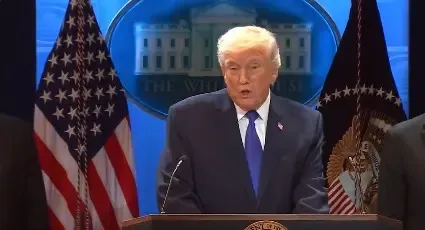
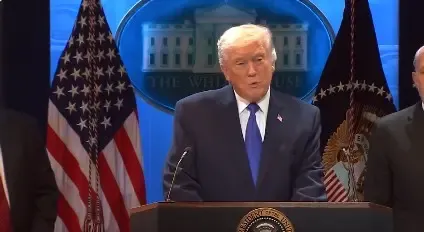
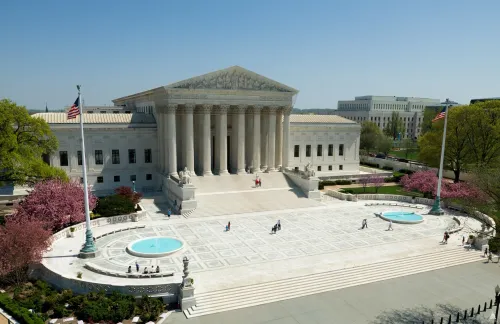
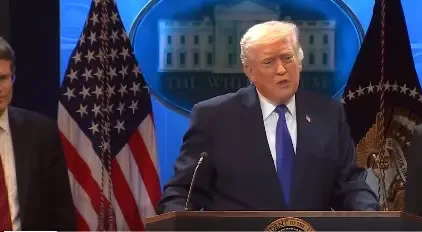
Washington, Feb 21 (NationPress) US President Donald Trump has claimed that the Supreme Court is being influenced by foreign interests, indicating potential increases in tariffs and asserting his capability to impose comprehensive embargoes following a court ruling that limited his authority on a specific tariff mechanism.
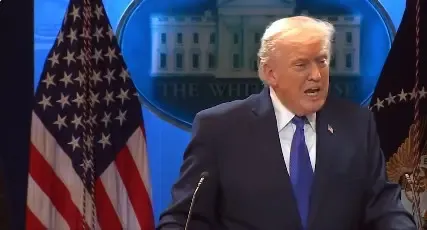
During a contentious press briefing at the White House, Trump stated: "It's my belief that the court has been influenced by foreign interests and a political movement that is significantly smaller than widely perceived."
When questioned about proof of foreign sway over the justices, Trump replied: "You will discover what?"
He accused that "foreign interests are represented by individuals who I believe wield undue influence," adding, "They hold considerable sway over the Supreme Court, whether through fear, respect, or friendships, I cannot say."
These remarks followed the Supreme Court rejecting his application of a particular tariff authority.
Trump labeled the court's decision as "deeply disappointing" and described it as "ridiculous," yet maintained that it would not undermine his trade initiatives.
Rather, the President indicated that the ruling clarified his powers under various statutes, potentially leading to increased tariff rates.
"Higher rates are possible," Trump responded when queried about future tariff increases.
"It depends on our objectives."
He elaborated, "We can assess much more than what I previously charged."
Trump noted that while the Supreme Court curtailed his ability to levy what he termed a fee under one statute, it confirmed broader powers.
"I can impose embargoes," he asserted.
"I can do whatever I wish."
Trump emphasized: "In essence, I can disrupt trade, I can even devastate a nation. I'm permitted to implement an embargo that could be damaging to another country."
He claimed that the Supreme Court's ruling ultimately bolstered his position.
"There will be no ambiguity," he remarked, adding that the figures "could far exceed the hundreds of billions we've already accrued."
Trump reiterated his ongoing assertion that tariffs have played a crucial role in resolving international disputes.
"Tariffs have been pivotal in concluding five of the eight conflicts I have resolved," he claimed.
He maintained: "I accomplished this primarily through tariffs."
Trump portrayed tariffs not merely as economic instruments but also as vital tools for national security and diplomatic leverage.
"This case held significant importance to me as a representation of economic and national security," he stated.
While he harshly criticized certain justices, Trump commended those who dissented, asserting they demonstrated "strength, wisdom, and a love for our country."
The Supreme Court's ruling addressed a particular legal framework for tariffs but did not eliminate the President's ability to utilize other trade laws enacted by Congress.
For decades, Presidents from both the Democratic and Republican parties have depended on provisions pertaining to national security, unfair trade practices, and emergency powers to impose duties, embargoes, and trade restrictions, often leading to legal challenges.
Point of View
It is crucial to approach this development with an unbiased lens. President Trump’s allegations against the Supreme Court highlight significant tensions between judicial independence and executive power. While the implications of tariffs and embargoes could have far-reaching effects, it's essential to consider the broader context of trade policy and its ramifications on both domestic and international fronts.
NationPress
20 Sept 2026
Frequently Asked Questions
What did Trump say about the Supreme Court?
Trump accused the Supreme Court of being influenced by foreign interests and suggested that this influence could lead to tariff increases.
What are Trump's plans regarding tariffs?
Trump hinted at potentially raising tariffs and mentioned his authority to impose embargoes on countries.
How did the Supreme Court ruling affect Trump’s tariff powers?
The ruling limited his use of a specific tariff authority but reaffirmed broader powers he holds under other statutes.
What does Trump believe tariffs can achieve?
Trump believes tariffs can be used as tools for economic stability, national security, and even resolving international conflicts.
What was Trump's reaction to the Supreme Court ruling?
He described the ruling as 'deeply disappointing' and 'ridiculous' but claimed it would not deter his trade agenda.