US Supreme Court's Ruling Casts Doubt on Trump's Trade Agenda
Synopsis
The recent US Supreme Court ruling has thrown a wrench into Trump's trade policy, challenging his authority over tariffs and creating uncertainty among global trading partners. This article explores the implications of this decision and the responses from key nations.
Key Takeaways
Supreme Court Ruling: The court ruled against Trump's use of the IEEPA for tariffs.
Trade Confusion: Businesses are uncertain about applicable tariffs.
Global Negotiations: Countries like India and China may renegotiate terms.
Temporary Tariffs: Trump can impose tariffs for limited durations without Congressional approval.
EU's Position: The EU is considering countermeasures following the ruling.
New Delhi, Feb 24 (NationPress) In just over a year since assuming office as the 47th President of the United States on January 20 last year, Donald Trump has significantly disrupted the global order through frequent alterations centered around two of his key themes – trade and tariffs.
Initially, he implemented a series of "reciprocal tariffs" last year, compelling various nations to hastily pursue trade agreements with Washington or engage in negotiations, as the odds seemed heavily stacked against them.
"Following the US President's dismantling of the global economic framework in 2025, Japan was among those nations racing to finalize a deal. They committed to substantially boosting investments in the US in return for reduced US tariffs on Japanese goods," noted the UK's progressive newspaper, The Guardian.
"However, merely two days after Trump’s proclaimed victory, his efforts to reform international trade faced a significant setback at the US Supreme Court," it further reported.
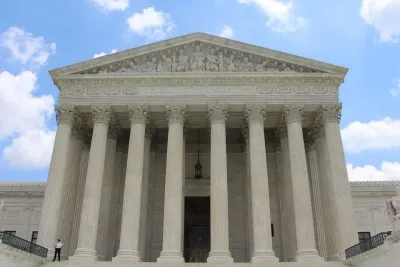
On February 20, the US Supreme Court ruled in a 6-3 decision that President Trump exceeded his authority when he imposed global tariffs under the International Emergency Economic Powers Act (IEEPA). The court clarified that the IEEPA pertains to national security crises, not expansive trade initiatives. This ruling effectively invalidated many of Trump’s previous "reciprocal tariffs".
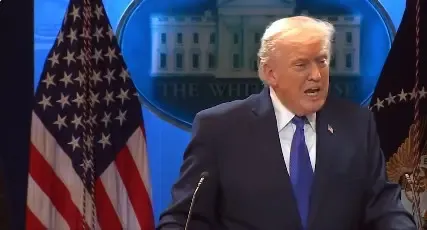
True to form, with a disdainful attitude towards the judges who deemed much of his tariff policy illegal, Trump quickly declared a 10% global tariff, subsequently escalating it to 15% by invoking Section 122 of the Trade Act of 1974.
While this provision permits the US President to impose such tariffs, it is a temporary measure limited to a maximum of 150 days and is intended to address balance-of-payments deficits, necessitating Congressional approval for extension.
With mid-term elections approaching this year, the House is likely to be cautious in its voting.
In the meantime, businesses and trading partners are grappling with uncertainty regarding applicable tariffs, complicating long-term planning. Nonetheless, the landscape has shifted, with allies feeling more empowered to renegotiate specific terms.
Countries such as India, Brazil, and China have received substantial tariff reductions without making any concessions, according to The Guardian's report, while nations like the UK may face increased tariffs despite having made compromises.
New Delhi has opted to halt ongoing negotiations just before finalizing a trade deal, causing alarm among exporters in India, particularly in the textiles, chemicals, and auto parts sectors.
The European Union is also seeking clarity following an initial trade agreement with Washington. Reports indicate that Brussels intends to consult the WTO and has warned of potential countermeasures.
Agricultural exporters in Brazil are reportedly concerned about rising costs, as President Luiz Inacio Lula da Silva urged nations to unite and form collective negotiating blocs for discussions with the US during his visit to Delhi.
Meanwhile, President Xi Jinping of China will have enhanced leverage in upcoming negotiations with his US counterpart during the latter's visit to Beijing from March 31 to April 2. This week, China’s Ministry of Commerce stated that it is reviewing the US Supreme Court's ruling and conducting a thorough assessment of its implications.
They pointed out that unilateral actions, such as the imposition of reciprocal tariffs and fentanyl tariffs, violate both international trade regulations and US domestic laws, serving no party's interests.
Trump may find it more challenging to pressure Xi for increased purchases of American soybeans, Boeing aircraft, and energy resources.
China could also slow down the steady supply of rare earth minerals, vital for American high-tech and AI-driven manufacturing. Some reports suggest Beijing might be planning a retaliatory stance, although that may be postponed until the Xi-Trump Beijing summit.
Point of View
Highlighting its implications for international relations and economic strategies. It reflects a nation-first approach, considering the interests of various stakeholders.
NationPress
2 Oct 2026
Frequently Asked Questions
What did the US Supreme Court rule about Trump's tariffs?
The US Supreme Court ruled that President Trump overstepped his authority by imposing global tariffs using the International Emergency Economic Powers Act, which is meant for national security emergencies.
How does this ruling affect international trade?
The ruling has led to confusion among trading partners regarding applicable tariffs, complicating long-term planning and negotiations.
What are the implications for countries like China and India?
Countries like China and India may seek to leverage this ruling to renegotiate trade terms, with India halting negotiations and China assessing its impact.
Can Trump still impose tariffs after this ruling?
Trump can still impose tariffs temporarily under the Trade Act of 1974, but this requires Congressional approval for extensions beyond 150 days.
What has been the response from the European Union?
The European Union is seeking clarifications following its initial trade agreement with Washington and has warned of possible countermeasures.