Trump minerals deals face conflict-of-interest alarm from 54 House Democrats
Synopsis
Fifty-four House Democrats have put the Trump administration on notice: its critical minerals agreements — spanning Kazakhstan, Congo, Zambia, and beyond — may be funnelling public money toward politically connected families while stripping Congress of oversight. The letter's most explosive allegation is that the State Department threatened to withhold HIV medicines to pressure Zambia into signing a deal.
Key Takeaways
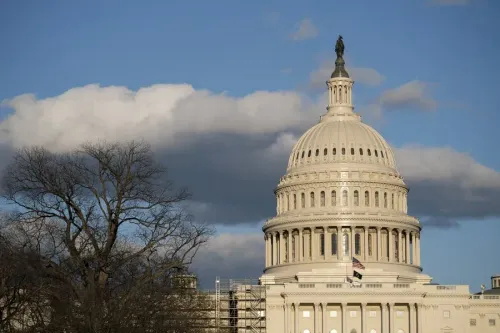
54 House Democrats sent a formal letter on 18 August to four senior Trump administration officials raising conflict-of-interest alarms over critical minerals agreements.
Lawmakers alleged companies linked to the families of President Trump and Commerce Secretary Lutnick could profit from a US-backed deal in Kazakhstan .
The agreements could commit US taxpayers to billions of dollars in loans and loan guarantees via the Development Finance Corporation and Export-Import Bank .
The State Department allegedly threatened to withhold HIV medicines to pressure Zambia into signing a minerals deal, according to the letter.
The letter was led by Jared Huffman , Linda Sánchez , and Jonathan Jackson ; Indian American lawmakers Ro Khanna and Shri Thanedar were among the signatories.
Lawmakers submitted 10 questions to the administration on human rights, environmental safeguards, taxpayer protections, and potential conflicts of interest.
More than 54 House Democrats have formally raised concerns that the Trump administration's critical minerals agreements could enrich politically connected families, expose American taxpayers to significant financial losses, and erode congressional oversight over trade and investment decisions.
Key Allegations in the Letter
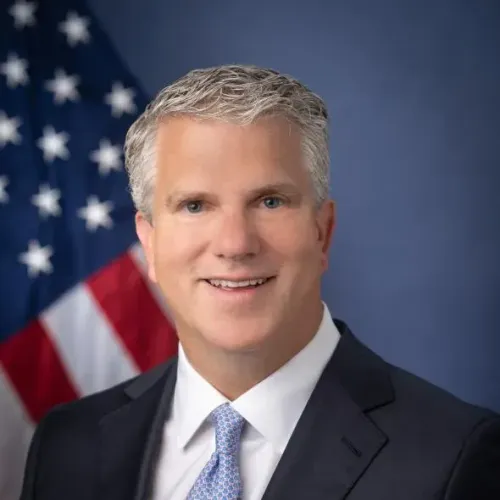
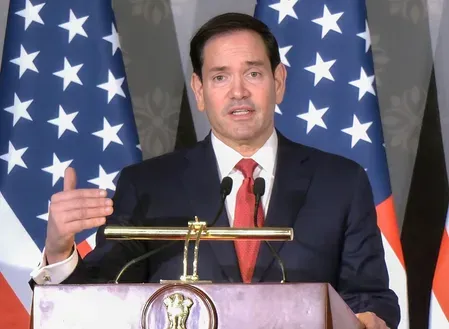
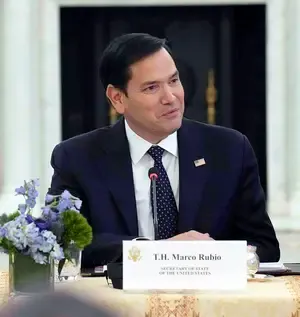
In a letter addressed to four senior administration officials — US Trade Representative Jamieson Greer, Secretary of State Marco Rubio, Commerce Secretary Howard Lutnick, and Treasury Secretary Scott Bessent — the lawmakers questioned the transparency, labour standards, human rights protections, and environmental safeguards embedded in a range of critical minerals agreements.
The lawmakers alleged that companies linked to the families of President Donald Trump and Commerce Secretary Lutnick could profit from a US-backed critical minerals deal in Kazakhstan, citing recent reporting by The New York Times. 'Absent strong transparency and accountability measures, these investments and loan guarantees raise risks of conflicts of interest, self-dealing, preferential treatment, and weakened oversight,' the letter stated.
Taxpayer Exposure and Financial Risk
The Democrats warned that the agreements could commit US taxpayers to billions of dollars in direct loans and loan guarantees channelled through the Development Finance Corporation and the Export-Import Bank. They also questioned proposed federal equity investments in mining and processing companies.
'If projects succeed, companies keep the profits; if they fail, taxpayers help absorb losses,' the letter said — a formulation that critics argue amounts to privatised gains and socialised risk.
Country-Specific Concerns
The letter raised concerns about arrangements spanning the Democratic Republic of Congo, Zambia, Malaysia, Argentina, Ecuador, Cambodia, and Bangladesh. Notably, the lawmakers alleged that the State Department had threatened to withhold HIV medicines and other assistance to pressure Zambia into signing a minerals agreement — a claim that, if verified, would mark a significant escalation of coercive diplomacy.
They also raised concerns about a US-backed paramilitary force reportedly guarding mining operations in Congo. In trade agreements with Argentina, Ecuador, Cambodia, and Bangladesh, the lawmakers said critical minerals provisions required those countries to facilitate US mining investment without binding environmental, labour, or human rights commitments.
Who Led the Effort
The letter was spearheaded by House Natural Resources Committee ranking member Jared Huffman, Ways and Means Trade Subcommittee ranking member Linda Sánchez, and Congressman Jonathan Jackson. Indian American lawmakers Ro Khanna and Shri Thanedar were among the signatories.
The Broader Strategic Context
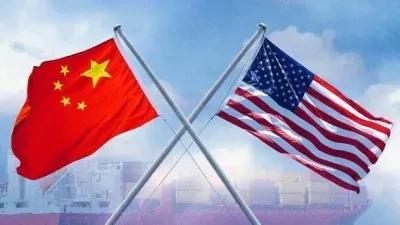
Critical minerals are indispensable for electric vehicles, batteries, semiconductors, renewable-energy equipment, and advanced defence systems. China holds a dominant position in the processing and refining of several such minerals, and successive US administrations have sought to build alternative supply chains through overseas agreements and domestic investment.
The Democrats said they supported reducing US dependence on China and strengthening domestic mineral supply chains — but insisted that such goals must not come at the cost of accountability. They submitted 10 questions to the administration covering human rights, environmental assessments, taxpayer safeguards, conflicts of interest, and proposed price floors. The letter also warned that price-support mechanisms could create antitrust risks and inadvertently benefit Chinese state-linked companies.
This comes amid a long-running constitutional tension: while Congress holds authority over international commerce, successive administrations — including Biden's — have used executive agreements to pursue trade and supply-chain objectives. Notably, the letter pointed out that lawmakers from both parties had previously criticised the Biden administration's minerals agreement with Japan for similarly bypassing Congress.
The administration has not yet formally responded to the letter. How it addresses the 10 questions — particularly on conflicts of interest and taxpayer protections — will be closely watched on Capitol Hill in the weeks ahead.
Point of View
But it is also politically convenient — the same caucus largely stayed silent when the Biden administration's Japan minerals deal bypassed Congress. The more substantive concern is structural: the Development Finance Corporation and Export-Import Bank were designed as development tools, not vehicles for agreements where executive-branch-connected families stand to gain. If the Kazakhstan allegations withstand scrutiny, the administration faces a genuine accountability crisis, not merely a messaging problem. The Zambia coercion claim — HIV medicines as leverage — is the sharpest edge here, and the one most likely to attract bipartisan attention if independently corroborated.
NationPress
18 Aug 2026
Frequently Asked Questions
What are the Trump administration's critical minerals agreements?
They are a series of bilateral agreements covering mining, processing, and trade in critical minerals — materials essential for electric vehicles, batteries, semiconductors, and defence systems — across countries including Kazakhstan, the Democratic Republic of Congo, Zambia, Argentina, Ecuador, Cambodia, and Bangladesh. The deals aim to reduce US dependence on China's dominant minerals processing capacity.
Why are House Democrats concerned about conflicts of interest?
The lawmakers allege that companies linked to the families of President Trump and Commerce Secretary Howard Lutnick could profit from a US-backed minerals deal in Kazakhstan, citing reporting by The New York Times. They warn that without strong transparency measures, the agreements risk self-dealing and preferential treatment.
How much taxpayer money could be at risk?
The letter warns that the agreements could commit US taxpayers to billions of dollars in direct loans and loan guarantees through the Development Finance Corporation and the Export-Import Bank, with federal equity investments in mining companies also possible. Democrats argue that if projects fail, taxpayers absorb the losses while private companies keep any profits.
What is the allegation involving Zambia and HIV medicines?
The lawmakers alleged that the State Department threatened to withhold HIV medicines and other assistance to pressure Zambia into signing a critical minerals agreement. The allegation, if verified, would represent a significant use of humanitarian aid as diplomatic leverage.
Which lawmakers led the letter, and who signed it?
The effort was led by House Natural Resources Committee ranking member Jared Huffman, Ways and Means Trade Subcommittee ranking member Linda Sánchez, and Congressman Jonathan Jackson. Indian American lawmakers Ro Khanna and Shri Thanedar were among the 54 signatories.