Siberia permafrost thaw threatens Arctic economic race

Synopsis
A Chinese Academy of Sciences study published in Science on August 6 finds that Siberian permafrost thaw could offset 20% of global methane reduction targets by 2050 — quietly undermining the Arctic ambitions of the US, Russia, and China before they can be realised.
Key Takeaways
Arctic warming is occurring almost four times faster than the global average, accelerating permafrost thaw across the region.
Approximately 46 per cent of the northern hemisphere's permafrost is located in Siberia .
A study by the Chinese Academy of Sciences , published in Science on August 6 , warns that by 2050 , Siberian permafrost thaw and wildfires could offset 20 per cent of required global methane reductions.
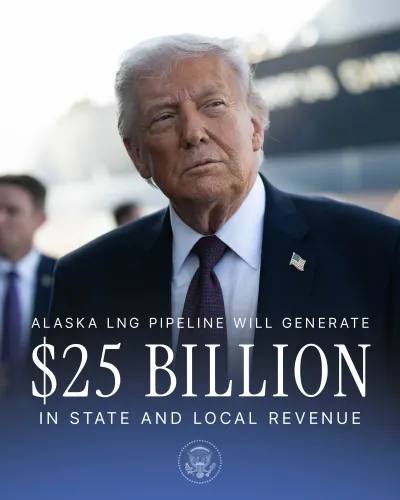
US President Donald Trump has pursued Arctic expansion since returning to office, targeting Greenland , Alaska resources, and new icebreaker investments.
Collapsing permafrost threatens roads, pipelines, and infrastructure that underpin all three major powers' Arctic economic strategies.
The methane feedback loop from thawing permafrost risks making international climate targets harder to achieve independent of other mitigation efforts.
A landmark international study warns that rapidly thawing permafrost across Siberia could undermine the Arctic's emerging role as a global economic corridor, posing a direct challenge to strategic ambitions held by the United States, Russia, and China. The research, led by the Chinese Academy of Sciences and published in the peer-reviewed journal Science on August 6, projects severe climate and infrastructure consequences that could eclipse the region's resource potential.
Trump's Arctic Expansion Drive
Since returning to office last year, US President Donald Trump has aggressively pushed to expand America's Arctic footprint. His administration's agenda includes investing in icebreakers to counter Russian and Chinese shipping ambitions, unlocking natural resources in Alaska, and renewing efforts to buy or annex Greenland. The Arctic is increasingly viewed as the world's next major economic gateway, with shorter shipping routes rivalling the Suez Canal and vast untapped mineral reserves drawing all three powers into a high-stakes competition.
The Permafrost Problem
Permafrost — ground in cold regions that has remained below 0 degrees Celsius (32 degrees Fahrenheit) for at least two consecutive years — covers most of the Arctic region. Approximately 46 per cent of the northern hemisphere's permafrost lies in Siberia. Its thaw releases stored greenhouse gases, particularly methane, creating a feedback loop that accelerates further warming.
Warming across the Arctic is occurring almost four times faster than the global average, a phenomenon scientists call Arctic amplification. As temperatures rise, the structural integrity of frozen ground collapses, threatening roads, pipelines, buildings, and other critical infrastructure essential to any large-scale Arctic economic development.
Why It Matters: The 20% Methane Offset Risk
The Chinese Academy of Sciences-led study projects that by 2050, higher methane emissions from permafrost thaw combined with increasing wildfires in Siberia could offset 20 per cent of the global methane reduction required to meet international climate targets. This figure represents a significant and largely underappreciated liability sitting beneath the Arctic's much-hyped economic promise. According to the study, the massive cost of collapsing ground threatens to overshadow the region's economic potential.
The Competitive Backdrop
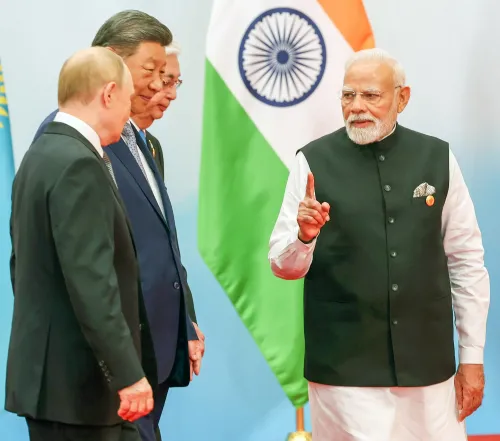
Russia, China, and the US are each positioning themselves for dominance over Arctic sea lanes and mineral wealth. Moscow controls the Northern Sea Route and has invested heavily in Arctic infrastructure for decades. Beijing has declared itself a 'near-Arctic state' and participates in Arctic shipping and research. Washington, under President Trump, has escalated its posture, particularly around Greenland and Alaska. All three strategies, however, depend on stable ground — literally.
What's Next
The study's findings inject a critical variable into Arctic geopolitics that policymakers and investors have largely sidestepped. Infrastructure projects built on permafrost face compounding risks as thaw rates accelerate, and the methane feedback loop could render climate commitments harder to meet regardless of reductions elsewhere. As great-power competition in the Arctic intensifies through the late 2020s, the physical stability of Siberia's landscape may prove to be the most consequential — and least controllable — factor of all.
Point of View
Shipping lanes, and mineral rights — but this study reframes the battlefield as one of physical geology. The permafrost risk is not a distant environmental footnote; it is a balance-sheet liability for every infrastructure dollar committed above the Arctic Circle. What mainstream coverage misses is that Russia, which controls the most Arctic territory and has the most to gain from ice-free routes, is simultaneously the most exposed to permafrost-driven infrastructure collapse in Siberia. For Washington and Beijing, the study is a signal that rival Arctic strategies may be built on ground — quite literally — that cannot hold.
NationPress
2 Oct 2026
Frequently Asked Questions
What did the Chinese Academy of Sciences Arctic permafrost study find?
The study, published in the journal Science on August 6 , found that thawing permafrost and increasing wildfires in Siberia could offset 20 per cent of the global methane reduction needed to meet climate targets by 2050 . It identified the massive cost of collapsing ground as a threat that could overshadow the Arctic 's economic potential.
Why is Siberian permafrost thaw a problem for Arctic development?
Permafrost provides the structural foundation for roads, pipelines, and buildings across the Arctic . As it thaws — driven by warming that is nearly four times faster than the global average — infrastructure collapses, making large-scale economic development far more costly and technically difficult for all nations operating in the region.
What are Trump's Arctic ambitions and how are they affected?
President Donald Trump has pursued expanded US influence in the Arctic since returning to office, including icebreaker investments, Alaska resource development, and renewed efforts to acquire Greenland . Permafrost instability adds a significant physical and financial risk to these plans, particularly for infrastructure projects dependent on frozen ground.
How much of the world's permafrost is in Siberia?
Approximately 46 per cent of the northern hemisphere's permafrost is located in Siberia , making it the single largest permafrost zone on Earth and the region most central to the study's climate projections.
Which countries are competing for Arctic resources and sea lanes?
The United States , Russia , and China are the primary powers competing for control of Arctic sea lanes and mineral wealth. Russia controls the Northern Sea Route; China has declared itself a 'near-Arctic state'; and the US under President Trump has escalated its Arctic posture through icebreaker programmes and the push for Greenland .