Could Tariff Threats Undermine Transatlantic Relations?
Synopsis
Eight European nations have united to voice their concerns over U.S. tariff threats on key goods, warning of potential harm to transatlantic relations. This article explores their commitment to Arctic security and the importance of dialogue amidst rising tensions.
Key Takeaways
Eight European nations oppose U.S. tariff threats.
The countries stress the importance of dialogue over coercion.
They reaffirm their commitment to Arctic security .
Tariff threats could jeopardize transatlantic relations .
European leaders stand united in their response.
Berlin, Jan 18 (NationPress) Eight European nations—Germany, Denmark, Finland, France, The Netherlands, Norway, Sweden, and the United Kingdom—expressed concerns on Sunday that tariff threats jeopardize transatlantic relations and could lead to a dangerous downward spiral.
A joint declaration from these countries reiterated their commitment to bolstering Arctic security as a common interest across the Atlantic and extended support to the citizens of Greenland.
In their statement, the eight nations remarked, "As NATO allies, we pledge to enhance Arctic security as a mutual interest. The pre-planned Danish exercise, 'Arctic Endurance', conducted alongside our Allies, addresses this necessity without posing any threat. We stand united with Denmark and the citizens of Greenland."
They continued, "Building on last week's discussions, we are prepared to engage in dialogue rooted in the principles of sovereignty and territorial integrity which we firmly uphold. The threats of tariffs undermine transatlantic relations and risk a perilous downward trajectory. We will remain united and coordinated in our response, committed to defending our sovereignty."
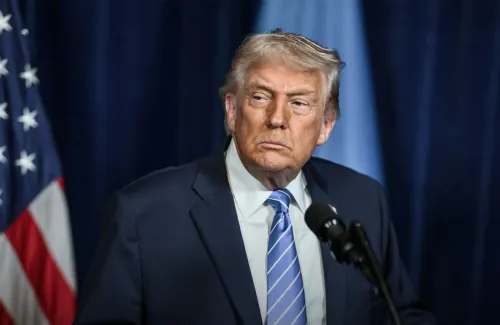
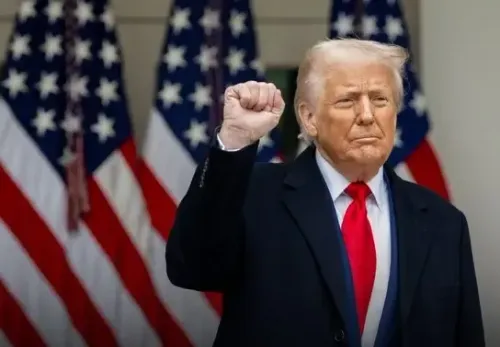
This joint statement followed a social media announcement from U.S. President Donald Trump on Saturday, revealing plans to impose a 10 percent tariff starting February 1 on goods from Denmark, Norway, Sweden, France, Germany, the UK, The Netherlands, and Finland related to Greenland. The tariff may escalate to 25 percent in June unless an agreement is established for the U.S. to purchase the territory, as reported by Xinhua news agency.
Nordic leaders quickly voiced their opposition, emphasizing that disagreements among allies should be resolved through dialogue rather than coercion.
Danish Foreign Minister Lars Lokke Rasmussen expressed surprise at the tariff threat, indicating that Denmark was liaising with the European Commission, according to Ritzau.
Norwegian Prime Minister Jonas Gahr Store labeled the threats as "unacceptable" in remarks made to NTB, asserting that such threats have no place among allies and reaffirming Norway's commitment to Denmark's sovereignty.
Finnish President Alexander Stubb stated that conflicts among allies should be addressed through conversation, warning that tariffs could damage transatlantic relations and initiate a perilous downward spiral.
Swedish Prime Minister Ulf Kristersson condemned the tariff as "blackmail," declaring that Sweden "will not be subjected to blackmail" and suggesting the issue should be managed at the EU level.
Other European leaders have also indicated a stronger stance if Washington proceeds with these measures.
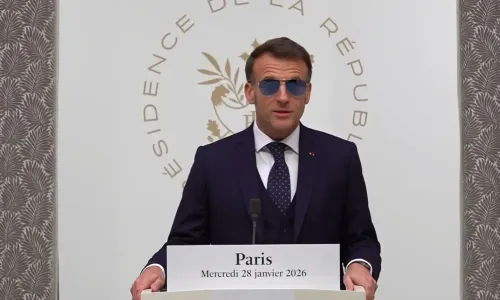
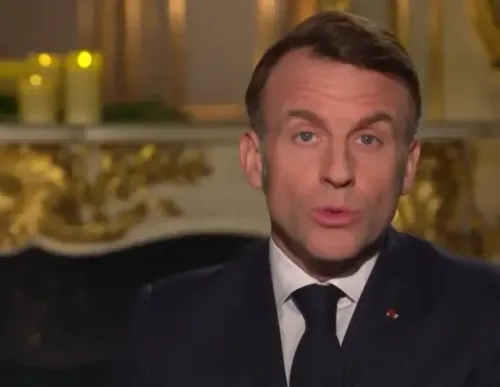
French President Emmanuel Macron described the tariff threat as "unacceptable," asserting that Europeans would respond in a unified and coordinated manner if the measures are enacted.
He highlighted France's involvement in a Denmark-led exercise in Greenland as a demonstration of France's dedication to national sovereignty and independence, emphasizing that "no intimidation or threat will sway us."
Greenland, the largest island in the world, functions as a self-governing territory under the Kingdom of Denmark, with Copenhagen retaining authority over defense and foreign affairs.
The U.S. operates a military base on the island. Since taking office in 2025, Trump has frequently expressed interest in "acquiring" Greenland.
Point of View
It's vital to recognize the importance of diplomatic relations among allies. The recent tariff threats from the U.S. raise significant concerns about transatlantic stability. It's crucial to foster dialogue instead of coercion to maintain peace and cooperation among NATO members.
NationPress
24 Sept 2026
Frequently Asked Questions
What countries are involved in the tariff threat situation?
The countries involved are Germany, Denmark, Finland, France, the Netherlands, Norway, Sweden, and the United Kingdom.
What is the main concern of these nations regarding the tariff threats?
The main concern is that these tariff threats undermine transatlantic relations and could lead to a dangerous downward spiral.
What is the response from European leaders to the tariff threats?
European leaders are advocating for dialogue and expressing solidarity with Denmark and Greenland against the tariff threats.
How has the U.S. President communicated about the tariffs?
U.S. President Donald Trump announced the tariff threats via a social media post, stating the potential for a 10 percent tariff starting February 1.
What is the significance of Greenland in this context?
Greenland is a self-governing territory under Denmark, and its strategic importance has been highlighted by U.S. interests in acquiring it.