Is the Rule of Law the Biggest Challenge in Bangladesh?
Synopsis
Bangladesh's Law Advisor Asif Nazrul emphasizes that the rule of law is the country's greatest challenge, yet progress is being made. With upcoming elections, concerns about violence against women and minority rights highlight the need for government accountability.
Key Takeaways
The rule of law is a pressing issue in Bangladesh.
Significant reforms have been undertaken recently.
Violence against women and minorities is on the rise.
Upcoming elections may see the lowest representation of women candidates.
Genuine commitment from the government is essential for lasting change.
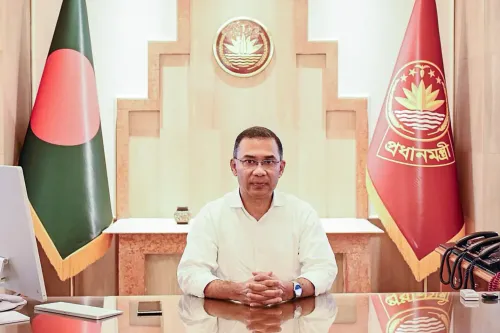
Dhaka, Jan 18 (NationPress) Bangladesh's Law Advisor Asif Nazrul acknowledged on Sunday that the establishment of the rule of law represents the most significant challenge facing the nation. Nevertheless, he emphasized that considerable advancements have been achieved in this area, as reported by local media.
Nazrul warned that attaining enduring success would be arduous without genuine dedication and commitment from the government elected after the general elections scheduled for February 12, according to United News of Bangladesh.
He stated, "While some claim that no reforms have occurred, it is unprecedented to witness such a substantial level of reform in Bangladesh's history within such a brief period."
Asif Nazrul delivered these comments during a policy dialogue titled ‘Judicial Independence and the Rule of Law’ organized by the Centre for Governance Studies (CGS) at the CIRDAP (Centre for Integrated Rural Development for Asia and the Pacific) auditorium in Dhaka.
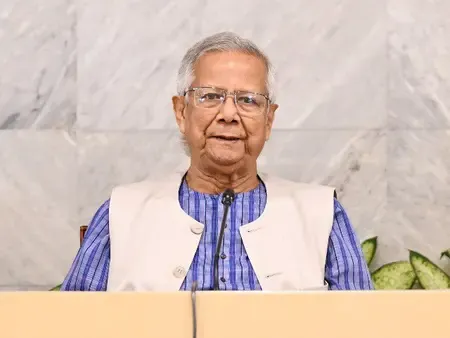
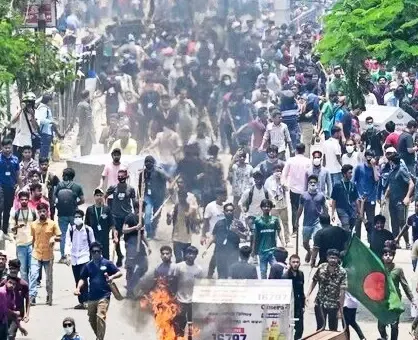
In the lead-up to the elections, incidents of violence against women, girls, and religious minorities have surged, highlighting the interim government led by Chief Advisor Mohammad Yunus's failure to safeguard the fundamental human rights of the populace.
Citing police statistics, the New York-based Human Rights Watch (HRW) recently indicated an increase in gender-based violence from January to June 2025, compared to the same period in 2024.
"Dr. Fauzia Moslem, President of the Bangladesh Mahila Parishad (Women's Council of Bangladesh or BMP), attributes this rise to heightened activity and rhetoric from religious factions aimed at restricting women's freedom of movement and societal participation. In May 2025, hardline religious groups protested against the interim government’s initiatives to enhance gender equality and women’s rights, demanding a cessation of activities they deemed 'anti-Islamic'. Since then, women and girls have faced verbal, physical, and digital harassment, further stifling their voices due to fear of violence," wrote Subhajit Saha, a Senior Coordinator in HRW's Women's Rights Division.
The general elections on February 12 will mark the first since the departure of a democratically elected government led by former Prime Minister Sheikh Hasina in August 2024.
The HRW report further detailed an uptick in violence against Hindu and ethnic minorities in recent months.
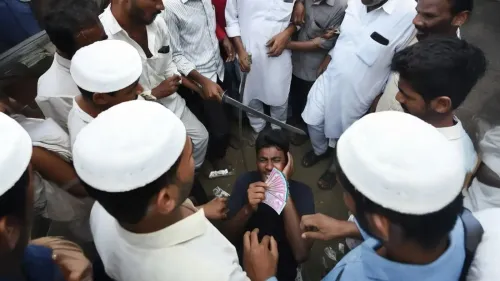
"In December, Dipu Chandra Das, a 27-year-old garment worker, lost his life at the hands of a mob over alleged blasphemy. Rights organizations have documented at least 51 incidents of violence against Hindus, including 10 fatalities. Ethnic minorities in the Chittagong Hill Tracts continue to endure abuse from security forces following the revolution," wrote Saha.
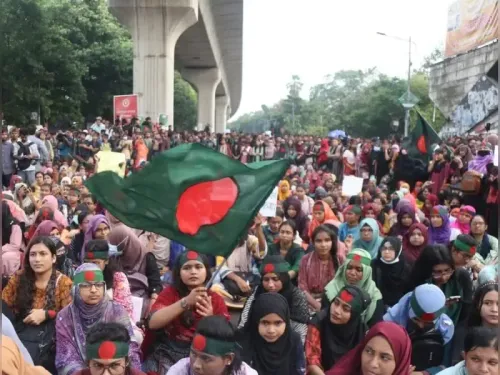
Despite Bangladesh having previously seen two women Prime Ministers and significant female participation in the 2024 student-led protests, women still face substantial barriers to political involvement. In the forthcoming general elections, 30 out of the 51 political parties lack any female candidates. Jamaat-e-Islami, an Islamist political party and one of Bangladesh’s leading political entities, has not nominated a single woman among its 276 candidates," he added.
Terming it a "matter of shame," multiple reports have indicated that the February elections will feature the lowest-ever representation of women candidates in Bangladesh's electoral history.
Point of View
It is crucial to approach the complexities of Bangladesh's political and social landscape with an unbiased lens. The ongoing challenges surrounding the rule of law and human rights violations demand attention and action from both the government and civil society. Our commitment is to report truthfully and advocate for positive change in the nation.
NationPress
23 Sept 2026
Frequently Asked Questions
What is the biggest challenge facing Bangladesh according to Law Advisor Asif Nazrul?
According to Law Advisor Asif Nazrul, establishing the rule of law is the biggest challenge in Bangladesh.
What significant progress has been made regarding the rule of law?
Nazrul noted that considerable reforms have been achieved in a short time, marking a notable shift in the country.
What are the concerns ahead of the upcoming elections?
There are rising concerns about violence against women, girls, and religious minorities, highlighting failures in protecting basic human rights.
How has gender-based violence changed recently?
Reports indicate an increase in gender-based violence from January to June 2025 compared to the same timeframe in 2024.
What is the representation of women candidates in the upcoming elections?
Reports suggest that the February elections will see the lowest participation of women candidates in Bangladesh's electoral history.