Is Trump’s New 10% Global Tariff a Response to Supreme Court Setback?
Synopsis
After the Supreme Court's ruling on his tariff authority, Trump has announced a new 10% global tariff to maintain his original trade agenda. This move underscores the ongoing tensions between the executive branch and judicial authority over trade policies.
Key Takeaways
Trump reacts strongly to the Supreme Court's tariff ruling.
New 10% global tariff announced to preserve tariff agenda.
Existing tariffs under Section 232 and Section 301 will remain.
Litigation may extend over the next few years.
Trade policy remains a contentious issue in US governance.
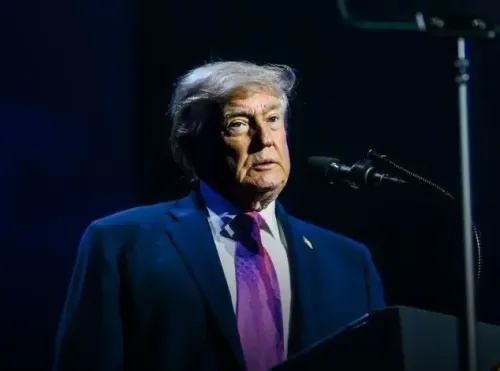
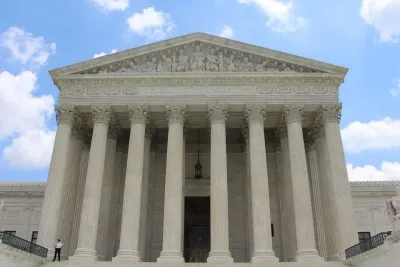
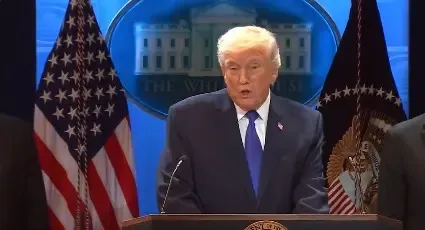
Washington, Feb 21 (NationPress) US President Donald Trump expressed his frustration with the Supreme Court after it rejected his use of a critical tariff authority, labeling the court's decision as "deeply disappointing". In response, he announced plans to utilize alternative statutes, including the introduction of a "10 percent global tariff", aimed at preserving his tariff agenda.
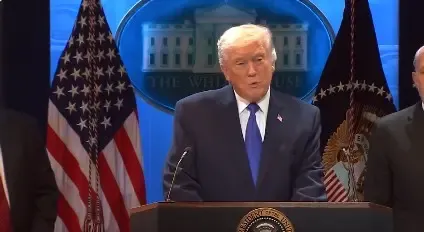
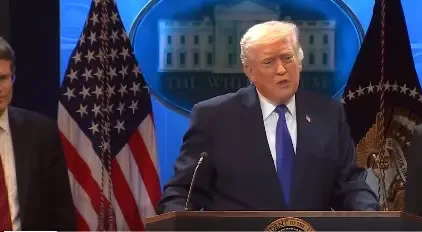
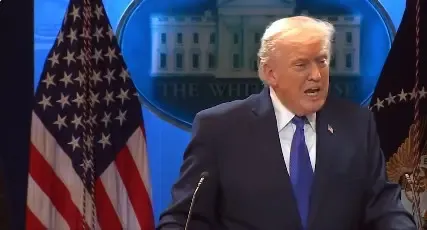
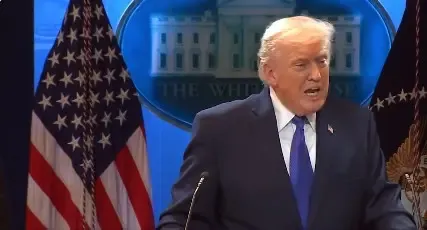
During a White House press briefing, Trump remarked: "The Supreme Court's ruling on tariffs is deeply disappointing, and I'm ashamed of certain members of the court, absolutely ashamed, for not having the courage to do what's right for our country," while expressing gratitude to Justices Clarence Thomas, Samuel Alito, and Brett Kavanaugh for their dissenting opinions.
The President asserted that the ruling did not terminate his tariff strategy; instead, it offered clarity on alternative options available to him.
"The good news is that there are methods, practices, statutes, and authorities as recognized by the entire court in this terrible decision... that are even stronger than the tariffs available to me as President of the United States," Trump stated.
He further explained: "The Supreme Court did not overrule tariffs; they merely overruled a particular use of IEEPA tariffs and essentially its use to get a fee," adding, "I can do anything I want with IEEPA's... anything, I just can't charge anybody for it."
Trump emphasized that existing tariffs would continue to be enforced, with new ones on the horizon.
"Therefore, effective immediately, all national security tariffs under Section 232 and existing Section 301 tariffs are remaining in place, fully in place and in full force and effect," he declared.
He also noted that the US administration is "initiating several Section 301 and other investigations to protect our country from unfair trading practices of other countries and companies."
When questioned about the need for Congressional action, Trump insisted, "You don't need to -- it's already been approved," asserting that he has the authority to impose tariffs, which he claims has been validated by Congress.
US Trade Representative Jameison Greer echoed Trump's sentiments, stating: "We have Section 122, which will be implemented today... We have Section 301 investigations, which are incredibly legally durable... and we're going to keep continuity in the program."
Trump pointed out a major uncertainty regarding the funds already collected.
When asked about the "$175 billion in tariff revenue... now in limbo" and the potential for refunds, he replied: "They take months and months to write an opinion, and they don't even discuss that point."
He remarked that the Supreme Court's ruling has left the matter open for further litigation.
"I guess it has to get litigated for the next two years," he noted, adding, "We'll end up being in court for the next five years."
Trump also highlighted the significance of tariffs to his economic narrative.
"Our stock market has just recently broken 50,000 on the Dow... and... broken 7,000 on the S&P," Trump mentioned, asserting that tariffs have revitalized factories. He recounted a steel executive’s remark, "Sir, I want to kiss you," in appreciation for his tariff implementation.
In the US, tariffs can be enacted under various laws, including provisions linked to national security (Section 232) and unfair trade practices (Section 301). IEEPA is a separate emergency powers statute that Presidents have utilized for specific economic restrictions.
Disputes over the extent of these powers frequently lead to litigation that can escalate to the Supreme Court.
Trade policy has long been a contentious arena among US Presidents, Congress, and the courts, with both Democratic and Republican administrations employing tariffs and negotiated agreements to exert pressure on trading partners, safeguard domestic industries, and achieve broader foreign policy objectives.
Point of View
I believe that this latest tariff announcement from President Trump highlights a persistent struggle between the executive and judicial branches regarding trade authority. While tariffs can serve as tools for economic protection, their implications on international relations and domestic markets must be carefully weighed to ensure a balanced approach.
NationPress
20 Sept 2026
Frequently Asked Questions
What is the purpose of the new 10% global tariff?
The new 10% global tariff aims to sustain President Trump's tariff agenda following the Supreme Court's ruling against his previous tariff authority.
How does this decision impact US trade policy?
This decision reinforces the ongoing tensions between the executive branch and the judiciary over trade policy, potentially leading to further legal disputes.
What are the existing tariffs that will remain in place?
Existing tariffs under Section 232 and Section 301 will continue to be enforced alongside the newly announced global tariff.
What does IEEPA stand for?
IEEPA stands for the International Emergency Economic Powers Act, which allows the President to impose economic restrictions during national emergencies.
Will Congress need to approve the new tariffs?
President Trump asserts that Congressional approval is not needed for the new tariffs, as he claims he has the authority to impose them.