Did US Business Groups and Lawmakers Celebrate the Supreme Court's Ruling Against Trump's Tariffs?
Synopsis
In a landmark decision, the Supreme Court has overturned President Trump's emergency tariffs, sparking approval from business groups and lawmakers. This ruling not only reaffirms congressional authority but also promises relief for businesses facing financial strains. Read more about the implications of this pivotal ruling and its impact on the economy.
Key Takeaways
Supreme Court annulled Trump's tariffs .
Ruling seen as a restoration of congressional authority .
Business groups call for refunds on unlawfully collected duties .
Concerns remain about potential future tariffs .
Decision could affect trade negotiations .
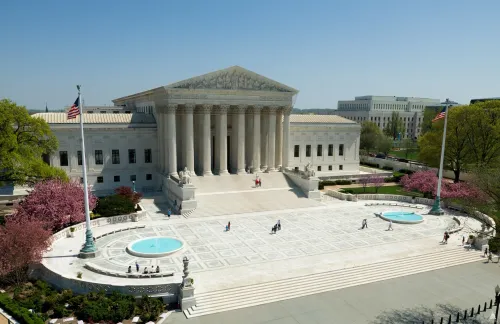
New York, Feb 21 (NationPress) US business entities, advocacy organizations, and legislators expressed their approval of a Supreme Court ruling that annulled President Donald Trump's authority to impose tariffs using emergency powers, viewing the verdict as a restoration of congressional authority and a relief for enterprises.
In a decisive 6-3 ruling, the Supreme Court concluded that the executive branch overstepped its boundaries by employing emergency powers to impose import taxes on numerous trading partners, declaring many of the tariffs enacted in the previous year as unlawful.
Neil Bradley, executive vice president and chief policy officer at the US Chamber of Commerce, remarked on Friday that the ruling constituted "excellent news for businesses and consumers," highlighting that companies had encountered considerable cost hikes and supply chain disruptions due to the tariffs.
He urged the administration to act promptly to reimburse unlawfully collected duties and to revise the overall tariff strategy to foster economic growth and reduce family expenses.
We Pay the Tariffs, a coalition advocating for small businesses, also demanded "complete, rapid, and automatic" refunds, stating that many of its members had incurred billions in duties that "should never have been enforced."
US Senator Mitch McConnell, a Republican from Kentucky, also praised the ruling, as reported by Xinhua news agency.
"The hollow merits of extensive trade wars with America's allies were apparent long before today's ruling," McConnell stated.
He added, "The American populace understands that when Washington erects artificial barriers, constructing and purchasing domestically becomes more expensive."
Edward Fishman, a former State Department and Treasury official now affiliated with the Council on Foreign Relations, indicated that the ruling might restrict the use of tariffs as an immediate geoeconomic response, although they could still be utilized in trade negotiations via other legal avenues.
Some business organizations expressed concern regarding persistent uncertainty, apprehensive that tariffs might be reintroduced through alternative statutory channels.
Point of View
This Supreme Court ruling represents a crucial moment in the ongoing discourse around trade and economic policy in the United States. By reaffirming the importance of congressional authority, it highlights the need for a balanced approach to international trade that safeguards both business interests and consumer welfare.
NationPress
30 Sept 2026
Frequently Asked Questions
What was the Supreme Court's ruling about Trump's tariffs?
The Supreme Court ruled 6-3 that President Trump's use of emergency powers to impose tariffs was unconstitutional, declaring many tariffs illegal.
How did business groups respond to the ruling?
Business groups welcomed the ruling as a relief for companies and consumers, emphasizing that it restores congressional authority over trade policies.
What are the implications of this decision?
The ruling may limit the use of tariffs as a quick-response tool in trade negotiations, though alternative legal channels remain available.
What did Senator Mitch McConnell say about the ruling?
Senator McConnell celebrated the ruling, indicating that the negative consequences of trade wars with allies were evident prior to the decision.
Are businesses concerned about future tariffs?
Yes, some business groups have indicated that there is still uncertainty, fearing that tariffs could be reinstated through other statutory mechanisms.