Trump seeks $11.1 billion farm aid as US agriculture faces record income drop

Synopsis
US farm income collapsed by more than $90 billion in a single year — one of the largest annual drops on record — as fertiliser costs surged 50% and 200,000 farms disappeared over the past decade. The Trump administration's $11.1 billion emergency ask to Congress is a direct response, but gaps in disaster coverage are already drawing bipartisan fire on Capitol Hill.
Key Takeaways
The Trump administration has requested $11.1 billion in agricultural assistance from Congress as part of a $87.6 billion supplemental funding package. $10 billion targets row-crop and speciality-crop producers in 2026 ; $1.1 billion addresses losses from catastrophic winter freezes.
US farm income fell by more than $90 billion between 2023 and 2024 , one of the largest annual declines on record.
Fertiliser costs rose more than 50% between 2020 and 2025 ; the US agricultural trade deficit hit $50 billion .
The US lost 200,000 farms over the past decade, according to Senator Susan Collins .
Bipartisan lawmakers pushed for broader disaster coverage; the administration said it supports all categories of farm disaster relief.
The Trump administration has asked Congress for $11.1 billion in emergency agricultural assistance, citing rising production costs, a record collapse in farm income, and mounting natural disaster losses as existential pressures on American farmers. The request, submitted on 22 July, forms part of President Donald Trump's broader $87.6 billion supplemental funding package.
What the Package Covers
Agriculture Secretary Brooke Rollins presented the proposal before the Senate Appropriations Committee, breaking it into two components. The larger share — $10 billion — is earmarked as temporary economic assistance for row-crop and speciality-crop producers in 2026. The remaining $1.1 billion is directed at recovery from catastrophic freezes that struck during the previous winter.
'This supplemental is so important. It provides a bridge and extends a hand to Americans who need it,' Rollins told the committee.
The Scale of the Crisis
Rollins laid out a stark picture of cost escalation across the agricultural supply chain between 2020 and 2025: seed costs rose 19%, crop protection expenses climbed 30%, and fertiliser costs surged more than 50%. Fuel and oil costs increased nearly 33%, electricity rose 36%, and repair and maintenance expenses were up 27%.
Against that backdrop, farm income fell by more than $90 billion between 2023 and 2024 — one of the largest annual declines on record, according to Rollins. The US agricultural trade deficit reached $50 billion over the same period.
Voices from the Senate
Republican Senator Mike Rounds said farmers were producing crops at a loss, placing the projected 2026 loss per acre at $131 for corn, $342 for cotton, $114 for wheat, and $80 for soybeans. 'Farmers and ranchers are facing production costs that exceed market returns,' Rounds said.
Senate Appropriations Committee Chair Susan Collins noted that the United States had lost 200,000 farms over the past decade, with producers squeezed by falling commodity prices, labour shortages, trade disruptions, pests, disease, and increasingly volatile weather.
Gaps in the Proposal Draw Scrutiny
Lawmakers from both parties pressed Rollins to extend coverage to farmers affected by disasters not included in the current request. Collins questioned why the proposal addressed the most recent freeze but omitted earlier agricultural losses from drought and excessive rainfall in other states. Rollins responded that the administration was 'obviously 100 per cent in support of any sort of disaster relief program for our farmers, whether it's hurricane or tornado, drought, freeze, etc.'
Longer-Term Outlook
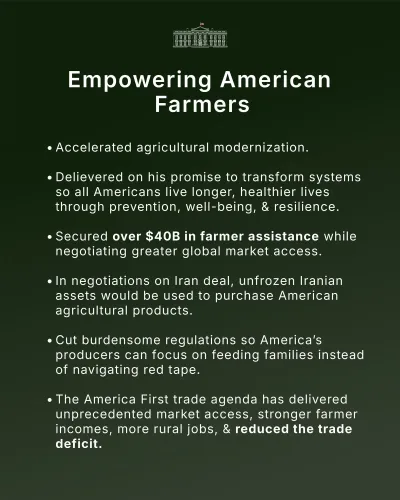
The administration argued that structural measures were beginning to stabilise the agricultural economy. Rollins said the agricultural trade deficit had declined by 42% in one year and that 19 new trade agreements had been secured. She added that the administration was pursuing expanded biofuel markets and working to reshore fertiliser and other agricultural production to the United States.
This comes amid a broader historical pattern: Congress has frequently folded emergency farm assistance into supplemental spending legislation during periods of depressed prices or trade disruption, making the current request consistent with precedent even as its scale stands out. With global fertiliser markets tightly linked to energy costs and US commodity exports influencing food prices across import-dependent economies in Asia and beyond, the outcome of this request carries implications well beyond American borders.
Point of View
But the bipartisan criticism over coverage gaps reveals a structural problem: emergency farm bills in the US have long been reactive and geographically uneven, compensating the most recent disaster while leaving earlier losses unaddressed. The 200,000-farm loss figure over a decade points to a consolidation crisis that no supplemental package alone can reverse. Meanwhile, the administration's claim of a 42% reduction in the agricultural trade deficit in one year deserves independent scrutiny — the same period saw the overall deficit reach $50 billion, suggesting the baseline math warrants closer examination. The real question is whether Congress will pass this as a standalone measure or fold it into a larger spending fight, which could delay relief well into the 2026 crop cycle.
NationPress
20 Oct 2026
Frequently Asked Questions
What is the $11.1 billion farm aid package requested by the Trump administration?
It is an emergency agricultural assistance package submitted to Congress on 22 July, comprising $10 billion in temporary support for row-crop and speciality-crop producers in 2026 and $1.1 billion for recovery from catastrophic winter freezes. The request is part of President Trump's broader $87.6 billion supplemental funding bill.
Why are US farmers in financial distress?
US farm income fell by more than $90 billion between 2023 and 2024 — one of the largest annual declines on record — while production costs surged. Fertiliser costs rose over 50%, seed costs climbed 19%, and fuel costs increased nearly 33% between 2020 and 2025, squeezing margins to the point where many crops are being produced at a loss.
How much are farmers losing per acre in 2026?
According to Senator Mike Rounds, projected 2026 losses stand at $131 per acre for corn, $342 for cotton, $114 for wheat, and $80 for soybeans, reflecting production costs that consistently exceed market returns.
Why are some lawmakers criticising the proposal?
Senators from both parties, including Committee Chair Susan Collins, questioned why the $1.1 billion disaster component covers only the most recent freeze and not earlier losses from drought and excessive rainfall in other states. Agriculture Secretary Rollins said the administration supports all forms of farm disaster relief but did not commit to expanding the current proposal.
What longer-term measures is the administration taking for US agriculture?
The administration says the agricultural trade deficit has declined by 42% in one year and that 19 new trade agreements have been secured. It is also pursuing expanded biofuel markets and working to reshore fertiliser and agricultural input production back to the United States.