Trump Administration Considers Fertilizer Relief for Farmers Amid Rising Costs
Synopsis
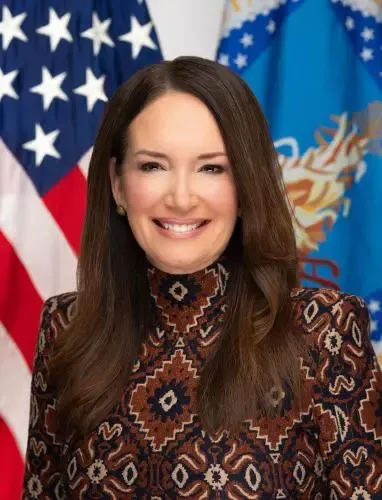
As American farmers face increasing fertilizer costs due to global tensions, the Trump administration is exploring measures to provide financial relief. Agriculture Secretary Brooke Rollins has indicated that solutions are in the pipeline as farmers gear up for the spring planting season.
Key Takeaways
Rising fertilizer costs are a concern for American farmers due to global tensions.
The Trump administration is exploring financial relief measures for farmers.
Most funds from the previous $12 billion relief package have already been distributed.
An additional $1 billion in aid for specialty crops is on the way.
The administration emphasizes the importance of trade policy in supporting agriculture.
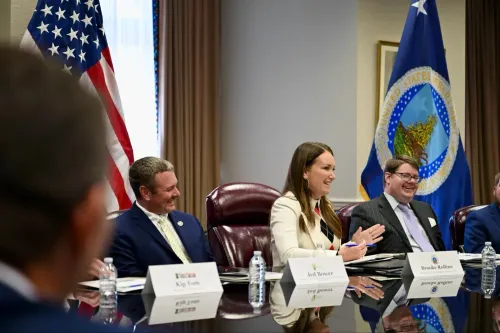
Washington, March 14 (NationPress) The Trump administration is contemplating various measures to protect American farmers from escalating fertilizer expenses stemming from international tensions, particularly involving Iran, as stated by US Agriculture Secretary Brooke Rollins during a press briefing at the White House.
In her remarks to the media, Rollins highlighted the administration's vigilance regarding fertilizer markets as farmers nationwide approach the vital spring planting period.
“Given the current situation in Iran and its impact on nitrogen and urea—essential components of fertilizer—our farmers are entering the planting season,” she elaborated.
Rollins indicated that the White House is evaluating several strategies to mitigate rising input costs for farmers, although a formal announcement has yet to be made.
“The president is acutely aware of these challenges,” she noted, adding, “We are on the verge of announcing solutions to address these issues.”
She further mentioned that officials are exploring all possible policy options.
“We're investigating every possible route to keep fertilizer prices manageable as we head into planting season,” she explained. “While we don’t have significant announcements yet, they are forthcoming.”
According to Rollins, the administration is also collaborating with Congressional leaders regarding potential financial support for farmers should costs escalate further.
“I have been in discussions with lawmakers as they consider additional funding for our farmers,” she stated.
When asked if a second relief package might be on the table, she confirmed that the administration remains open to all possibilities.
“Everything is under consideration,” she said.
These remarks come as the administration implements previously announced financial aid for farmers. Officials reported that most funds from an earlier relief package have already been distributed.
“The initial relief package, valued at $12 billion, was announced on December 6,” Rollins said, specifying that “$11 billion was allocated for our row crop farmers.”
“This funding became available about two weeks ago under our new Farmer One File initiative, enabling us to expedite disbursements significantly compared to historical USDA timelines,” she added.
Rollins indicated that around two-thirds of those funds have already reached farmers. “Yes, nearly two-thirds of that money has been distributed,” she affirmed.
The department is also preparing to announce another round of assistance aimed at specialty crops.
“We are nearing the release of the additional $1 billion we discussed for specialty crops,” she stated. “We are finalizing the formulas for that and will announce details very soon.”
Additionally, the secretary mentioned that the administration is examining broader structural challenges in the agricultural sector, including the rising costs of essential farm inputs.
Rollins noted that federal authorities are also investigating consolidation in segments of the agricultural supply chain.
“The Department of Justice is reviewing all of these aspects,” she remarked, referring to fertilizer and seed companies, as well as processors.
Trade policy was also emphasized as a crucial aspect of the administration's agricultural strategy.
“When we last left this White House, we had an agricultural trade surplus,” she recounted. “Now, four years later, we are facing a $50 billion agricultural trade deficit.”
“In the past year, we have established 18 new trade agreements, thanks to President Trump, who consistently champions our farmers,” she concluded.
The United States stands as one of the globe's foremost agricultural producers and exporters, with agricultural exports historically playing a significant role in its trade balance. American farmers heavily depend on fertilizers like nitrogen and urea, which are intricately linked to global energy and commodity markets.
Point of View
The actions of the Trump administration indicate a significant response to the challenges faced by American farmers. The administration's commitment to exploring a variety of strategies for financial relief demonstrates a proactive approach in addressing the rising costs of essential agricultural inputs, ensuring farmers receive the support they need.
NationPress
1 Oct 2026
Frequently Asked Questions
What measures is the Trump administration considering for farmers?
The administration is contemplating various strategies to shield farmers from rising fertilizer costs, particularly those linked to global tensions, including discussions of potential financial assistance.
How is the current fertilizer situation affecting farmers?
Farmers are facing increased costs for essential fertilizers like nitrogen and urea, which are crucial for the upcoming planting season.
What was included in the previous relief package for farmers?
The previous relief package amounted to $12 billion, primarily aimed at row croppers, with $11 billion specifically allocated for them.
Is there any new financial assistance for specialty crops coming soon?
Yes, the administration is finalizing an additional $1 billion in assistance focused on specialty crops, with an announcement expected shortly.
What role does trade policy play in the administration's agricultural strategy?
Trade policy is a key component, as the administration has recently established 18 new trade agreements, aiming to address the agricultural trade deficit.