Trump Heads to Wisconsin to Address Farmers on Agriculture
Synopsis
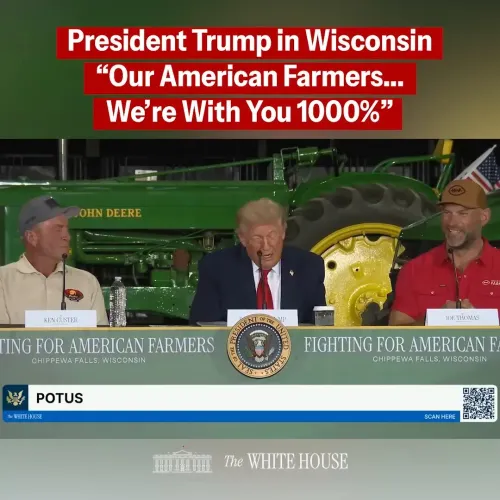
President Donald J. Trump visited Chippewa Falls, Wisconsin, on June 5, 2026, to speak to farmers on American agriculture. The visit continues a pattern of presidential outreach to rural communities and signals continued focus on farm policy, trade protection, and domestic agricultural support.
Key Takeaways
President Trump travelled to Chippewa Falls, Wisconsin on June 5, 2026 to address farmers on American agriculture.
Wisconsin is one of the leading dairy-producing states in the US, making it a key venue for agricultural policy messaging.
During his first term, Trump disbursed more than $23 billion via the Market Facilitation Program to offset farm losses from retaliatory tariffs.
The Agricultural Improvement Act (Farm Bill) was signed by Trump in 2018 , reauthorising major commodity and conservation programmes.
Farm organisations and congressional agriculture committees are expected to respond to any policy signals from the speech.
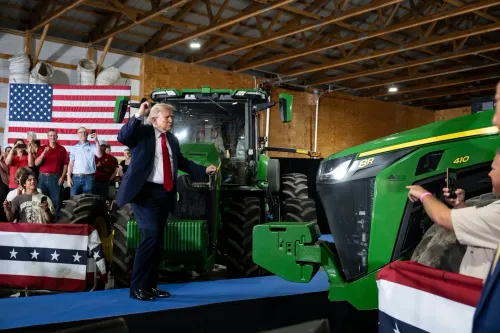
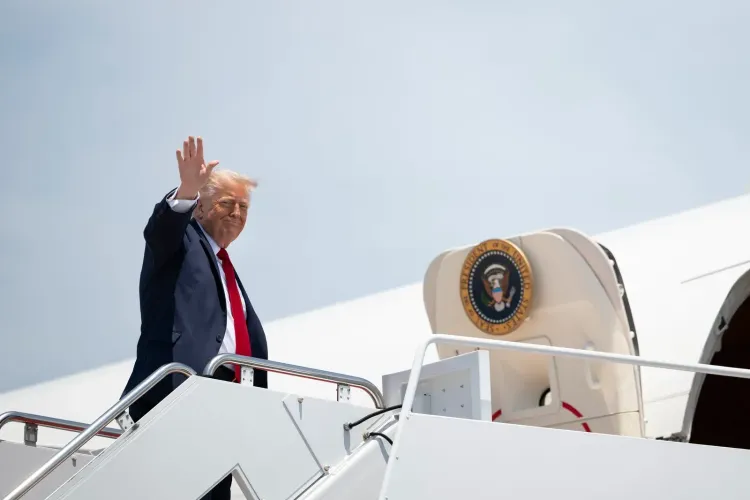
President Donald J. Trump travelled to Chippewa Falls, Wisconsin, on Friday, June 5, 2026, to deliver a speech to farmers on American agriculture, the White House announced via its official communications account.
Context
The White House posted on X that President Trump was heading to Chippewa Falls 'to speak to farmers on American agriculture,' signalling a direct presidential engagement with one of the country's most politically significant rural constituencies. Chippewa Falls sits in a region of Wisconsin with dense dairy and crop farming activity, making it a symbolically and practically apt venue for such outreach.
Wisconsin is among the leading dairy-producing states in the United States, and its agricultural economy has historically been sensitive to shifts in federal trade policy, commodity support programmes, and export market access. The state has repeatedly served as a focal point for presidential messaging on farm issues given its electoral weight and concentration of dairy and specialty-crop operations.
Policy Backdrop
The visit draws on a well-established policy lineage from Trump's first term. In 2018, President Trump signed the Agricultural Improvement Act — commonly known as the Farm Bill — reauthorising major commodity, conservation, and nutrition programmes for American farmers.
Between 2018 and 2020, the Trump administration disbursed more than $23 billion in Market Facilitation Program payments to offset losses suffered by soybean, pork, and dairy producers from Chinese retaliatory tariffs. Those payments became a defining feature of the administration's 'America First' agricultural posture, blending trade confrontation with direct federal support to insulate domestic producers from fallout.
The broader pattern reflects a Republican administration priority: using executive authority and trade-protection measures to shore up commodity prices and signal solidarity with rural America. Wisconsin dairy producers in particular have experienced the downstream effects of both tariff disputes and federal subsidy cycles over the past decade.
Stakeholders and Impact
American farmers — and Wisconsin dairy producers specifically — are the primary audience for the visit. Farm organisations and congressional agriculture committees will be closely watching any signals that emerge from the speech regarding new executive actions, legislative proposals on farm subsidies, or shifts in export-promotion strategy.
Rural communities across the Midwest have long viewed direct presidential visits as an indicator of political prioritisation. For Wisconsin farmers, a presidential address on agriculture carries both policy and symbolic weight, particularly in the context of ongoing debates over trade agreements and domestic commodity support.
What's Next
Observers will monitor whether the Chippewa Falls visit is followed by concrete executive actions or legislative proposals touching on farm subsidies, tariff structures, or export promotion. Reactions from major national farm organisations and the congressional agriculture committees in both chambers are expected to follow the speech.
The visit reinforces a long-standing pattern of presidential outreach to agricultural communities and underscores Wisconsin's continued centrality in the political geography of American farm policy heading further into 2026.
Point of View
Trump reinforces the 'America First' agricultural narrative that defined his first term — blending trade protectionism with direct federal support. For Indian observers, the visit is a reminder that US farm policy decisions, particularly on tariffs and export promotion, carry downstream consequences for global commodity markets including those affecting Indian agricultural exports. The key question is whether the speech produces actionable policy or remains a messaging exercise ahead of a politically sensitive electoral cycle.
NationPress
22 Sept 2026
Frequently Asked Questions
Why did President Trump visit Chippewa Falls, Wisconsin?
President Trump visited Chippewa Falls, Wisconsin, on June 5, 2026, to speak directly to farmers about American agriculture policy, continuing a pattern of presidential outreach to rural communities.
What is Wisconsin's significance for US agriculture?
Wisconsin is one of the leading dairy-producing states in the United States, and its agricultural economy has been significantly affected by federal trade policies, tariffs, and commodity support programmes.
What was the Market Facilitation Program?
The Market Facilitation Program was a Trump administration initiative that disbursed more than $23 billion between 2018 and 2020 to compensate American farmers — including soybean, pork, and dairy producers — for losses caused by Chinese retaliatory tariffs.
What is the Farm Bill and did Trump sign it?
The Farm Bill, formally the Agricultural Improvement Act, is a major piece of US legislation reauthorising commodity, conservation, and nutrition programmes for farmers. President Trump signed it in 2018.
What should Indian farmers and traders watch for after Trump's Wisconsin speech?
Indian stakeholders should watch for any new executive actions on US farm subsidies, tariff structures, or export promotion, as these can affect global commodity prices and trade flows relevant to Indian agriculture.