Pralhad Joshi Breaks Ground for 4 New Classrooms in Dharwad Village
Synopsis
Union Minister Pralhad Joshi broke ground for four new classrooms at Bandivada village's government primary school in Dharwad, after heavy rain destroyed the roof. Tata Hitachi is funding the ₹75 lakh construction under CSR, linking the local repair to India's national rural education push.
Key Takeaways
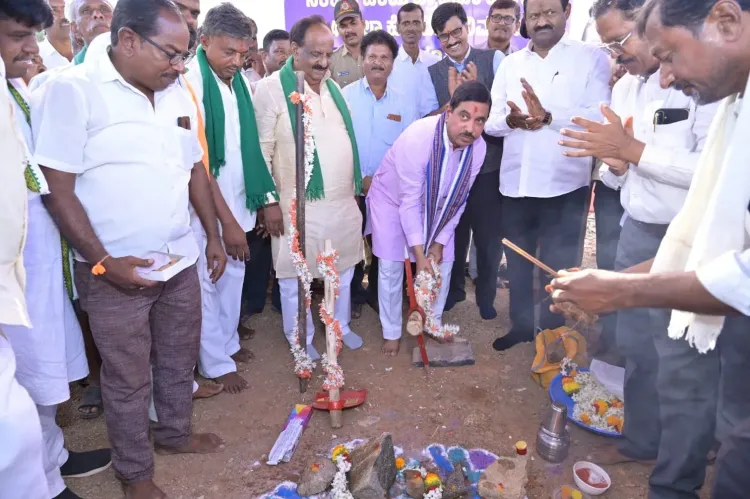
Bhoomi puja for four new school classrooms held on 6 November 2026 at the Government Senior Primary School, Bandivada village, Navalgund taluk, Dharwad .
Heavy rain and wind recently destroyed the school's roof, prompting the emergency intervention.
Tata Hitachi is funding the construction with a ₹75 lakh CSR grant , brokered directly by Minister Joshi.
Konaraddy , former MLA Shankar Patil Munenakoppa , and Tata Hitachi Plant Head Govinda Rao Kulkarni attended the ceremony.
Joshi cited PM Narendra Modi's government priority of strengthening rural educational infrastructure as the broader mandate behind the move.
The initiative aligns with the Samagra Shiksha Abhiyan (2018) and National Education Policy 2020 goals of equitable, quality schooling in rural India.
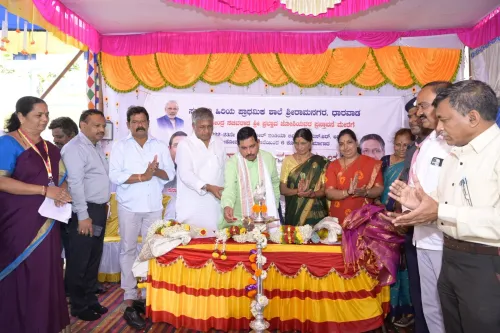
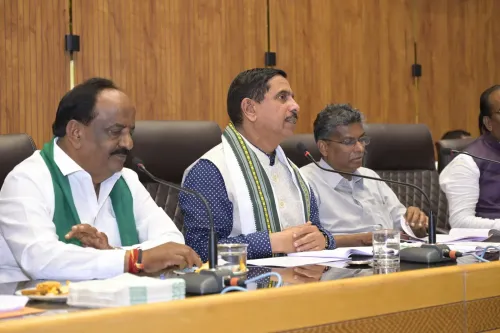
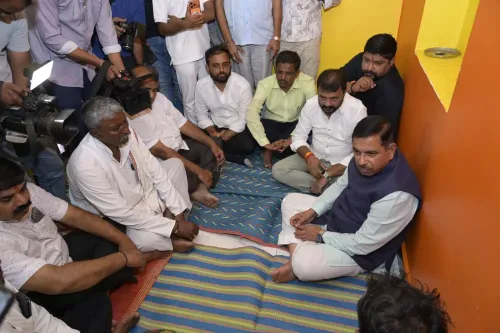
When a storm tore the roof off the Government Senior Primary School in Bandivada village, Navalgund taluk, it could have meant months of disrupted learning for the children inside. Instead, Union Consumer Affairs Minister Pralhad Joshi moved fast — and on Friday, 6 November 2026, he was on the ground in Dharwad to break earth for four brand-new classrooms funded entirely through corporate social responsibility.
Posting in Kannada, Minister Joshi described the moment: 'ನೂತನ 4 ಶಾಲಾ ಕೊಠಡಿಗಳ ಭೂಮಿಪೂಜಾ ಸಮಾರಂಭ' — the 'bhoomi puja (ground-breaking) ceremony for four new school rooms' — and explained that the moment news of the collapsed roof reached him, he immediately convened discussions with officials and reached out to Tata Hitachi to channel ₹75 lakh in CSR funding toward the reconstruction.A roof falls, four classrooms rise: how the intervention unfolded
Heavy rain and wind had stripped the roof off the school, leaving students and teachers exposed. Joshi's account underlines that the response was swift: rather than waiting for a budgetary allocation, he personally co-ordinated with Tata Hitachi Plant Head Govinda Rao Kulkarni to unlock CSR funds. The ₹75 lakh grant will finance construction of the four new rooms, replacing what the storm destroyed and adding permanent, weather-resilient infrastructure.
The minister was joined at the ceremony by MLA N.H. Konaraddy, former MLA Shankar Patil Munenakoppa, Dharwad Rural BJP District President Ningappa Sutagatti, SDMC Chairman Mahantesh Asundi, and a gathering of teachers, local leaders, and community members — a signal of the cross-party civic interest the school's plight had generated.
Rural school safety and the national education push
Joshi linked the initiative to the Modi government's broader commitment to strengthening educational infrastructure in rural India, noting that every student deserves a 'safe, good, and quality learning environment.' That framing connects the local event to two larger policy frameworks: the Samagra Shiksha Abhiyan — launched in 2018 to integrate and upgrade school infrastructure nationwide — and the National Education Policy 2020, which placed equitable access to quality schooling at its centre.
CSR-driven school reconstruction has quietly become a practical bridge between those national ambitions and ground-level reality, particularly in rural Karnataka where ageing government school buildings remain vulnerable to seasonal weather damage. Tata Hitachi's role here is a textbook example: corporate funds filling a gap that government capital budgets can take months to mobilise.
What the new classrooms mean for Bandivada's children
Four classrooms for a single primary school in a village taluk may sound modest on a national scale. It is transformative at the village level. Overcrowded or damaged rooms suppress attendance, demoralise teachers, and — as the recent roof collapse showed — pose real safety risks. The new block, once complete, will give Bandivada's students a structurally sound space regardless of the monsoon's severity next year.
The question now is whether this CSR model — a minister spotting a problem, calling a corporate partner, and cutting through procurement timelines — can be replicated systematically across the dozens of rain-damaged rural schools that rarely make it onto a minister's radar.
Point of View
Particularly for rural infrastructure damaged in weather events. For Joshi, whose political base is rooted in the Dharwad belt, the move serves both a genuine constituency need and a visible demonstration of responsive governance ahead of the Karnataka election cycle. Nationally, the incident highlights how the Samagra Shiksha Abhiyan's grand infrastructure mandate still depends, at the last mile, on individual ministerial initiative rather than systematic institutional response. The CSR channel — agile but ad hoc — will need to be formalised if it is to close the rural school repair backlog at any meaningful scale.
NationPress
6 Nov 2026
Frequently Asked Questions
Why are four new classrooms being built at Bandivada village school in Dharwad?
Recent heavy rain and wind destroyed the school's existing roof, making classrooms unsafe. Union Minister Pralhad Joshi intervened to arrange ₹75 lakh in Tata Hitachi CSR funding for four brand-new classrooms to replace the damaged structure.
Who is funding the new school classrooms in Bandivada, Navalgund?
Tata Hitachi is funding the construction under its Corporate Social Responsibility (CSR) programme, contributing ₹75 lakh after Minister Pralhad Joshi personally co-ordinated with the company's officials.
What is bhoomi puja and why was it held at Bandivada school?
Bhoomi puja is a traditional ground-breaking ceremony performed in India before construction begins. It was held at the Government Senior Primary School in Bandivada on 6 November 2026 to formally launch the construction of the four new classrooms.
What is Samagra Shiksha Abhiyan and how does it relate to this project?
Samagra Shiksha Abhiyan, launched in 2018, is a central government scheme to integrate and strengthen school education infrastructure across India, particularly in rural areas. The Bandivada classroom project reflects its broader goal of providing safe, quality learning environments in government schools.
Which leaders attended the Bandivada school ground-breaking ceremony with Pralhad Joshi?
MLA N.H. Konaraddy, former MLA Shankar Patil Munenakoppa, Dharwad Rural BJP District President Ningappa Sutagatti, Tata Hitachi Plant Head Govinda Rao Kulkarni, and SDMC Chairman Mahantesh Asundi were among those present.