CM Fadnavis accelerates Marathwada Water Grid with JICA
Synopsis
Chief Minister Devendra Fadnavis met JICA officials in Mumbai on 6 November 2026 to accelerate the Marathwada Water Grid — a ₹25,056 crore pipeline network spanning 8 districts, with JICA signalling ₹20,000 crore in loans for Phase 1 covering 4 districts and 1 crore beneficiaries.
Key Takeaways
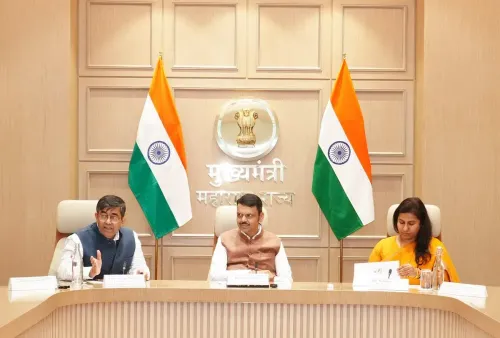
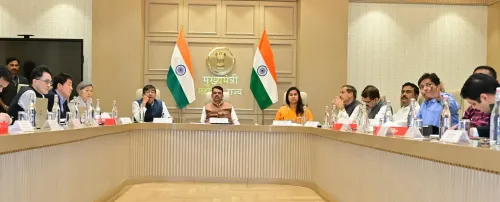
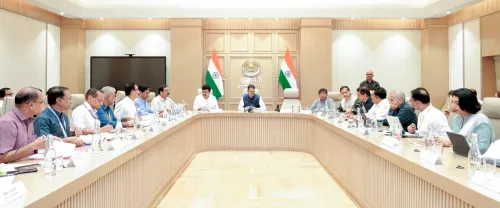
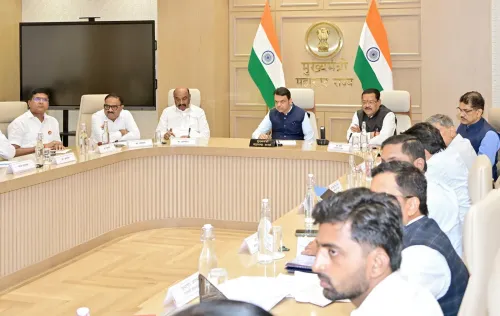
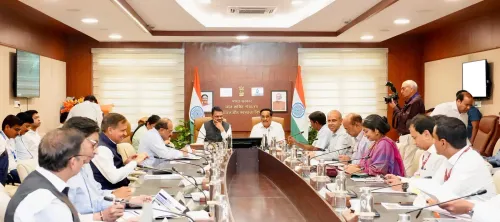
CM Devendra Fadnavis chaired a JICA delegation meeting at Varsha residence, Mumbai, on 6 November 2026 to fast-track the Marathwada Water Grid.
Phase 1 covers Chhatrapati Sambhajinagar, Beed, Latur, and Dharashiv , interlinking six reservoirs via approximately 3,095 km of pipelines and 15 water purification centres .
JICA has indicated positive intent to provide approximately ₹20,000 crore in loan assistance for Phase 1; total project cost estimated at ₹25,056 crore for all 8 districts.
Around 1 crore citizens are projected to benefit directly; industrial zones in Chhatrapati Sambhajinagar will also receive sustainable water supply.
Japanese earthquake-resistant technology — including ductile iron pipes, modern pumps, and SCADA systems — will be deployed, addressing seismic risks in Latur and Dharashiv.
The state has targeted project completion by 2029 ; immediate next steps include submitting the preliminary report to the Department of Economic Affairs and appointing a Project Management Consultant.
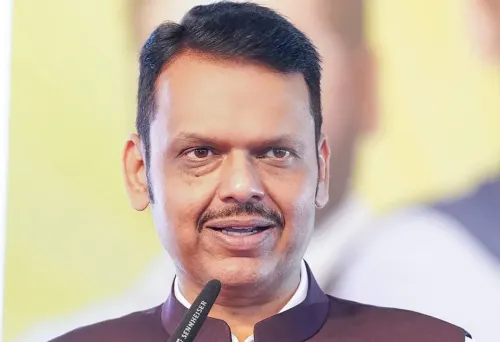
A region that has lived under the shadow of drought for decades may finally be getting a permanent answer. Chief Minister Devendra Fadnavis chaired a high-stakes meeting at Varsha residence, Mumbai, on 6 November 2026 with a delegation from the Japan International Cooperation Agency (JICA), directing officials to fast-track the Marathwada Water Grid Project — a pipeline network designed to end chronic water scarcity across eight districts of eastern Maharashtra.
What the grid is built to do
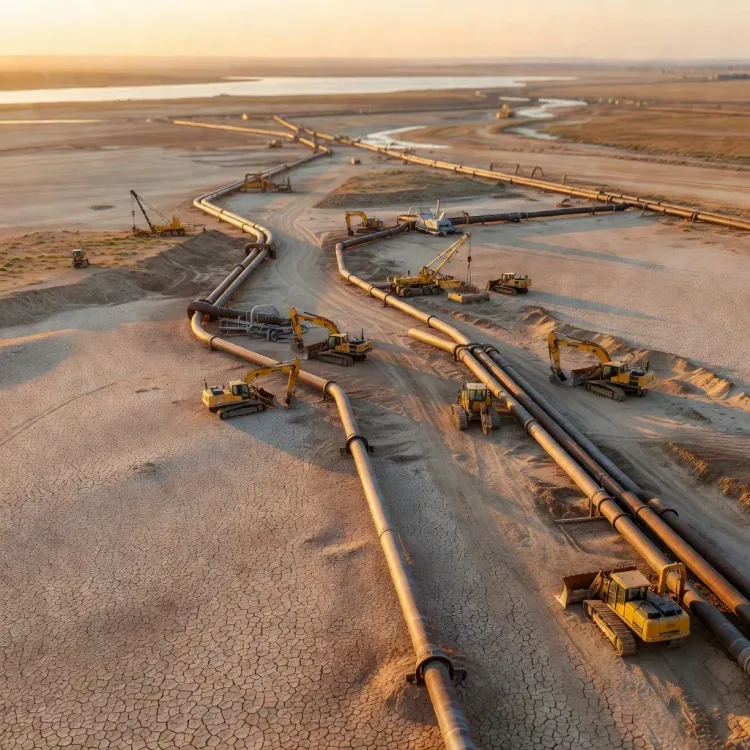
The project's core logic is deceptively simple: Marathwada's water problem is not just one of quantity — it is one of geography. Some reservoirs overflow while drought-struck districts run dry. The Water Grid fixes that by connecting surplus dams to deficit ones through enclosed pipelines, using a twin-flow system to push water where it is needed most.
In Phase 1, four districts come first: Chhatrapati Sambhajinagar, Beed, Latur, and Dharashiv. Six reservoirs — Jayakwadi, Majalgaon, Manjara, Ujani, Nima Terna, and Nima Manar — will be interlinked. The infrastructure involved is massive: approximately 3,095 kilometres of primary and secondary pipelines and 15 water purification centres. The government says roughly 1 crore citizens will benefit directly.
JICA's ₹20,000 crore loan signal
The meeting produced a critical financial milestone. JICA has indicated a positive response to providing approximately ₹20,000 crore in loan assistance for the first phase alone. The total estimated cost of the full eight-district grid stands at around ₹25,056 crore — one of the largest water infrastructure commitments in Maharashtra's history.
Two of the four Phase-1 districts — Latur and Dharashiv — lie in seismically active zones, a complication Japan is uniquely positioned to address. The project will deploy Japanese earthquake-resistant construction techniques, including ductile iron pipes, modern pumping systems, and a SCADA (Supervisory Control and Data Acquisition) network for real-time monitoring. Latur, of course, is the district that bore the brunt of the devastating 1993 earthquake — the choice of Japanese seismic expertise here carries particular weight.
Industrial zones in the frame
The grid's benefits extend beyond farms and households. Auric City, Shendra-Bidkin, and Waluj industrial corridors in Chhatrapati Sambhajinagar are explicitly earmarked to receive sustainable water supply under the project — a signal that the state sees the grid as an economic enabler, not just a relief measure.
The AVGC thread and the February 'Manga Caravan'
The JICA meeting also touched on a separate but telling strand of India-Japan collaboration. Maharashtra is working with Japanese companies and the Indian Institute of Creative Technologies (IICT) to position the state as a global hub for the Animation, Visual Effects, Gaming, and Comics (AVGC) sector. A 'Manga Caravan' is slated for Mumbai in February — an event CM Fadnavis formally welcomed, underscoring how Maharashtra is weaving cultural and creative diplomacy into its broader Japan partnership.
The 2029 deadline and what happens next
Fadnavis issued direct instructions at the meeting: upload the preliminary project report without delay and dispatch it to the Department of Economic Affairs under the central government. A Project Management Consultant will be appointed and a Detailed Project Report (DPR) prepared in coordination with JICA. Planning has been calibrated to achieve physical completion by 2029.
The meeting was attended by Minister Gulabrao Patil (online), Minister of State Meghna Bordikar, and JICA India Chief Representative Takeuchi Takuro, among other senior officials. Maharashtra has signalled it will deepen Japan cooperation across water, transport, environment, and technology — with Marathwada's drought crisis as the most urgent test of that promise.
One crore people are waiting for pipes that actually carry water. The clock to 2029 has started.
Point of View
Fadnavis is effectively converting a chronic regional grievance into a bankable infrastructure commitment with international accountability. The SCADA and seismic-tech components signal that Maharashtra is benchmarking this against global water management standards, not just domestic schemes. The simultaneous AVGC-Japan thread reveals a deliberate strategy: use the JICA relationship as a gateway to deeper bilateral engagement across sectors, giving Maharashtra a distinct foreign-investment identity within India's federal landscape.
NationPress
6 Nov 2026
Frequently Asked Questions
What is the Marathwada Water Grid Project?
It is a planned pipeline network that will interlink dams with surplus water to drought-prone reservoirs across eight districts of Marathwada in eastern Maharashtra, aiming to permanently resolve the region's chronic water scarcity.
Which districts are covered in Phase 1 of the Marathwada Water Grid?
Phase 1 covers four districts: Chhatrapati Sambhajinagar, Beed, Latur, and Dharashiv, with six major reservoirs to be interlinked.
What is JICA's role in the Marathwada Water Grid?
JICA — the Japan International Cooperation Agency — has indicated a positive response to providing approximately ₹20,000 crore in loan assistance for Phase 1 of the project, and will also assist in preparing the Detailed Project Report.
What is the total cost and timeline for the Marathwada Water Grid?
The estimated cost for the full eight-district grid is approximately ₹25,056 crore. The government has planned to complete physical work by 2029.
Why is Japanese earthquake-resistant technology being used in the Marathwada project?
Latur and Dharashiv districts fall in seismically active zones, making earthquake-resistant construction essential. Japan's expertise in this area — including ductile iron pipes and SCADA monitoring systems — will be used to ensure long-term resilience of the infrastructure.