Maharashtra minister orders village-wise water scarcity plans by Oct 25

Synopsis
With drought declared in 304 talukas and the dry season approaching, Maharashtra’s Water Supply Minister has set a 5-day deadline for village-level water scarcity blueprints across three divisions. The order couples immediate groundwater recharge directives with a push to operationalise near-complete Jal Jeevan Mission projects before conditions worsen.
Key Takeaways
Minister Gulabrao Patil has ordered village-wise water scarcity action plans for Nagpur , Amravati , and Konkan divisions to be submitted by 25 October .
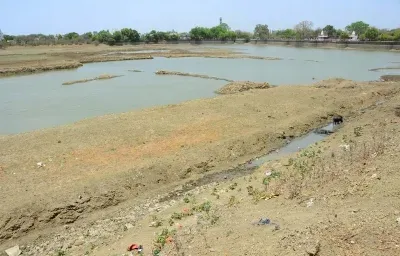
Maharashtra has already declared drought in 304 talukas and launched 12 mitigation measures following scanty rainfall.
Drinking water projects under Jal Jeevan Mission with 75%–99% completion must be fast-tracked to operationalisation.
Authorities must use 2% of DPC funds for source augmentation; groundwater recharge works to draw on Mining and CSR funds.
Water tankers may only be deployed as a last resort; officials must first ensure cleaning and disinfection of public wells.
Officers have been directed to respond immediately to any village-level complaints or media reports of water distress.
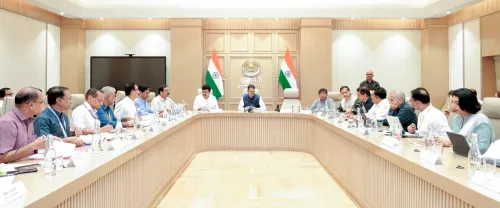
Maharashtra Water Supply and Sanitation Minister Gulabrao Patil on Monday, 21 October directed district administrations to prepare and submit realistic, village-wise action plans for potential water scarcity — covering all preparedness stages — across the Nagpur, Amravati, and Konkan divisions by 25 October. The directive follows the state government's earlier declaration of drought in 304 talukas and the rollout of 12 mitigation measures in response to scanty rainfall.
What the Minister Directed
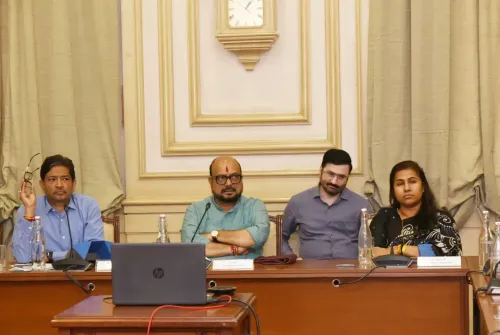
Addressing a high-level review meeting, Minister Patil evaluated water supply status, groundwater levels, and mitigation readiness across the three divisions. While he noted that no severe water scarcity currently exists in these regions, he stressed the urgency of administrative preparedness ahead of the coming months. “The administration must remain proactive. Action plans should be framed based on ground-level inspections and extensive consultations with public representatives, sarpanches, gram panchayats, and local officials,” he said.
He further instructed that action plans for villages potentially dependent on water tankers must include a dedicated strategy for strengthening local water sources — with tanker deployment to serve only as a last resort, preceded by mandatory cleaning and disinfection of available public wells.
Jal Jeevan Mission Projects in Focus
Minister Patil also directed officials to prioritise the completion and operationalisation of drinking water supply projects under the Jal Jeevan Mission that have reached between 75% and 99% completion. Pending works including pipeline laying, pump installation, electrical connections, and transformer setups must be finished on a priority basis.
Schemes exceeding 75% completion must have their package details verified and certified promptly to ensure smooth funding releases. Fixed timelines are to be set for handing over completed and successfully tested water supply schemes to Zilla Parishads or Gram Panchayats. In cases of delay by local bodies in accepting projects, formal proceedings will follow state policy guidelines.
Groundwater Recharge and Funding Provisions
Authorities have been asked to utilise 2% of District Planning Committee (DPC) funds primarily for source augmentation. Groundwater recharge works — including well recharging, farm ponds, cement bandharas, cement plugs, continuous contour trenches (CCT), and repairs of older bunds — are to be carried out by drawing on District Planning, Mining, and Corporate Social Responsibility (CSR) funds.
The minister emphasised efficient water budget planning and disciplined conservation practices, directing officials to focus on rejuvenating local water sources rather than defaulting to tanker-based solutions.
Accountability and Complaint Response
Minister Patil issued strict instructions that officers must immediately visit villages and take necessary action whenever complaints regarding water scarcity surface or media reports highlight local distress. Zilla Parishads and Gram Panchayats are expected to handle operation, maintenance, and electricity billing effectively. Local officials were advised to coordinate directly with District Collectors and Zilla Parishad Chief Executive Officers (CEOs) to resolve persistent transformer or power connection issues.
With the 25 October deadline now in place, the administration across all three divisions faces a narrow window to translate field-level assessments into actionable preparedness frameworks before potential scarcity conditions intensify.
Point of View
With tanker-dependency becoming normalised in drought-prone talukas rather than a stopgap measure. The emphasis on Jal Jeevan Mission completion is well-placed — projects stalled at 80–90% are sunk costs that could deliver relief within weeks if unblocked. Yet the directive’s success depends entirely on whether district administrations treat the October 25 deadline as a working document or a compliance ritual. Past water scarcity review cycles in Vidarbha and Marathwada suggest the latter is the more common outcome.
NationPress
21 Oct 2026
Frequently Asked Questions
Why has the Maharashtra government issued a water scarcity action plan directive?
The state has declared drought in 304 talukas after scanty rainfall and launched 12 mitigation measures. Minister Gulabrao Patil issued the directive on 21 October to ensure administrative preparedness before water scarcity conditions intensify in the coming months, particularly across the Nagpur, Amravati, and Konkan divisions.
What is the deadline for submitting the village-wise water scarcity plans?
District administrations in the Nagpur, Amravati, and Konkan divisions must submit their village-wise action plans by 25 October. Plans must be based on ground-level inspections and consultations with sarpanches, gram panchayats, and local officials.
How does this directive relate to the Jal Jeevan Mission?
Minister Patil specifically directed officials to prioritise completing drinking water supply projects under the Jal Jeevan Mission that are between 75% and 99% complete. Pending works such as pipeline laying, pump installation, and transformer setups must be finished on priority to make these projects operational quickly.
What funding sources can be used for groundwater recharge works?
Authorities have been directed to use 2% of District Planning Committee (DPC) funds for source augmentation. Additional groundwater recharge activities — including farm ponds, cement bandharas, and continuous contour trenches — can draw on District Planning, Mining, and CSR funds.
When can water tankers be deployed under the new directives?
Water tankers must serve only as an absolute last resort. Before deploying tankers, officials are required to first ensure the cleaning and disinfection of available public wells and focus on rejuvenating local water sources through source augmentation and conservation measures.