AgriVoltaics policies must serve small farmers, says Shivraj Singh Chouhan
Synopsis
India's two key ministers for agriculture and renewable energy used the AgriVoltaics World Conference 2026 to set a clear condition: solar panels on farmland must serve farmers, not replace them. With PM-KUSUM's next phase poised to launch one of the world's most ambitious agrivoltaic programmes, and six states holding half of India's agrivoltaic potential, the policy choices made now will determine whether 0.96-hectare landholders become energy producers — or lose ground to solar infrastructure.
Key Takeaways
Shivraj Singh Chouhan called for agrivoltaics policies tailored to India's small and marginal farmers at the AgriVoltaics World Conference 2026 on 21 October 2026 in New Delhi .
India's average farm landholding is just 0.96 hectares ; Chouhan stressed solar installations must allow continued cultivation, not replace it.
India's non-fossil fuel installed capacity has reached 308.03 GW , over 55% of total installed capacity of approximately 560 GW .
Maharashtra, Rajasthan, Andhra Pradesh, Madhya Pradesh, Karnataka and Uttar Pradesh account for nearly 50% of India's agrivoltaic potential.
Field studies indicate yield improvements of 10–20% for certain crops and water savings of around 30% under agrivoltaic systems.
An ambitious agrivoltaic programme is to be launched under the next phase of PM-KUSUM ; agrivoltaic structures can cost 25–30% more than ground-mounted solar.
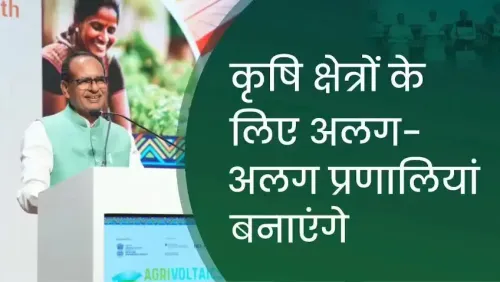
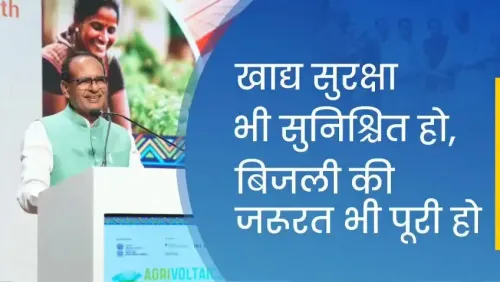
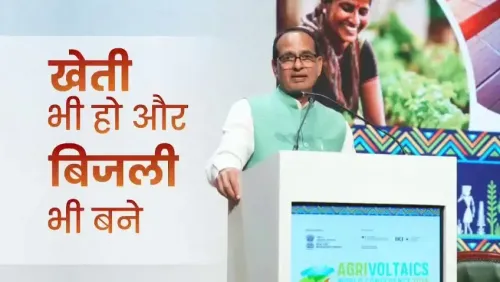
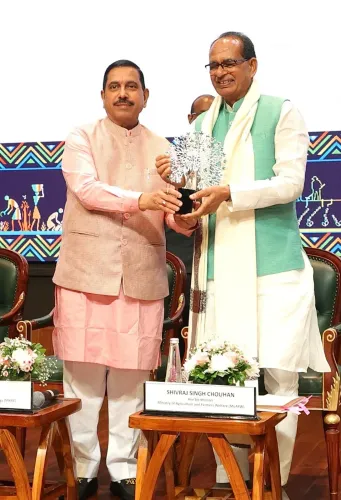
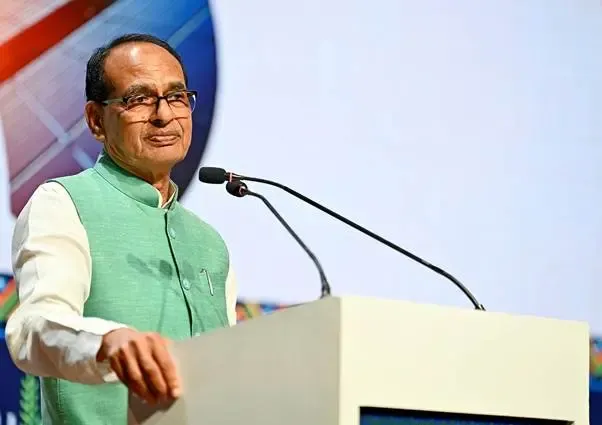
Union Agriculture and Farmers Welfare Minister Shivraj Singh Chouhan on Wednesday, 21 October 2026, called for agrivoltaics policies to be specifically designed around the needs of India's small and marginal farmers, arguing that solar energy adoption in agriculture could transform farmers into both food producers and energy producers. His remarks came at the inaugural session of the AgriVoltaics World Conference 2026 in New Delhi, a three-day event he co-inaugurated with Union Minister Pralhad Joshi.
The Case for Farmer-Centred Agrivoltaic Design
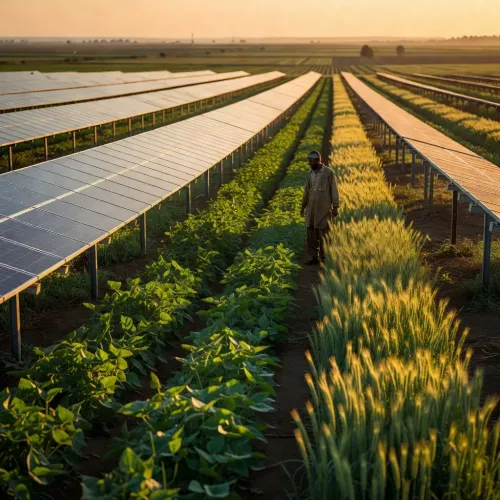
Chouhan stressed that agrivoltaics — the practice of installing solar panels above cropland while continuing to cultivate beneath them — must not displace farming. He called for system designs that accommodate ploughing, crop rotation, and adequate rainwater drainage, emphasising that the average Indian landholding stands at just 0.96 hectares, making it essential that solar integration supplements rather than supplants cultivation.
The minister also pushed for the active involvement of Farmer Producer Organisations (FPOs) and dedicated training programmes for rural youth and women in equipment operation, repair, and maintenance — a measure he said would generate employment directly within villages.
Farmers as Annadatas and Urjadatas
Both ministers invoked the dual identity of Annadatas (food providers) and Urjadatas (energy providers) as a vision for India's farming community. Chouhan noted that electricity has become indispensable to modern agriculture, making the integration of energy generation with farming a logical step toward farmers' welfare and broader economic prosperity.
He also highlighted that India's foodgrain stocks remain adequate, that the agricultural sector has maintained a growth rate of 4.5 per cent, and that agricultural exports have reached a record $52.55 billion.
India's Renewable Energy Backdrop
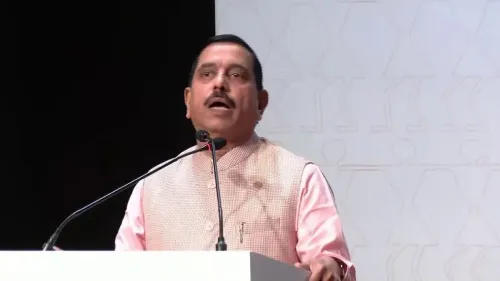
Minister Joshi outlined the scale of India's renewable push, noting that the country's non-fossil fuel-based installed electricity capacity has reached 308.03 GW, accounting for more than 55 per cent of the nation's total installed capacity of approximately 560 GW.
He identified Maharashtra, Rajasthan, Andhra Pradesh, Madhya Pradesh, Karnataka, and Uttar Pradesh as collectively holding close to 50 per cent of India's estimated agrivoltaic potential. Field studies, he noted, have indicated potential crop yield improvements of 10–20 per cent for certain crops and reductions of around 30 per cent in water consumption under suitable agrivoltaic systems.
PM-KUSUM Expansion and Cost Challenges
Joshi announced that one of the world's most ambitious agrivoltaic programmes would be launched under the next phase of PM-KUSUM, aligning the scheme with existing agricultural programmes to accelerate solar energy adoption in the farm sector.
He also acknowledged a key structural barrier: elevated and tilted agrivoltaic structures can be 25–30 per cent more expensive than conventional ground-mounted solar installations. The government, he said, aims to bridge this cost gap through targeted support for AgriPV capacity creation.
As the conference progresses over three days, the sector will watch closely whether the policy framework that emerges translates ministerial intent into farmer-accessible, ground-level solutions.
Point of View
Yet the 0.96-hectare average landholding statistic that Chouhan himself cited is precisely why the economics are treacherous — small farmers cannot absorb the 25–30% cost premium of elevated agrivoltaic structures without deep subsidy. The PM-KUSUM expansion announcement is the right vehicle, but past phases of the scheme have seen sluggish uptake due to financing and grid-connectivity bottlenecks. The conference needs to produce a cost-bridging mechanism and an FPO-linked deployment model, not just vision statements, if agrivoltaics is to move from demonstration plots to the 140 million farm households it nominally targets.
NationPress
21 Oct 2026
Frequently Asked Questions
What is agrivoltaics and why is India promoting it?
Agrivoltaics refers to the practice of installing solar panels above cropland while continuing to cultivate beneath them, allowing land to generate both food and electricity simultaneously. India is promoting it to boost farmers' incomes, expand renewable energy capacity, and reduce water consumption in agriculture — with field studies indicating yield improvements of 10–20% for certain crops and water savings of around 30%.
What did Shivraj Singh Chouhan say at the AgriVoltaics World Conference 2026?
Chouhan said agrivoltaics policies must be designed around the needs of small and marginal farmers, insisting that solar installations must allow continued ploughing, crop rotation, and rainwater drainage rather than replacing farming. He also called for FPO involvement and training programmes for rural youth and women in equipment operation and maintenance.
What is the PM-KUSUM agrivoltaic expansion announced by Pralhad Joshi?
Joshi announced that one of the world's most ambitious agrivoltaic programmes will be launched under the next phase of PM-KUSUM, aligning solar energy adoption with existing agricultural schemes to extend its reach across India's farming sector. The government also said it would provide support to bridge the 25–30% higher cost of agrivoltaic structures compared to conventional ground-mounted solar.
Which states have the highest agrivoltaic potential in India?
Maharashtra, Rajasthan, Andhra Pradesh, Madhya Pradesh, Karnataka, and Uttar Pradesh together account for nearly 50% of India's estimated agrivoltaic potential, according to figures cited at the conference.
How does agrivoltaics affect crop yields and water use?
According to field studies referenced at the conference, agrivoltaic systems can improve yields by 10–20% for certain crops and reduce water consumption by around 30% under suitable conditions. These figures are indicative and vary by crop type, climate zone, and system design.