Gujarat govt schools gain ground: 4,817 students quit private schools in Ahmedabad in 2025–26
Synopsis
Over 60,000 students have left private schools for Ahmedabad's government schools in 11 years — and the pace is picking up. In 2025–26 alone, 4,817 made the switch, drawn by robotics labs, Google-featured classrooms, and daily nutrition. Gujarat's 'Mission Schools of Excellence' is quietly rewriting the urban school-choice calculus.
Key Takeaways
4,817 students shifted from private to government schools in Ahmedabad district during the 2025–26 academic year.
Over 60,000 children have left private schools for Ahmedabad Municipal Corporation schools over the past 11 years .
Thaltej Primary School – 2 offers smart classrooms, a robotics lab, science and maths laboratories, a smart library, and a daily nutrition programme.
The shift is linked to Gujarat Chief Minister Bhupendra Patel 's Mission Schools of Excellence initiative.
Officials say sustained infrastructure investment — not a single policy — explains the decade-long enrolment trend.
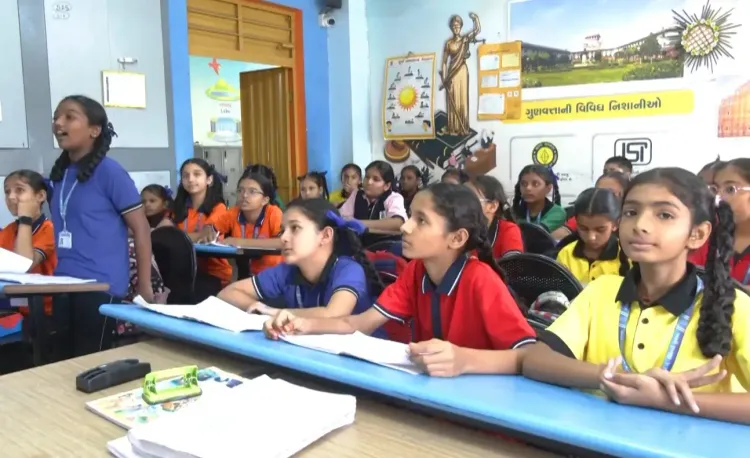
Government schools in Ahmedabad are undergoing a quiet but measurable transformation, with 4,817 students in Ahmedabad district transferring from private institutions to public schools during the 2025–26 academic year. The shift reflects growing parental confidence in Gujarat's state-run education system, driven by modern infrastructure investments ranging from robotics laboratories to smart classrooms.
What Modern Government Schools Now Offer
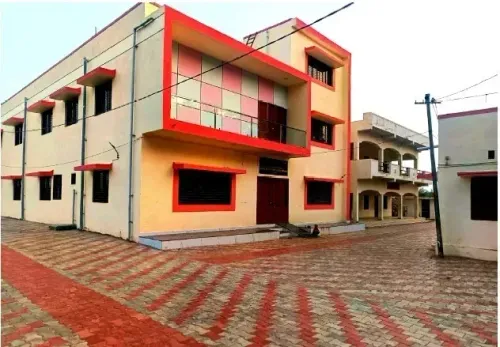
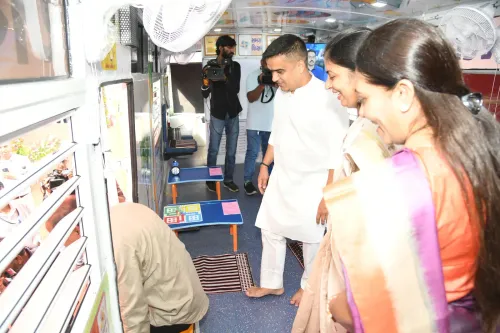
Thaltej Primary School – 2 in Ahmedabad stands as a flagship example of this change. The institution is equipped with Google-featured smart classrooms, a smart library, dedicated science and mathematics laboratories, a robotics laboratory, and sports infrastructure. Students additionally receive daily nutritional support — milk, breakfast, and meals — as part of a broader welfare package.
According to Chirag Joshi, Principal of Thaltej Primary School – 2, smart boards are deployed in every classroom to make lessons more interactive and engaging. 'The school's science laboratory has several models that help students understand concepts and learn new things,' said student Angel Dubey. Fellow student Vansh Chauhan noted the availability of science, mathematics, and robotics labs as key draws.
Parents Driving the Shift
Parent Sundaraben cited the school's large playground, sports equipment, musical instruments, and daily nutrition programme as reasons for her satisfaction. Accounts like hers reflect a broader pattern: according to Dr L. D. Desai, Administrative Officer in the Education Department, Ahmedabad, parents are obtaining leaving certificates from reputed private schools and enrolling their children in municipal government schools instead.
Dr Desai noted that over the past 11 years, more than 60,000 children have left prominent private schools to join schools run by the Ahmedabad Municipal Corporation (AMC). The 2025–26 figure of 4,817 in a single district suggests the trend is accelerating.
The Policy Push Behind the Numbers
The transformation is closely linked to the Mission Schools of Excellence initiative, rolled out under Chief Minister Bhupendra Patel. The programme prioritises quality education, modern infrastructure, and technology-enabled learning in government schools, aiming to support students' academic, physical, and mental development.
Notably, this is not an overnight outcome — officials attribute the sustained shift to more than a decade of incremental investment in digital learning tools, laboratory infrastructure, and sports facilities. The pattern challenges a long-held assumption in Indian public policy that government schools are inherently inferior to private alternatives in urban settings.
What This Means for Indian Public Education
Ahmedabad's experience offers a data point for the broader national conversation on school choice in India. Historically, urban middle-class families have defaulted to private schooling regardless of cost, viewing government schools as a fallback. A reversal — even a partial one — in a large city like Ahmedabad carries implications for how states across the country design and fund public education.
With enrolment trends moving in a positive direction, the focus is now on whether infrastructure improvements translate into measurable learning outcomes — a question that officials and education researchers will be watching closely in the years ahead.
Point of View
And the 11-year data strip of 60,000 transfers is too large to dismiss as statistical noise. The real test, however, is whether improved infrastructure is translating into better learning outcomes; enrolment gains that are not backed by outcome data can be politically convenient without being educationally decisive. Gujarat has built the hardware; the software — teacher quality, curriculum depth, and third-party assessment — remains the harder problem to solve.
NationPress
21 Oct 2026
Frequently Asked Questions
Why are students leaving private schools for government schools in Ahmedabad?
Parents cite modern facilities — including smart classrooms, robotics labs, science and maths laboratories, and a daily nutrition programme — as key reasons for switching. According to officials, sustained infrastructure investment under initiatives like Mission Schools of Excellence has rebuilt parental trust in government schools.
How many students have transferred from private to government schools in Ahmedabad?
During the 2025–26 academic year, 4,817 students in Ahmedabad district transferred from private to government schools. Over the past 11 years, more than 60,000 children have made the switch to Ahmedabad Municipal Corporation schools.
What is Gujarat's Mission Schools of Excellence?
Mission Schools of Excellence is a state government initiative under Chief Minister Bhupendra Patel that focuses on upgrading government schools with modern infrastructure, digital learning tools, laboratories, and sports facilities. It aims to support students' academic, physical, and mental development.
What facilities does Thaltej Primary School – 2 in Ahmedabad offer?
Thaltej Primary School – 2 has Google-featured smart classrooms, a smart library, science and mathematics laboratories, a robotics laboratory, sports infrastructure, and a daily provision of milk, breakfast, and meals for students.
Does this trend in Gujarat reflect a broader shift in Indian public education?
Ahmedabad's experience is notable because urban middle-class families in India have historically preferred private schools regardless of cost. A sustained reversal in a large city over 11 years suggests that targeted infrastructure investment can shift school-choice behaviour, though education experts stress that learning outcome data — not just enrolment figures — must validate the shift.