CM Bhupendra Patel Hails Vadodara Govt School With 'Admission Full' Board
Synopsis
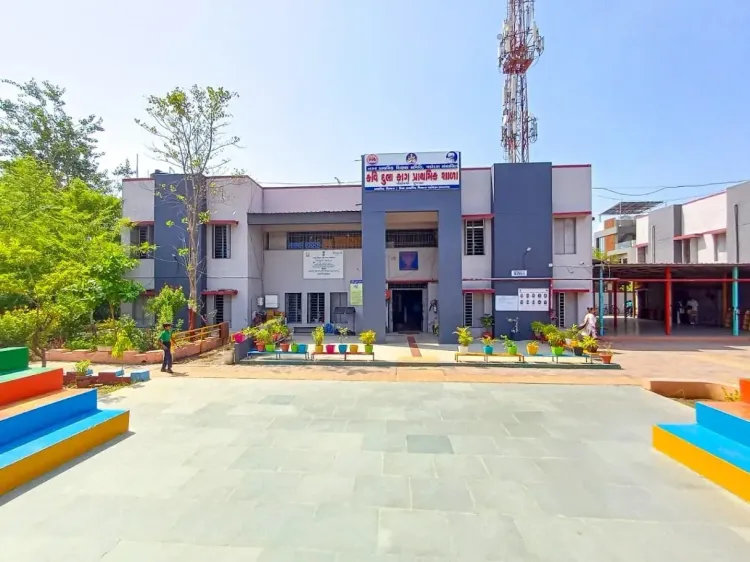
Gujarat CM Bhupendra Patel spotlighted Vadodara's Kavi Dula Kag Government Primary School — equipped with smart classrooms, labs, and a medicinal garden — as a symbol of the state's two-decade public-school transformation, with parent demand so high the school has displayed an 'Admission Full' board during #ShalaPraveshotsav2026.
Key Takeaways
Kavi Dula Kag Government Primary School in Vadodara has had to display an 'Admission Full' board due to high parent demand — an unusual milestone for a state-run primary school.
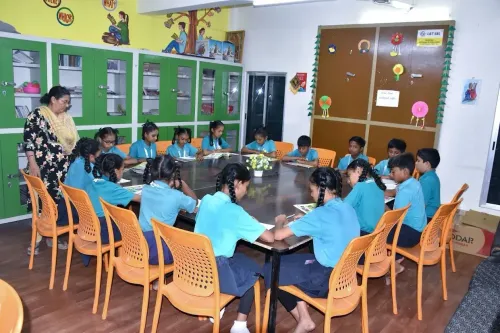
The school features smart classrooms with interactive panels , computer and science labs, a library, a playground, and a medicinal plant garden.
CM Bhupendra Patel credited Prime Minister Narendra Modi's leadership over the last two-and-a-half decades for a 'revolutionary' change in Gujarat's government school quality and infrastructure.
The Gunotsav grading programme (launched 2009 ) and Samagra Shiksha Abhiyan (from 2018 ) form the policy backbone of the state's school-upgrade push.
The post was shared under #ShalaPraveshotsav2026 , Gujarat's annual enrollment drive aimed at boosting primary-school admissions and reducing dropout rates.
Enrollment data and budget allocations for 2026-27 smart-classroom expansion will be key indicators of how widely this model scales across Gujarat.
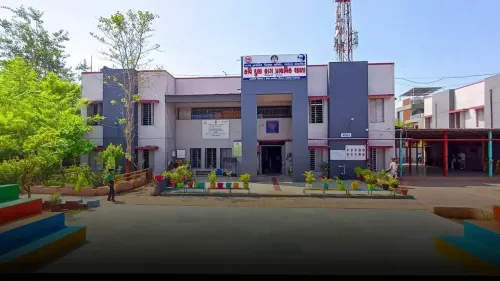
Gujarat Chief Minister Bhupendra Patel on Tuesday, June 23, 2026, highlighted the transformation of a government primary school in Vadodara that has seen such a surge in parent demand that it has had to display an 'Admission Full' board — a rare sight for a state-run institution. The post, shared on X under the hashtag #ShalaPraveshotsav2026, drew attention to Kavi Dula Kag Government Primary School as a model of what public education in Gujarat has become.
Context
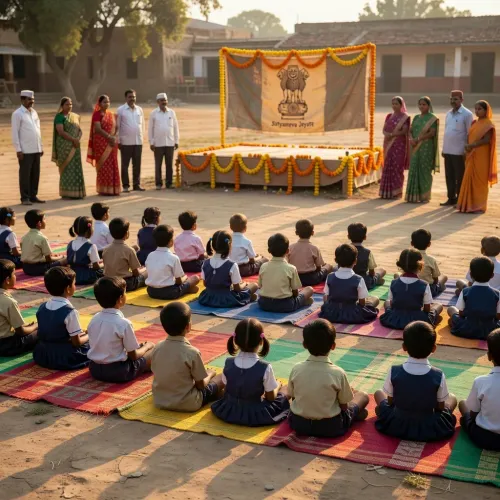
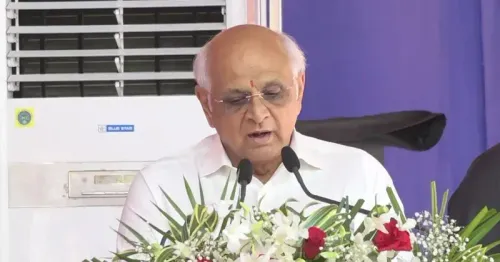
Writing in Gujarati, CM Patel expressed that words fall short to describe the joy of seeing parents queue up outside a government school and the school having to put up an 'Admission Full' board. 'કોઈ સરકારી શાળામાં બાળકને પ્રવેશ અપાવવા વાલીઓની લાઈન લાગે.. અને શાળામાં Admission Full નું બોર્ડ લગાવવું પડે..' ('When parents line up to get their child admitted to a government school and the school has to put up an Admission Full board — words are not enough to describe that joy!'), he wrote. The post was accompanied by four images from the school premises.
The Chief Minister listed the facilities at Kavi Dula Kag Government Primary School: smart classrooms equipped with interactive panels, computer and science laboratories, a library, a playground, a medicinal plant garden, and a teaching system designed to nurture democratic values and leadership skills among students.
Policy Backdrop
CM Patel credited the transformation of Gujarat's government schools over the last two-and-a-half decades to the leadership and guidance of Prime Minister Narendra Modi, who served as Gujarat's Chief Minister from 2001 to 2014. He noted that the change has been 'revolutionary' — spanning both the quality of education and a ground-up overhaul of school infrastructure.
The policy lineage runs through several landmark programmes. The Gunotsav school-quality assessment initiative, launched in 2009 under then-Chief Minister Modi, benchmarked and graded government schools to drive upgrades. The centrally integrated Samagra Shiksha Abhiyan, running since 2018, has channelled funds into smart classrooms, science labs, and physical infrastructure across Gujarat's government schools. Annual Shala Praveshotsav enrollment campaigns, running since the mid-2000s, have consistently worked to boost primary admissions and reduce dropout rates.
The #ShalaPraveshotsav2026 campaign represents the latest edition of this drive, using schools like Kavi Dula Kag as visible proof points that government schooling can compete with private institutions on quality and amenities.
Stakeholders and Impact
The primary beneficiaries of this shift are government-school students and their parents in urban Gujarat, particularly in cities like Vadodara. The surge in parent interest signals a reversal of a long-standing trend in which families with even modest means preferred private schools over government ones, driven by concerns over quality and infrastructure.
The emphasis on visible, tangible amenities — interactive panels, labs, a medicinal garden — is designed to address precisely those concerns. Broader alignment with the National Education Policy 2020's focus on outcome-based, holistic learning gives the state's approach a national policy anchor, strengthening the case for continued budget support.
What's Next
Attention will now turn to enrollment figures and parent turnout during the 2026 Shala Praveshotsav rounds across Gujarat's districts, which will serve as a real-world test of whether the momentum visible in Vadodara has spread statewide. State budget allocations for 2026-27 for further smart-classroom expansion will be closely watched as an indicator of the government's commitment to scaling this model beyond showcase schools.
Point of View
Presenting public education as aspirational rather than a last resort. This fits a broader BJP pattern of using visible, photogenic infrastructure — smart panels, labs, gardens — to argue that ideological continuity in governance produces compounding returns in public services. The real test, however, will come from district-level enrollment data across the 2026 Shala Praveshotsav cycle, not from a single model school in an urban centre.
NationPress
22 Sept 2026
Frequently Asked Questions
What is Shala Praveshotsav 2026 in Gujarat?
Shala Praveshotsav is Gujarat's annual government-school enrollment campaign, running since the mid-2000s, aimed at boosting primary admissions and reducing dropout rates. The 2026 edition, tagged #ShalaPraveshotsav2026 , is being used to showcase improved school infrastructure across the state.
Which school did CM Bhupendra Patel highlight in his post?
Kavi Dula Kag Government Primary School in Vadodara was highlighted by CM Patel. The school has smart classrooms with interactive panels, computer and science labs, a library, a playground, and a medicinal plant garden.
Why is a government school in Gujarat displaying an 'Admission Full' board?
According to CM Patel's post, parent demand for admission to Kavi Dula Kag Government Primary School in Vadodara has been so high that the school has had to put up an 'Admission Full' board, reflecting growing confidence in government school quality.
What government schemes improved Gujarat's government schools?
Key programmes include the Gunotsav school-quality assessment initiative launched in 2009 and the Samagra Shiksha Abhiyan integrated from 2018 , which together funded smart classrooms, science labs, and infrastructure upgrades in Gujarat's government schools.
What role did PM Modi play in Gujarat's school transformation?
CM Patel credited Prime Minister Narendra Modi , who served as Gujarat's Chief Minister from 2001 to 2014 , with initiating a 'revolutionary' change in government school quality and infrastructure over the last two-and-a-half decades, including launching the Gunotsav programme.