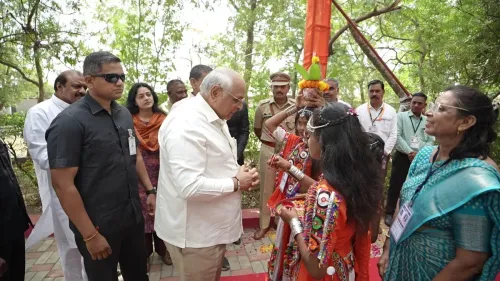
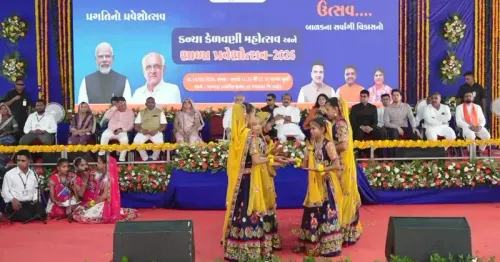
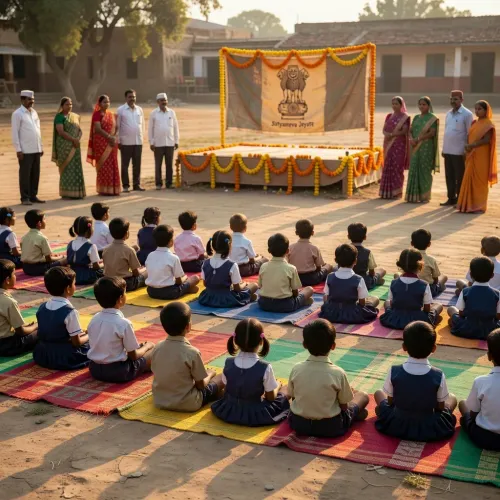
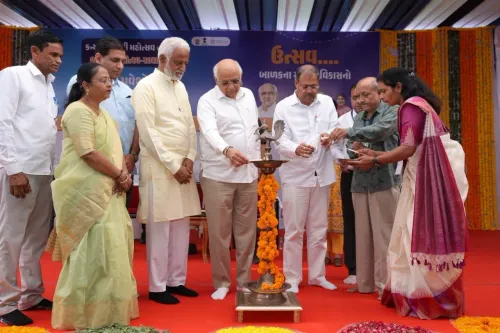
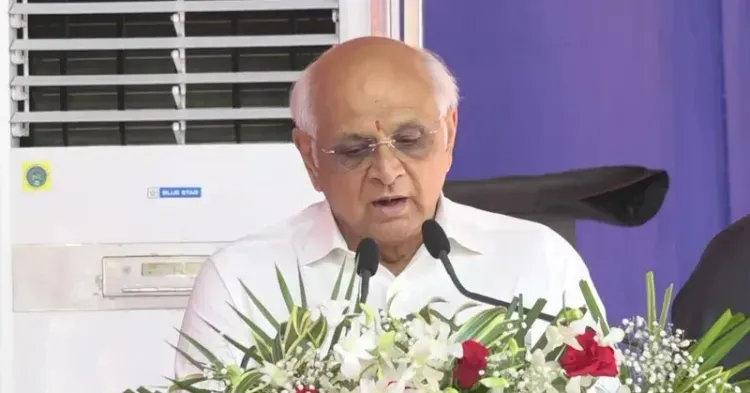
CM Bhupendra Patel at Dahod Shala Praveshotsav 2026
Synopsis
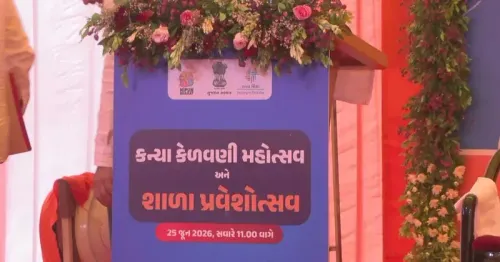
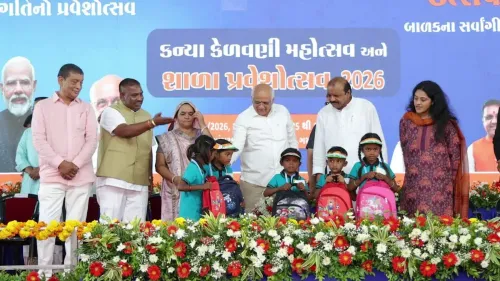
Chief Minister Bhupendra Patel attended the Shala Praveshotsav and Kanya Kelavani Mahotsav at Moti Kharji Rahidungri Primary School in Dahod on 24 June 2026, personally leading Gujarat's annual tribal-belt enrollment drive for girl children and first-generation learners at the start of the academic year.
Key Takeaways
Chief Minister Bhupendra Patel personally attended the Shala Praveshotsav and Kanya Kelavani Mahotsav on 24 June 2026 .
The event was held at Moti Kharji Rahidungri Primary School in Dahod district , a tribal-majority area of eastern Gujarat.
Gujarat has run these twin enrollment drives every June–July since the early 2000s to boost school attendance in rural and tribal communities.
Kanya Kelavani Mahotsav specifically targets girl-child education, addressing dropout rates in areas with cultural and economic barriers.
The event was broadcast live, reflecting the state's emphasis on senior-level visible participation to amplify the enrollment message.
District-wise enrollment data for 2026–27 will be the key indicator of the drive's on-ground impact.
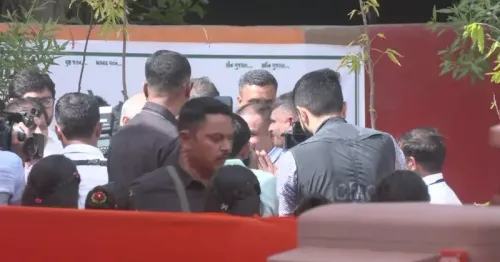
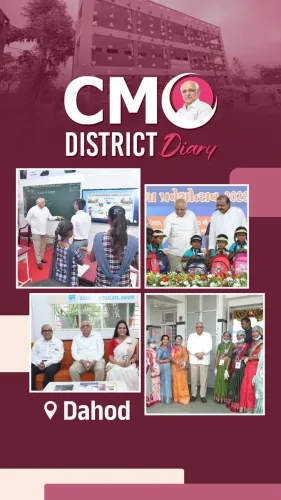
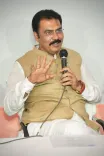
The Chief Minister's Office of Gujarat announced on Wednesday, 24 June 2026 that Chief Minister Bhupendrabhai Patel is personally attending the Shala Praveshotsav and Kanya Kelavani Mahotsav at Moti Kharji Rahidungri Primary School in Dahod district, marking the start of the new academic year with a flagship enrollment drive in one of Gujarat's most educationally underserved tribal regions.
Context
The post, shared live from the venue, reads: 'LIVE: માનનીય મુખ્યમંત્રી શ્રી ભૂપેન્દ્રભાઈ પટેલની પ્રેરક ઉપસ્થિતિમાં દાહોદ જિલ્લામાં મોટી ખરજની રાહડુંગરી પ્રાથમિક શાળા ખાતે શાળા પ્રવેશોત્સવ અને કન્યા કેળવણી મહોત્સવ કાર્યક્રમ' — translated: 'LIVE: Shala Praveshotsav and Kanya Kelavani Mahotsav programme at Moti Kharji Rahidungri Primary School in Dahod district, in the inspiring presence of Honourable Chief Minister Shri Bhupendrabhai Patel.' The live broadcast signals the state government's emphasis on visible, senior-level participation in grassroots education events.
Dahod is a predominantly tribal district in eastern Gujarat with historically lower literacy rates compared to the state average. The choice of venue — a rural primary school in this district — underscores the government's stated priority of reaching first-generation learners in Scheduled Tribe communities.
Policy Backdrop
Gujarat has conducted Shala Praveshotsav and Kanya Kelavani Mahotsav every June–July since the early 2000s as twin flagship initiatives of the state education department. The programs combine community mobilisation, door-to-door enrollment campaigns, and public ceremonies at local schools to drive both enrolment and retention, particularly among girls and tribal children.
Kanya Kelavani Mahotsav specifically targets girl-child education through rallies and community pledges, addressing dropout rates in rural belts where cultural and economic barriers remain significant. The consistent deployment of the Chief Minister at these events — a tradition maintained across successive Gujarat governments — is designed to signal political will and generate local media attention that amplifies the enrollment message at the village level.
Stakeholders and Impact
The primary beneficiaries are tribal students and girl children in Dahod's rural primary schools, many of whom are first-generation learners. Parents, local panchayat representatives, and school teachers are also key participants in the Mahotsav format, which uses community gatherings to build social pressure for enrollment.
The broader pattern across Gujarat shows that CM-level participation in district education events has correlated with improved enrollment metrics in tribal belts over successive academic years, as the state has worked to raise literacy above national averages in Scheduled Tribe areas. Civil society groups and self-help networks active in Dahod are expected to coordinate alongside state officials during the drive.
What's Next
District-wise enrollment figures for the 2026–27 academic session will be the key metric to watch once the drive concludes. Any follow-up announcements on school infrastructure — classrooms, sanitation facilities, or digital learning tools — for Dahod's primary schools would indicate whether the Mahotsav translates into sustained investment beyond the ceremonial launch.
With Gujarat's tribal education agenda increasingly tied to national schemes for equitable learning outcomes, the Dahod event sets the tone for similar district-level drives expected across the state through July 2026.
Point of View
Not a bureaucratic routine. The consistent pattern of CM-level participation since the early 2000s has institutionalised these drives as a political ritual that also delivers measurable enrollment gains. For the BJP government, Dahod's tribal demographics make it both a welfare target and an electoral constituency where visible state presence carries symbolic weight. Whether this year's event translates into infrastructure spending or remains ceremonial will be the test of its policy seriousness.
NationPress
22 Sept 2026
Frequently Asked Questions
What is Shala Praveshotsav in Gujarat?
Shala Praveshotsav is an annual Gujarat government programme held every June–July to drive school enrollment, especially in rural and tribal areas, by organising community ceremonies at primary schools across the state.
What is Kanya Kelavani Mahotsav?
Kanya Kelavani Mahotsav is a Gujarat state festival focused on promoting girl-child education through rallies, community pledges, and enrollment drives, particularly targeting dropout-prone rural and tribal districts.
Where was the 2026 Shala Praveshotsav event held?
The 2026 event was held at Moti Kharji Rahidungri Primary School in Dahod district, eastern Gujarat, on 24 June 2026.
Why is Dahod chosen for the CM's Shala Praveshotsav visit?
Dahod is a predominantly tribal district with historically lower literacy rates, making it a priority target for Gujarat's education enrollment campaigns aimed at first-generation learners and girl children.
Who is Bhupendra Patel?
Bhupendra Patel is the Chief Minister of Gujarat, in office since September 2021, belonging to the BJP, with a stated focus on tribal area development and expanding education access across the state.