Gujarat's Ranshala: 28 solar buses turn mobile classrooms for Agariya children
Synopsis
Gujarat has turned 28 decommissioned state transport buses into solar-powered, internet-connected classrooms and dispatched them to salt desert communities where Agariya children routinely lose months of schooling each year. The Ranshala model is a rare instance of a government repurposing idle public assets to solve a structural education gap — and officials say it is only the first batch.
Key Takeaways
28 retired GSRTC buses were flagged off from Gandhinagar on 23 June as solar-powered mobile classrooms under the Ranshala programme.
Buses are deployed across Surendranagar ( 20 ), Patan ( 4 ), Kutch ( 2 ), and Morbi ( 2 ) districts.
Each classroom runs on a 3.8 KVA off-grid solar plant capable of 48 hours of operation without external power.
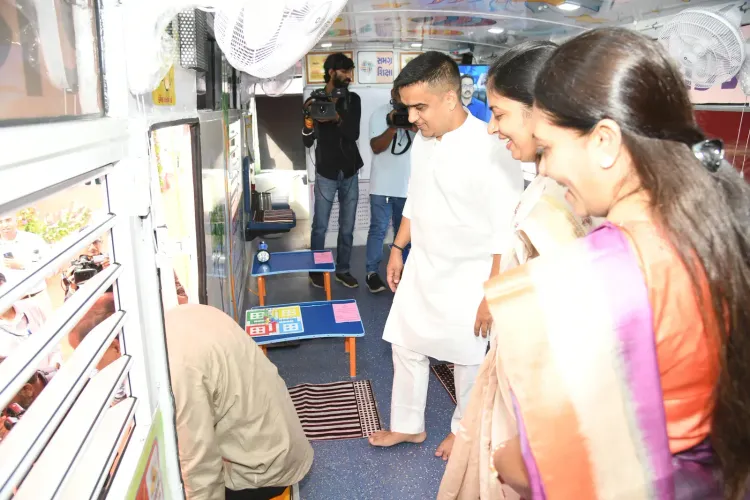
Facilities include 43-inch smart TVs , Dish TV, FM radio, drinking water systems, health-monitoring tools, and recreational equipment.
The programme targets children aged 6 to 14 from Agariya salt-farming families who migrate seasonally to remote desert regions.
Deputy Chief Minister Harsh Sanghavi inaugurated the buses; the government has indicated further conversions are planned.
Gujarat flagged off 28 solar-powered mobile classrooms from Gandhinagar on 23 June under the newly launched Ranshala programme, targeting uninterrupted education for children of Agariya salt-farming families in the state's remote desert regions. The initiative converts retired Gujarat State Road Transport Corporation (GSRTC) buses into fully equipped learning centres, reaching communities where seasonal migration routinely pulls children out of school.
Key Developments
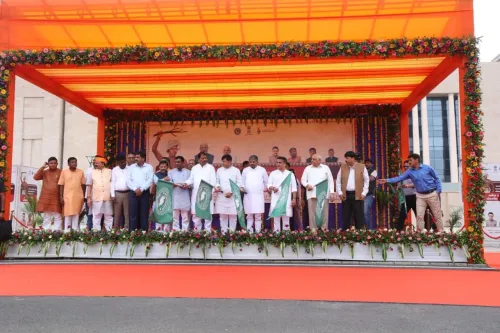
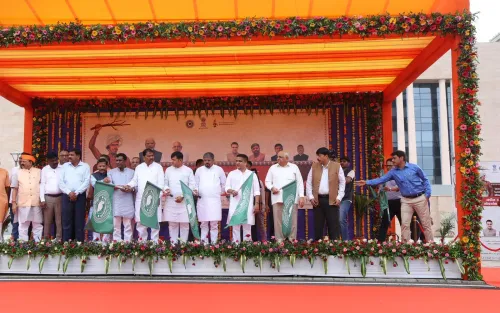
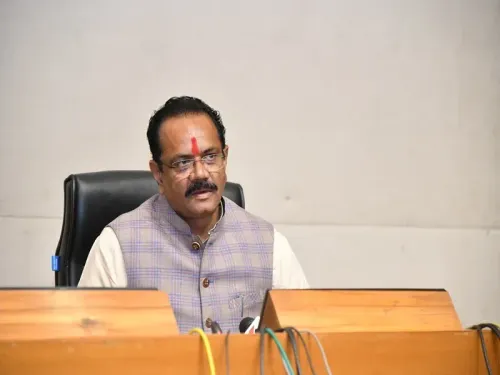
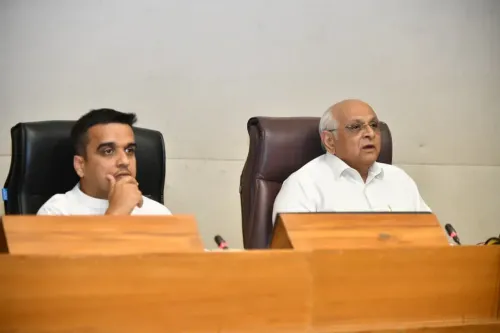
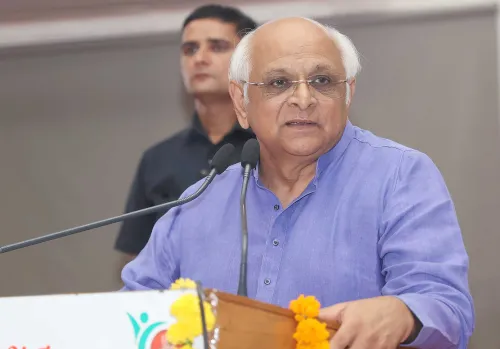
Deputy Chief Minister Harsh Sanghavi formally inaugurated the 28 buses at the Pathikashram ST Depot in Gandhinagar, coinciding with the statewide Shala Praveshotsav school enrolment drive. Chief Minister Bhupendra Patel simultaneously launched the enrolment drive from Vadnagar.
The buses will be deployed across four districts: 20 to Patdi taluka in Surendranagar, four to Santalpur in Patan, two to Anjar in Kutch, and two to Malia in Morbi — all areas with concentrated Agariya salt-production settlements.
What Each Bus Contains
Each converted bus is equipped with a 3.8 KVA off-grid solar power plant capable of running for up to 48 hours without an external electricity connection. Inside, students have access to 43-inch smart televisions, educational content via Dish TV, FM radio, LED lighting, and wall fans — supporting both online and offline learning.
To accommodate harsh desert conditions, the buses carry portable study tables, foldable outdoor shade nets, detachable blackboards and whiteboards, purified drinking water systems, wash basins, and dedicated teacher cabins with library space. Recreational equipment — including Ludo, swings, slides, and basketball gear — and health-monitoring tools such as digital weighing scales, height measurement systems, and BMI charts have also been installed. Safety provisions include emergency exits, fire extinguishers, and first-aid kits.
Who Runs the Programme
The Ranshala initiative is a joint effort by the Samagra Shiksha campaign, the state Education Department, and GSRTC. It targets children aged between six and 14 from Agariya families that migrate seasonally to salt-producing zones, where access to permanent schools is limited or absent.
Sanghavi said each bus can accommodate more than 20 children at a time and that students would be able to access Gujarat government online classes through the on-board connectivity. 'These buses, which were previously lying unused, have now been transformed into excellent classrooms. More such buses will be prepared in the future so that not a single child living in remote areas is deprived of education,' he said.
Why This Matters
Salt production in Gujarat's Rann of Kutch and surrounding districts is a seasonal livelihood that draws thousands of Agariya families deep into desert terrain for months at a time. Children accompanying their parents have historically faced near-total disruption to formal schooling during these periods, contributing to elevated dropout rates in the community. The Ranshala model attempts to eliminate that trade-off by bringing the school to the child rather than expecting the reverse.
Officials said the programme is specifically designed to reduce dropout rates and minimise learning loss caused by seasonal migration. With the government signalling that more buses will be converted in future phases, the initiative could expand its reach beyond the initial 28 classrooms.
Point of View
Not the school year, and whether teachers, connectivity, and maintenance hold up across remote desert terrain over multiple seasons is the question the launch ceremony cannot answer. The government's promise of 'more buses in future' also needs a timeline and a budget line to be credible. Done right, this could be a replicable blueprint for India's other migrant-labour communities; done halfway, it risks becoming a photo-opportunity fleet.
NationPress
22 Sept 2026
Frequently Asked Questions
What is Gujarat's Ranshala or 'School on Wheels' programme?
Ranshala is a Gujarat government initiative that converts retired GSRTC buses into solar-powered mobile classrooms and deploys them to remote salt-producing regions where Agariya children lose schooling due to seasonal migration. The first batch of 28 buses was flagged off from Gandhinagar on 23 June.
Which districts will the Ranshala buses serve?
The 28 buses are allocated across four districts: 20 to Patdi taluka in Surendranagar, four to Santalpur in Patan, two to Anjar in Kutch, and two to Malia in Morbi — all areas with significant Agariya salt-farming communities.
What facilities are inside each Ranshala mobile classroom?
Each bus has a 3.8 KVA off-grid solar power plant (48-hour autonomy), a 43-inch smart television, Dish TV and FM radio connectivity, LED lighting, portable study furniture, foldable shade nets, drinking water systems, a teacher cabin, library space, recreational equipment, and health-monitoring tools including digital weighing scales and BMI charts.
Who are the Agariya families and why do their children miss school?
Agariya communities are salt producers who migrate seasonally to the salt flats of Gujarat's Rann of Kutch and surrounding districts. Families live and work in these remote desert areas for months, and children accompanying them have historically had no access to formal schooling during that period, leading to high dropout rates.
Which agencies jointly run the Ranshala programme?
The programme is implemented jointly by the Samagra Shiksha campaign, Gujarat's Education Department, and GSRTC. It targets children aged six to 14 and is designed to reduce dropout rates by bringing education directly to migrant Agariya settlements.