CM Bhupendra Patel flags off 139 ST buses for Gujarat tribal areas
Synopsis
Chief Minister Bhupendra Patel flagged off 139 new GSRTC buses worth Rs 33.84 crore in Gandhinagar on 21 July 2026, deploying them across Gujarat's tribal districts under the Birsa Munda Janjatiya Gaurav Parivahan Seva to improve school access and cut dropout rates.
Key Takeaways
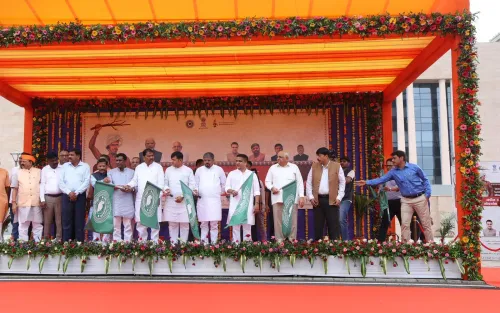
139 new ST buses flagged off from Gandhinagar's New Secretariat Complex on 21 July 2026 by CM Bhupendra Patel .
Total fleet cost: Rs 33.84 crore , jointly deployed by the Tribal Development Department and GSRTC .
Scheme named after tribal icon Bhagwan Birsa Munda under the Janjatiya Gaurav Parivahan Seva .
All buses fitted with GPS tracking ; student data updated daily via a dedicated web portal .
After school hours, buses will run on a revenue model for the general adivasi population.
Initiative aims to boost girl-child education , increase attendance, and reduce school dropout rates in tribal belts.
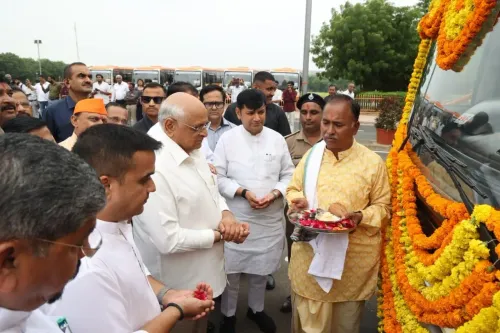
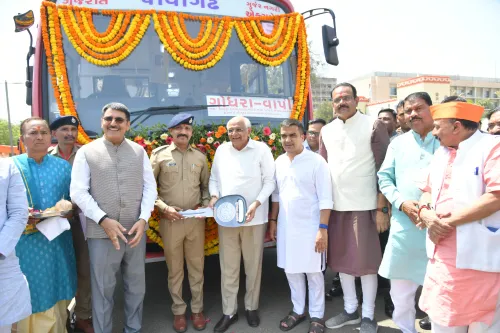
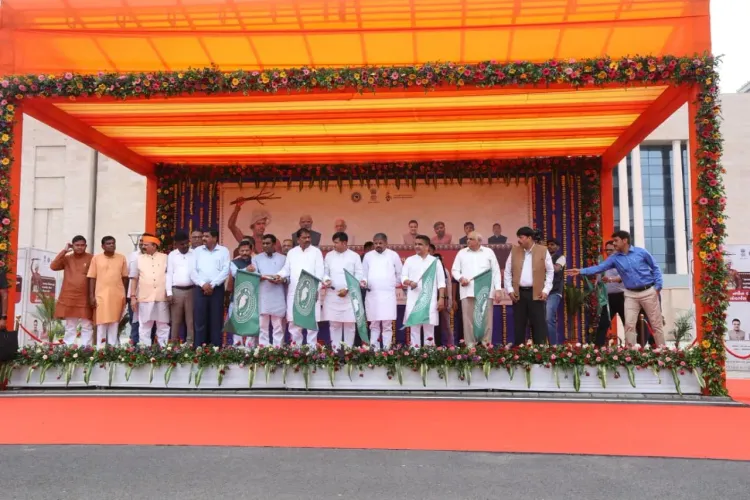
Chief Minister Bhupendra Patel on Tuesday, 21 July 2026 flagged off 139 new State Transport buses from the New Secretariat Complex in Gandhinagar, deploying them across tribal districts of Gujarat under the 'Bhagwan Birsa Munda Janjatiya Gaurav Parivahan Seva' (Bhagwan Birsa Munda Tribal Pride Transport Service). The buses, procured at a combined cost of Rs 33.84 crore, were ceremonially consecrated before dispatch in the presence of Deputy Chief Minister Harsh Sanghavi and other cabinet ministers.
Context
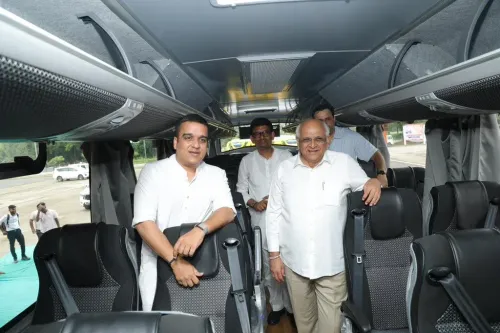
The new fleet is a joint initiative of the state government's Tribal Development Department and the Gujarat State Road Transport Corporation (GSRTC). The buses are designed specifically to serve remote, hard-to-reach pockets of Gujarat's scheduled tribe districts, where difficult terrain has historically made daily commutes to schools and colleges a significant barrier for students. CM Patel and the dignitaries present also inspected the new buses before the flag-off.
The scheme is named after Birsa Munda, the 19th-century tribal leader and freedom fighter from the Munda community, whose legacy has been invoked by state governments across India to anchor welfare programmes aimed at adivasi communities with a sense of cultural pride and recognition.
Policy Backdrop
Gujarat has expanded GSRTC's presence in tribal belts in successive phases since the early 2010s, treating rural bus connectivity as a tool for reducing educational dropout rates and improving access to higher education. The current initiative deepens that approach by layering digital accountability infrastructure on top of physical fleet expansion.
All 139 buses will be monitored through GPS tracking, and a dedicated web portal will maintain daily records of travelling students — including name, bus-pass number, route, school, and village details. After school and college hours, the same buses will operate on a revenue model, making them available to the broader adivasi population in those regions.
Stakeholders and Impact
The primary beneficiaries are tribal students — particularly girls — who live far from the nearest school or college. The official announcement explicitly links the service to promoting girl-child education (kanya kelavani) and higher education, with the stated goals of increasing regular attendance and reducing school dropout rates in scheduled tribe areas.
Beyond students, the revenue-model operation during off-peak hours extends the benefit to adivasi communities at large, offering a reliable public transport option in areas where private alternatives are scarce. The GPS-and-portal combination is also intended to give administrators real-time visibility over ridership and route compliance.
What's Next
The government's stated metrics for success — attendance rates and dropout reduction — will be tracked through the web portal, making this one of Gujarat's more data-driven tribal transport deployments. Observers will watch whether the revenue-model operations after school hours generate sufficient ridership to sustain the expanded fleet, and whether the initiative is integrated with central government tribal welfare programmes. Further phases of GPS-enabled bus services in additional tribal districts remain a possibility as rollout data accumulates.
Point of View
Which shifts the initiative from a one-time fleet addition to an ongoing accountability mechanism that the government can cite in future policy reviews. For the ruling dispensation, the dual-use revenue model after school hours also offers a fiscal argument for sustainability, reducing the political risk of the scheme being labelled a subsidy-heavy gesture. The real test will come in whether attendance and dropout data, now being formally tracked, shows measurable improvement in the tribal districts this fleet serves.
NationPress
20 Oct 2026
Frequently Asked Questions
What is the Birsa Munda Janjatiya Gaurav Parivahan Seva in Gujarat?
It is a joint transport scheme by Gujarat's Tribal Development Department and GSRTC that deploys dedicated buses in tribal districts to ferry students to schools and colleges, named after the 19th-century tribal leader Bhagwan Birsa Munda.
How many buses were flagged off and what was the cost?
A total of 139 new ST buses were flagged off at a combined cost of Rs 33.84 crore on 21 July 2026.
Who flagged off the tribal transport buses in Gujarat?
Chief Minister Bhupendra Patel flagged off the buses from the New Secretariat Complex in Gandhinagar, in the presence of Deputy CM Harsh Sanghavi and other ministers.
How will the Gujarat tribal buses be monitored?
All 139 buses are equipped with GPS tracking , and a web portal will update daily records of students travelling on each bus, including name, bus-pass number, route, school, and village.
Will the tribal buses also be available to the general public?
Yes. After school and college hours, the buses will operate on a revenue model , making them accessible to the broader adivasi population in the tribal areas they serve.