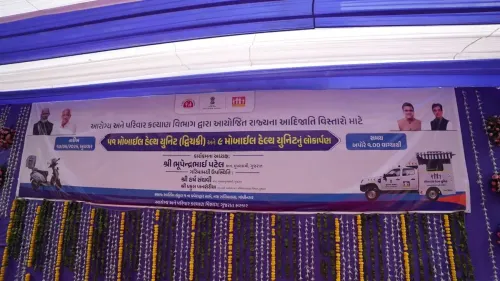
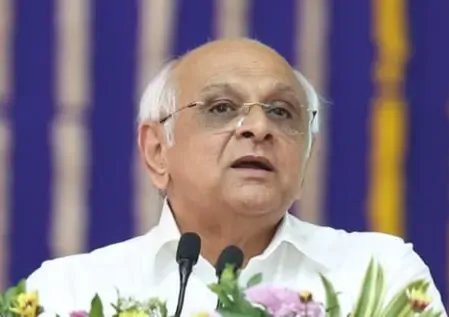
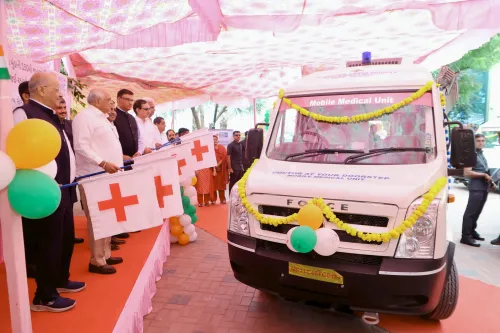
CM Bhupendra Patel Launches 60 Mobile Health Units for Gujarat Tribal Areas
Synopsis
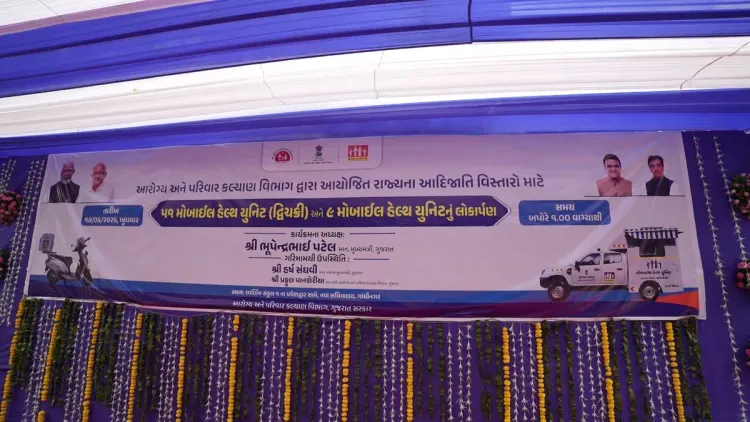
Gujarat CM Bhupendra Patel launched 60 GPS-tracked Mobile Health Units — 51 two-wheelers and 9 four-wheelers — from Gandhinagar on 17 June 2026 to deliver primary care, maternal welfare, and diagnostic services to tribal communities in the state's most inaccessible regions.
Key Takeaways
60 Mobile Health Units — 51 two-wheelers and 9 four-wheelers — were launched from Gandhinagar on 17 June 2026 .
Units are equipped with digital BP machines, glucometers, haemoglobin meters, and thermometers for on-site diagnostics.
Services include general OPD, maternal and child welfare, and family welfare consultations.
All vehicles will be monitored via GPS in real time to track coverage across remote tribal blocks.
Two-wheeler units are designed to reach areas where larger vehicles cannot access due to difficult terrain.
The initiative targets tribal residents in districts such as Dahod, Panchmahal, and the Dangs .
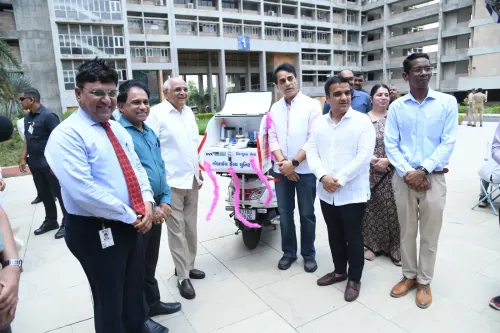
Gujarat Chief Minister Bhupendra Patel on Wednesday, 17 June 2026, launched 51 two-wheeler and 9 four-wheeler Mobile Health Units from Gandhinagar, directing them toward the state's most remote and interior tribal regions where fixed health facilities remain out of reach due to difficult terrain.
Context
Posting on X in Gujarati, CM Patel described the initiative as rooted in the government's commitment to deliver healthcare at the doorstep of citizens living in durgam ane antariyaL adivasi vistaaro (extremely remote and interior tribal areas). He said the units are 'not merely a mode of transport but moving clinics equipped with modern medical instruments.'
The two-wheeler units are specifically designed to navigate narrow tracks and steep gradients where larger ambulances or vans cannot enter — a persistent gap in tribal healthcare delivery across Gujarat's hilly and forested districts.
Policy Backdrop
Gujarat has run Mobile Medical Units under the National Health Mission since the mid-2000s, and expanded diagnostic outreach through the Mukhyamantri Amrutam Yojana launched in 2012. The new fleet deepens that lineage by adding technology-enabled real-time oversight.
Each unit carries a digital blood-pressure machine, glucometer, haemoglobin meter, and thermometer, and will provide general OPD services, maternal and child welfare, and family welfare consultations. All 60 vehicles will be tracked via GPS in real time, allowing the state health administration to monitor coverage and response patterns continuously.
This aligns with the National Health Policy 2017's emphasis on accessible primary care and digital monitoring to reduce out-of-pocket expenditure in underserved Scheduled Tribe belts.
Stakeholders and Impact
The primary beneficiaries are tribal residents in districts such as Dahod, Panchmahal, and the Dangs — areas where geographic isolation has historically meant long travel times to the nearest Primary Health Centre, often discouraging timely consultation for chronic conditions like hypertension and anaemia.
Frontline health workers, including ASHAs and ANMs, are expected to coordinate with the mobile units for last-mile referrals and follow-up care. The maternal and child welfare component directly targets indicators such as institutional delivery rates and infant nutrition in high-priority tribal blocks.
What's Next
State health officials will be expected to publish quarterly utilisation data from the deployed fleet, which could form the basis for scaling the initiative to additional tribal blocks. Integration with Ayushman Bharat Digital Mission health IDs would allow patient records generated during mobile visits to feed into a unified digital health ecosystem.
The GPS monitoring framework also opens the possibility of performance-linked accountability for the units, a model that could be replicated by other states with large Scheduled Tribe populations seeking to close the rural-urban healthcare gap.
Point of View
And that smaller, nimbler platforms are needed to fill the gap. Anchoring the launch in Gandhinagar and coupling it with GPS monitoring gives the initiative a visible accountability layer that past mobile medical unit programmes often lacked. For CM Patel, the move reinforces the BJP's tribal welfare narrative ahead of any future electoral cycle in a state where Scheduled Tribe constituencies hold significant sway. The real test, however, will be in utilisation data: whether the units consistently reach the most isolated hamlets or cluster around more accessible points will determine whether this is transformative policy or symbolic optics.
NationPress
19 Sept 2026
Frequently Asked Questions
What are the Mobile Health Units launched by Gujarat CM Bhupendra Patel?
They are 60 GPS-tracked travelling clinics — 51 on two-wheelers and 9 on four-wheelers — launched on 17 June 2026 to deliver primary healthcare to remote tribal communities in Gujarat.
Which areas will the Gujarat Mobile Health Units serve?
The units will serve extremely remote and interior tribal regions of Gujarat, including difficult terrain in districts such as Dahod, Panchmahal, and the Dangs, where larger vehicles cannot easily reach.
What medical equipment do Gujarat's new mobile health units carry?
Each unit is equipped with a digital blood-pressure machine, glucometer, haemoglobin meter, and thermometer, and provides general OPD, maternal and child welfare, and family welfare services.
How will Gujarat track the Mobile Health Units?
All 60 vehicles will be monitored via GPS in real time, allowing state health authorities to track their location and ensure consistent coverage of targeted tribal blocks.
Why are two-wheeler health units used in Gujarat tribal areas?
Two-wheelers can navigate narrow tracks and steep terrain in interior tribal regions where larger ambulances or vans are unable to reach, ensuring timely medical access for isolated communities.