CM Bhupendra Patel Flags Off 60 Mobile Health Units Across 14 Gujarat Districts
Synopsis
Chief Minister Bhupendra Patel flagged off 60 mobile health units — 51 two-wheelers and 9 vans — from Gandhinagar on 17 June 2026, deploying them to 14 Gujarat districts to deliver doorstep healthcare to tribal and remote communities, advancing PM Modi's 'Healthcare for All' vision.
Key Takeaways
60 mobile health units — comprising 51 two-wheeler units and 9 health vans — were flagged off from Gandhinagar on 17 June 2026 .
The units are equipped with advanced medical equipment and will serve 14 districts across Gujarat.
Primary beneficiaries are residents of tribal and geographically remote areas who lack easy access to fixed health facilities.
The flag-off was attended by Deputy CM Harsh Sanghvi and Health Minister Praful Pansheriya , reflecting high-level cabinet commitment.
The initiative is framed as advancing PM Narendra Modi 's 'Healthcare for All' goal and aligns with the Ayushman Bharat programme and National Health Policy 2017 .
Utilisation and health outcome data over the next 12–18 months will determine the scope of any fleet expansion.
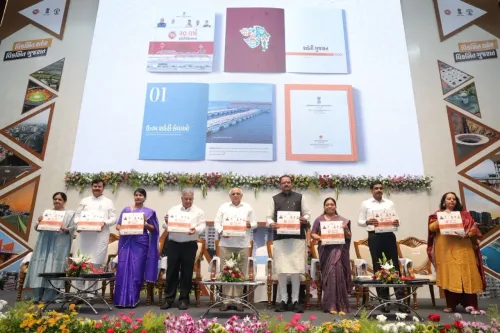
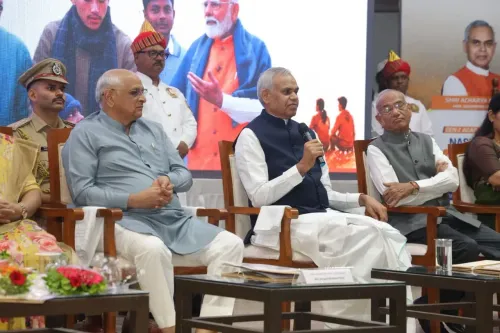
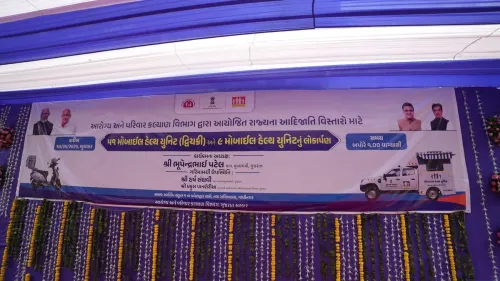
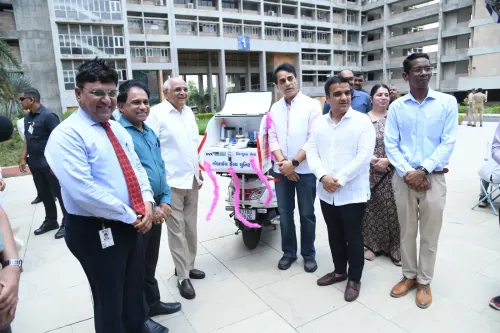
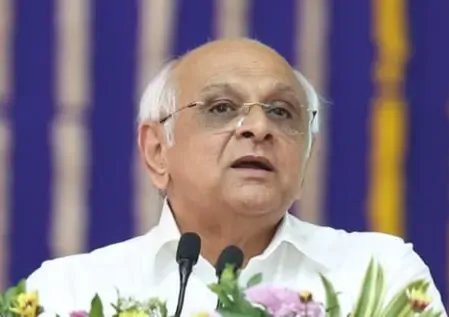
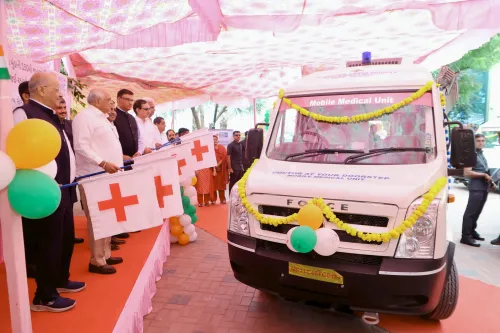
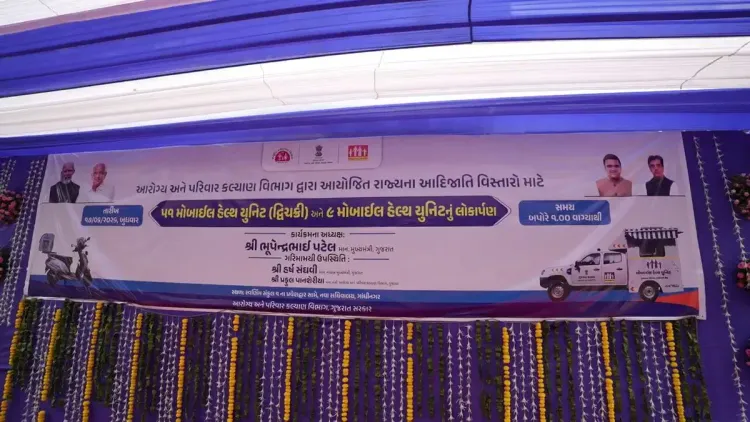
Chief Minister Bhupendra Patel on Wednesday, 17 June 2026, flagged off 51 two-wheeler mobile health units and 9 mobile health van units from Gandhinagar, deploying them across 14 districts of Gujarat to extend last-mile healthcare to tribal and remote communities. The ceremony was held in the presence of Deputy Chief Minister Harsh Sanghvi and Health Minister Praful Pansheriya.
Context
The Chief Minister's Office of Gujarat announced the flag-off in a post on X, stating in Gujarati: 'મોબાઇલ હેલ્થ યુનિટ્સ... આદિજાતિ અને અંતરિયાળ વિસ્તારોના નાગરિકોને ગુણવત્તાસભર, સુલભ અને સમયસર આરોગ્ય સેવાઓ ઘરઆંગણે મળતી થવાથી' — meaning these units will deliver 'quality, accessible and timely health services at the doorstep of citizens in tribal and remote areas.' The post framed the rollout as advancing Prime Minister Narendra Modi's 'Healthcare for All' vision.
The fleet comprises two distinct delivery models: lightweight two-wheeler units capable of navigating narrow village tracks, and larger health vans equipped with advanced medical equipment for more comprehensive on-site diagnosis and treatment.
Policy Backdrop
Gujarat has been deploying mobile medical units since the mid-2010s to address primary care deficits in its eastern tribal belt, where geography and poor road connectivity have historically made fixed health facilities difficult to access. The current expansion aligns with the National Health Policy 2017, which emphasises accessible services for underserved populations, and with the Ayushman Bharat programme launched in 2018 to strengthen primary healthcare through Health and Wellness Centres in rural and tribal areas.
The two-tier mobile model — combining agile two-wheelers with fully equipped vans — reflects a deliberate strategy to maximise geographic penetration while ensuring clinical capacity is available at the point of care.
Stakeholders and Impact
The primary beneficiaries are residents of tribal communities and geographically isolated villages spread across the 14 districts targeted in this phase. For these populations, distance to the nearest primary health centre has long been a structural barrier to timely care, particularly for maternal health, childhood immunisation, and management of non-communicable diseases.
Deputy Chief Minister Harsh Sanghvi and Health Minister Praful Pansheriya were present at the flag-off, signalling cross-departmental political commitment to the programme. The attendance of senior cabinet members underscores the state government's intent to position this rollout as a flagship health-delivery initiative.
What's Next
Utilisation data and health outcome metrics from the 14 districts over the next 12 to 18 months will be critical in assessing the programme's reach and effectiveness. Analysts and civil society groups tracking rural health equity will watch whether the units sustain regular schedules in the most remote habitations.
Any announcement on fleet expansion beyond the current 60 units will indicate whether the state intends to scale this model to the remaining districts not covered in this phase, potentially making it a template for other states pursuing last-mile health delivery under the national 'Healthcare for All' framework.
Point of View
The state government is simultaneously advancing a local programme and reinforcing its alignment with the Centre's flagship health agenda ahead of any future electoral cycle. The two-tier model — agile two-wheelers plus equipped vans — is a pragmatic design choice that acknowledges the terrain realities of tribal Gujarat rather than relying solely on road-dependent larger vehicles. Whether this translates into measurable improvements in health indicators for the 14 districts will depend on operational consistency, community outreach, and the quality of the equipment deployed — all factors that post-launch monitoring must scrutinise.
NationPress
16 Sept 2026
Frequently Asked Questions
What are the mobile health units flagged off by CM Bhupendra Patel?
CM Bhupendra Patel flagged off 51 two-wheeler mobile health units and 9 mobile health vans from Gandhinagar on 17 June 2026. These units are equipped with advanced medical equipment and are designed to deliver healthcare services directly to residents of tribal and remote areas across 14 Gujarat districts.
Which districts in Gujarat will receive these mobile health units?
The mobile health units have been deployed across 14 districts of Gujarat. The specific district names were not enumerated in the official announcement, but the programme targets areas with tribal populations and limited access to fixed health facilities.
How does this relate to PM Modi's Healthcare for All vision?
The Gujarat government has framed this rollout as advancing Prime Minister Narendra Modi's 'Healthcare for All' goal, which seeks universal access to quality health services. The initiative aligns with the Ayushman Bharat programme and the National Health Policy 2017, both of which emphasise primary care access for underserved rural and tribal populations.
Who was present at the mobile health unit flag-off in Gandhinagar?
Deputy Chief Minister Harsh Sanghvi and Health Minister Praful Pansheriya were present at the flag-off ceremony alongside Chief Minister Bhupendra Patel in Gandhinagar.
Why are two-wheeler health units used in Gujarat's tribal areas?
Two-wheeler mobile health units are used because they can navigate narrow village tracks and difficult terrain in Gujarat's tribal and remote areas where larger vehicles cannot easily reach. They complement the larger health vans by extending coverage to the most geographically isolated habitations.