Maharashtra drought 2026: Fadnavis declares relief in 265 talukas, lists 12 measures
Synopsis
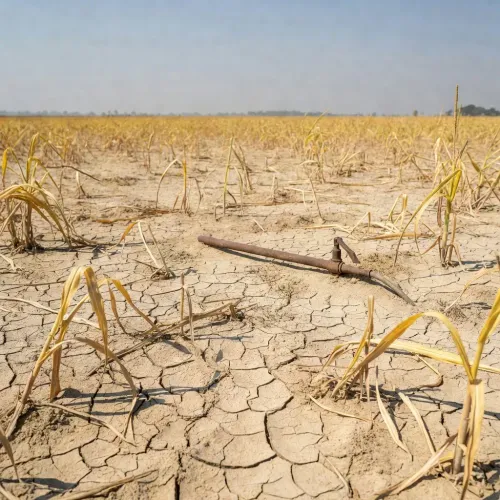
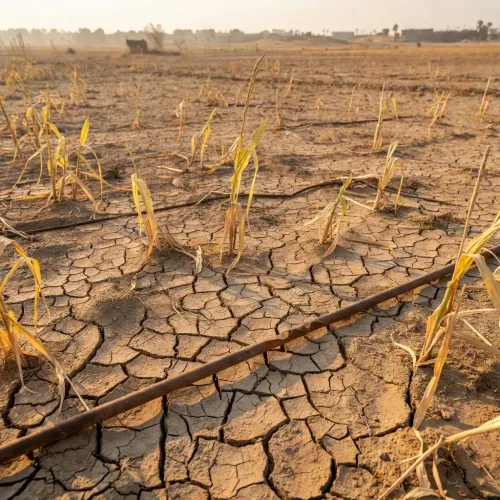
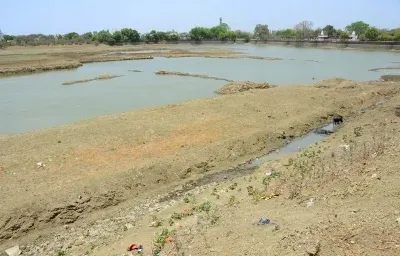
Maharashtra has declared drought across 265 of its 358 talukas — the most sweeping agricultural distress declaration of the Kharif 2026 season. With 12 relief measures immediately activated and District Collectors ordered to begin field inspections, CM Fadnavis has fast-tracked the response but deferred the critical question of crop-loss compensation to a later GR, keeping millions of farmers in wait.
Key Takeaways
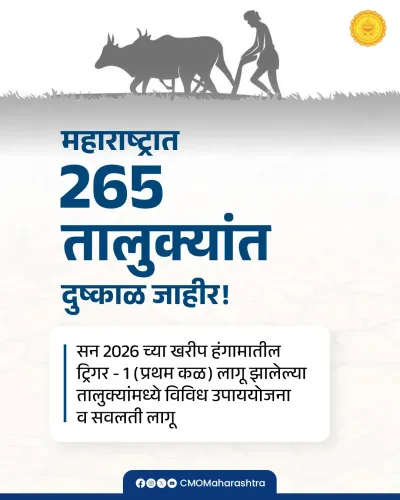
Devendra Fadnavis declared drought across 265 of Maharashtra's 358 talukas on 26 September 2026 via a Government Resolution under the Drought Management Code 2016 .
12 relief measures have been activated, covering loan restructuring, electricity concessions for pumps above 7.5 HP , MGNREGS norm relaxations, and water tanker deployment.
The Chhatrapati Sambhajinagar division has the highest share at 74 talukas ; Thane and Palghar districts are not included.
District Collectors have been ordered to begin panchnamas (spot inspections) immediately, using photographs and GPS coordinates .
Financial compensation for crop loss will be announced through a separate GR once survey requirements are fulfilled.
Maharashtra Chief Minister Devendra Fadnavis on Saturday, 26 September 2026, formally declared drought across 265 of the state's 358 talukas, announcing 12 relief measures for farmers, agricultural labourers, students, and livestock in affected areas. The declaration, issued through a Government Resolution (GR) under the Drought Management Code 2016, follows a Kharif 2026 season review by the State Agriculture Commissioner that confirmed drought-like conditions across six revenue divisions.
Scale of the Drought Declaration
The 265 talukas where Trigger-1 (First Trigger) has been activated span all major revenue divisions: 12 talukas in the Thane division, 49 in Nashik, 35 in Pune, 74 in Chhatrapati Sambhajinagar, 56 in Amravati, and 39 in Nagpur. The trigger was applied based on rainfall deficits and other contributing factors recorded from June 2026 to the present date. Notably, no talukas from Thane and Palghar districts are included in the current list.
In the Thane revenue division, affected talukas include Shrivardhan in Raigad district, Ratnagiri, Sangameshwar, and Rajapur in Ratnagiri district, and Sawantwadi, Dodamarg, Kankavli, Kudal, Vaibhavwadi, Malvan, Devgad, and Vengurla in Sindhudurg district. The Chhatrapati Sambhajinagar division — covering Jalna, Beed, Latur, Dharashiv, Nanded, Parbhani, and Hingoli districts — accounts for the single largest chunk with 74 talukas.
The 12 Relief Measures
Chief Minister Fadnavis outlined the following concessions for drought-affected talukas: exemption from land revenue; restructuring of crop loans; a stay on recovery of agriculture-related loans; concessions on electricity bills for agricultural pumps above 7.5 HP capacity (bills for pumps up to that capacity have already been waived); fee waiver for school and college students in examinations; and relaxation of norms under the Mahatma Gandhi National Rural Employment Guarantee Scheme (MGNREGS) to maximise work deployment.
Additional measures include deployment of water tankers for drinking water supply where needed; no disconnection of electricity to agricultural pumps in scarcity-declared villages; guaranteed food grain supply to prevent shortages; adequate fodder arrangements for livestock; and initiation of water conservation works alongside planning for drinking water and livestock water requirements.
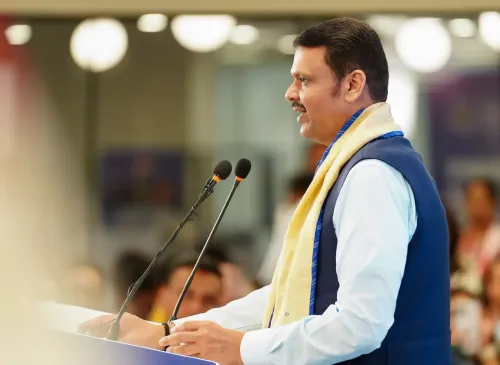
'Drought has been declared in 265 talukas across the state. The government has decided to implement 12 measures and concessions to provide relief to farmers, students, agricultural labourers, citizens, and livestock in these talukas,' Fadnavis said.
Survey Process and Field Action
Immediately following the GR, Fadnavis directed all concerned District Collectors to initiate spot inspections — known as panchnamas — without delay. Crop condition reports are to be compiled using photographs alongside GPS coordinates, documenting the status of standing crops in surveyed areas. The Revenue Department, Agriculture Department, and all related agencies have been instructed to work 'with sensitivity and coordination' and maintain continuous field-level communication.
'Due to a lack of rainfall, farmers are facing significant hardships. Immediate surveys will have to be conducted in the talukas where drought conditions have been declared,' Fadnavis said, emphasising priority action.
Financial Relief and What Comes Next
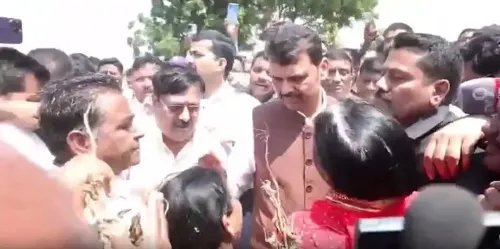
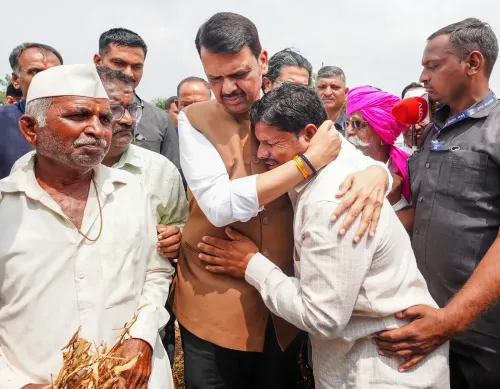
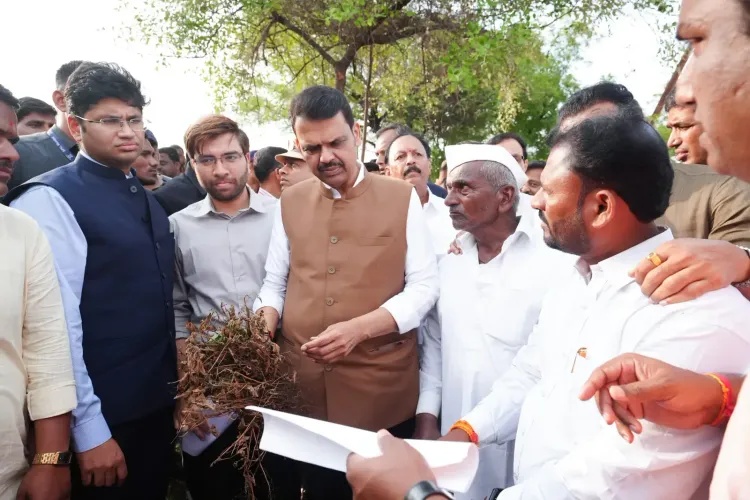
Fadnavis clarified that financial relief for crop loss will be announced through a separate GR once all prescribed procedural requirements — including the completion of accurate panchnamas — are fulfilled. He said the government has placed 'special emphasis' on the accuracy of the survey process before committing specific compensation figures. The Chief Minister had earlier undertaken a personal field tour across drought-affected regions, visiting farms and meeting farmers directly before Saturday's formal declaration.
With surveys now formally underway and compensation details to follow, the pace and coverage of the panchnama process will determine how quickly relief reaches Maharashtra's distressed farming communities.
Point of View
With bureaucratic bottlenecks between survey completion and GR issuance eating into the relief timeline. The decision to defer financial compensation to a 'separate GR' is procedurally defensible but leaves the most vulnerable farmers — those who have already lost standing crops — in limbo. The personal field visits by Fadnavis signal political seriousness, but the real accountability marker will be whether the 12 measures translate into verifiable outcomes before the next agricultural season begins.
NationPress
26 Sept 2026
Frequently Asked Questions
How many talukas has Maharashtra declared drought-affected in 2026?
Maharashtra has declared drought across 265 of its 358 talukas as of 26 September 2026, following a Kharif 2026 season review by the State Agriculture Commissioner. The declaration covers all six major revenue divisions of the state.
What are the 12 drought relief measures announced by CM Fadnavis?
The measures include exemption from land revenue, crop loan restructuring, a stay on agriculture loan recovery, electricity bill concessions for pumps above 7.5 HP, exam fee waivers for students, MGNREGS norm relaxations, water tanker deployment, no electricity disconnection in scarcity-hit villages, food grain supply assurance, livestock fodder arrangements, and water conservation works. Financial relief for crop loss will be detailed in a separate GR after surveys are completed.
Which regions of Maharashtra are worst affected by the drought?
The Chhatrapati Sambhajinagar division has the highest number of affected talukas at 74, covering districts including Beed, Latur, Dharashiv, Nanded, Parbhani, and Hingoli. The Amravati division follows with 56 talukas, and the Nashik division has 49. Notably, Thane and Palghar districts are not included in the current declaration.
When will farmers receive financial compensation for crop loss?
Chief Minister Fadnavis said financial relief for crop loss will be announced through a separate Government Resolution once all prescribed procedural requirements — including panchnamas (spot inspections) and crop condition surveys — are completed. A specific date has not been announced.
What is the panchnama process and why is it important for drought relief?
A panchnama is a spot inspection conducted by revenue officials to document crop conditions on the ground, using photographs and GPS coordinates. It is the mandatory procedural step that must be completed before the government can release financial compensation to drought-affected farmers, making its speed and accuracy critical to the relief timeline.