Maharashtra drought 2026: 265 talukas declared, 12-point relief package announced
Synopsis
Maharashtra has declared drought across 265 of its 358 talukas — nearly three-quarters of the state — after the 2026 Kharif monsoon failed. A 12-point relief package covering loan stays, electricity bill exemptions, MGNREGA relaxation, and water tanker deployment is now in force. With Vidarbha and Marathwada bearing the worst of the shortfall, and senior leaders conducting rare pre-declaration field visits, the agrarian crisis is already carrying significant political weight.
Key Takeaways
Maharashtra declared drought in 265 of 358 talukas (nearly 75% ) on 26 September 2026 following deficient 2026 Kharif season rainfall.
The declaration was made under Trigger-1 of the Drought Management Code, 2016 , following a report by the Commissioner of Agriculture .
A 12-point relief package includes full land revenue waiver, agricultural loan restructuring and recovery stay, MGNREGA norm relaxation, electricity bill exemptions, student exam fee waivers, and water tanker deployment.
Chhatrapati Sambhajinagar division is worst affected with 74 talukas ; Yavatmal ( 16 ) and Jalgaon ( 15 ) are the worst-hit districts.
Chief Minister Devendra Fadnavis said funds will not be a constraint; Deputy CMs Sunetra Pawar and Eknath Shinde visited drought-hit villages before the declaration.
District Collectors have been directed to conduct immediate geotagged panchnama assessments of crop loss across all affected talukas.
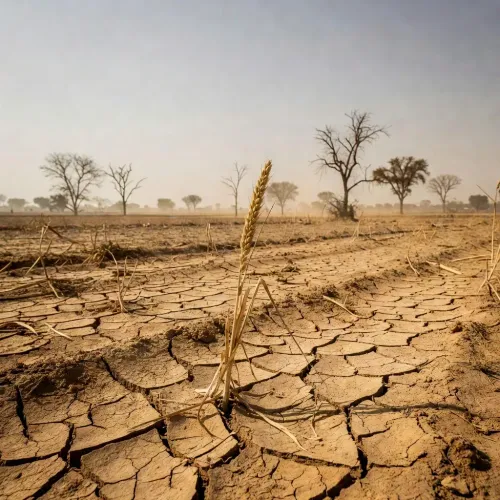
The Maharashtra government on Saturday, 26 September 2026, declared drought conditions across 265 of the state's 358 talukas — nearly 75 per cent of all revenue sub-districts — following deficient monsoon rainfall during the 2026 Kharif season. The declaration, issued through a Government Resolution (GR) by the state's Relief and Rehabilitation Department, triggers a comprehensive 12-point relief and concessions package for affected farmers, agricultural labourers, and rural households.
Trigger-1 Activation and Ground Assessment
The declaration was issued following activation of Trigger-1 guidelines under the Drought Management Code, 2016, and on the basis of a report submitted by the Commissioner of Agriculture. District Collectors across the affected zones have been directed to immediately begin panchnama (field crop-loss assessments), collecting geotagged photographs with GPS coordinates of damaged farmland. A comprehensive crop assessment report must be submitted to the government through the Agriculture Commissioner.
The 265 talukas are spread across all six revenue divisions of Maharashtra. Chhatrapati Sambhajinagar division accounts for the largest share with 74 talukas, followed by Amravati (56), Nagpur (39), Nashik (49), Pune (35), and Konkan (12). Within these, severely affected districts include Yavatmal (16 talukas), Jalgaon (15), Nanded (14), Amravati (14), Nagpur (14), and Chandrapur (12).
What the 12-Point Relief Package Covers
The state government has announced a sweeping relief framework for the affected talukas. Key measures include a full waiver of land revenue, restructuring of existing agricultural loans, and an immediate stay on recovery of all agriculture-related bank loans. Farmers operating agricultural pumps above 7.5 HP capacity will receive exemptions or concessions on current electricity bills — pumps below 7.5 HP were already waived. School and college students in the affected zones will receive a waiver of examination fees.
On the employment and food security front, the government has announced relaxation of work norm criteria under the Mahatma Gandhi National Rural Employment Guarantee Act (MGNREGA) to maximise job generation, along with targeted distribution systems to prevent food grain shortages for farmers and daily-wage workers. Strict orders have been issued prohibiting disconnection of agricultural pump power supplies in declared scarcity-affected villages. The package also mandates deployment of water tankers wherever drinking water shortages arise, measures to ensure adequate fodder supply for cattle, and immediate rollout of water conservation works in affected belts.
What Senior Leaders Said
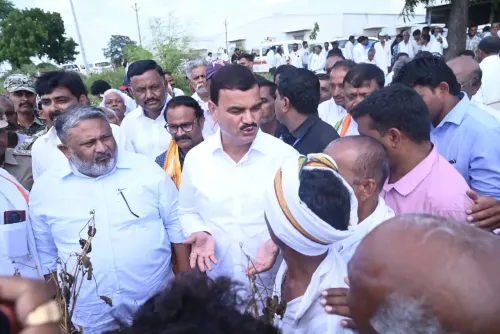
Deputy Chief Minister Sunetra Pawar, who was visiting drought-hit villages in Nanded district at the time of the announcement, assured farmers that the government would not leave them 'in the lurch.' Agriculture Minister Dattatray Bharane confirmed the declaration alongside Pawar.
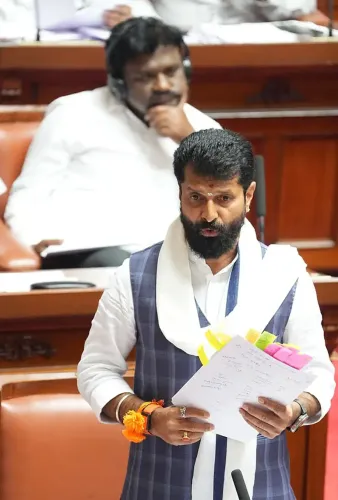
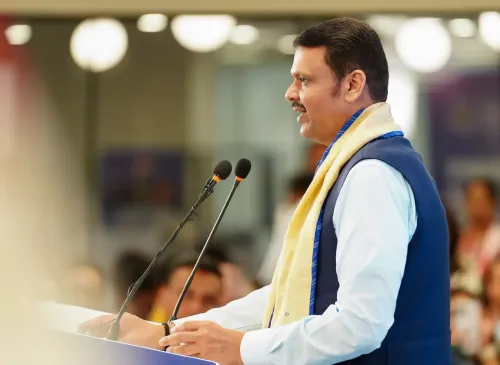
Chief Minister Devendra Fadnavis, who had visited Marathwada, Vidarbha, and Solapur district two days earlier, said that funds would not be a constraint in addressing the agrarian crisis. Deputy Chief Minister Eknath Shinde, who also visited drought-affected villages in Vidarbha, urged farmers not to lose heart, promising 'substantial financial assistance.'
Why This Matters
The scale of this declaration — covering nearly three-quarters of Maharashtra's talukas — makes it one of the most extensive drought designations in recent years. The Marathwada and Vidarbha regions, perennially among India's most drought-prone agricultural belts, together account for the bulk of the affected talukas. These regions also have among the highest rates of farmer indebtedness in the country, making timely loan stays and employment generation critical to preventing further rural distress.
This comes amid a broader pattern of erratic monsoon performance in central and peninsular India in 2026, with the Kharif season reporting below-normal rainfall across large swaths of the state. Notably, the government's proactive senior-level field visits before the official declaration signal the political weight attached to this crisis ahead of any local body election cycles.
What Comes Next
District-level panchnama assessments are expected to determine final crop loss figures, which will inform the scale of direct compensation to individual farmers. Water tanker deployments and MGNREGA job-card activations are expected to begin immediately in priority villages. The government has indicated that planning for long-term drinking and livestock water resources will proceed in parallel with emergency relief operations.
Point of View
MGNREGA relaxation, and water tankers are the standard toolkit, and their effectiveness will depend entirely on how fast district machinery translates GR language into field action. What is notable this time is the unusual spectacle of all three top leaders — Fadnavis, Pawar, and Shinde — making pre-declaration field visits, suggesting the government is acutely aware of the political combustibility of agrarian distress in Vidarbha and Marathwada. The real accountability question is whether geotagged panchnama assessments will produce verifiable crop loss data that drives proportionate direct compensation, or whether the declaration remains an administrative formality while individual farmers wait months for relief to materialise.
NationPress
26 Sept 2026
Frequently Asked Questions
How many talukas have been declared drought-affected in Maharashtra in 2026?
Maharashtra has declared drought conditions in 265 of its 358 talukas — nearly 75 per cent of all revenue sub-districts in the state — following deficient monsoon rainfall during the 2026 Kharif season. The declaration was issued on 26 September 2026 under Trigger-1 of the Drought Management Code, 2016.
What relief measures are included in Maharashtra's 12-point drought package?
The package covers a full waiver of land revenue, restructuring and recovery stay on agricultural bank loans, exemptions on electricity bills for agricultural pumps above 7.5 HP, waiver of exam fees for students in affected zones, relaxed MGNREGA work norms for maximum employment, water tanker deployment, prohibition on disconnecting agricultural pump power supplies, targeted food grain distribution, fodder supply for cattle, and immediate water conservation works.
Which regions of Maharashtra are worst affected by the 2026 drought?
Chhatrapati Sambhajinagar division is the worst affected with 74 talukas declared drought-hit, followed by Amravati division (56 talukas) and Nashik division (49 talukas). Among individual districts, Yavatmal (16 talukas), Jalgaon (15), Nanded (14), Amravati (14), and Nagpur (14) have the highest number of affected talukas.
What has the Maharashtra government said about funding the drought relief?
Chief Minister Devendra Fadnavis, who visited Marathwada, Vidarbha, and Solapur district two days before the declaration, said that funds will not be an obstacle in tackling the agrarian crisis. Deputy Chief Ministers Sunetra Pawar and Eknath Shinde also visited drought-affected villages and pledged substantial financial assistance to farmers.
What is the Trigger-1 drought declaration under the Drought Management Code, 2016?
Trigger-1 is the first level of drought severity under Maharashtra's Drought Management Code, 2016, activated when rainfall deficiency and crop stress indicators cross defined thresholds. Once Trigger-1 is activated, it mandates a formal government declaration and the rollout of a prescribed relief package, including field assessments by District Collectors and state-level concessions for affected farmers and rural households.