Maharashtra drought crisis: 83 talukas in 19 districts dry for 20+ days
Synopsis
Maharashtra's monsoon failure is no longer just a weather story — it is an agrarian emergency. With 83 talukas dry for over 20 days, crop losses already exceeding 37% in Beed, and even ruling coalition members demanding a drought declaration, the state government is caught between NDRF procedural timelines and a fast-deepening rural crisis.
Key Takeaways
83 talukas across 19 districts in Maharashtra have received no rainfall for more than 20 days , triggering a Kharif crop crisis.
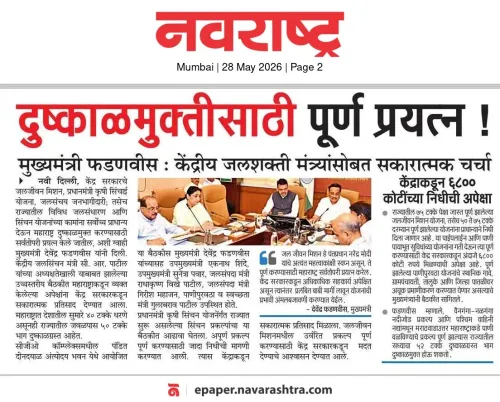
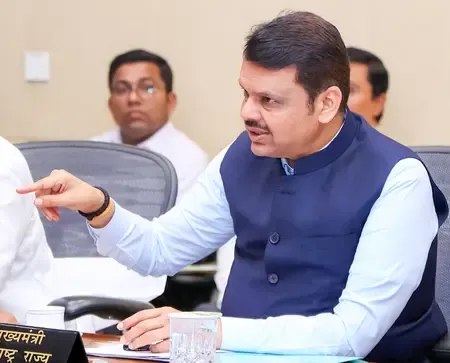
Chief Minister Devendra Fadnavis placed the state administration on high alert during Tuesday's Cabinet meeting; no relief package was announced immediately.
A formal drought declaration cannot be issued before 5 October under NDRF and Central Drought Management norms, to protect farmers' eligibility for central aid.
Crop damage in Beed stands at 37.21% of sown area; Jalna at 27.83% ; yields in Western Maharashtra expected to fall 20–25% .
A Yellow Mosaic virus outbreak has been detected on soybean crops, adding to the distress.
Opposition leaders and NCP MLA Dhananjay Munde of the ruling coalition have demanded an immediate drought declaration and emergency relief for Marathwada .
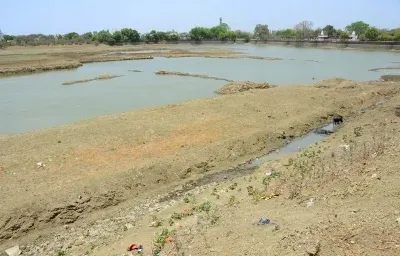
Maharashtra's Kharif crop season is facing a severe crisis as 83 talukas across 19 districts have recorded no rainfall for more than 20 days, pushing large swathes of Marathwada, Vidarbha, and Western Maharashtra to the brink of drought. The prolonged dry spell has triggered emergency discussions at the state's highest levels, with Chief Minister Devendra Fadnavis placing the administrative machinery on high alert.
Cabinet on High Alert
During Tuesday's Cabinet meeting, Chief Minister Devendra Fadnavis and several ministers expressed deep concern over the deteriorating agrarian situation. No immediate relief package was announced, but CM Fadnavis directed all district-level officials to stay on standby. Revenue Minister Chandrashekhar Bawankule and the Chief Minister jointly instructed all District Collectors and field administrators to prepare preliminary relief proposals without delay.
Local administration across affected districts — particularly in Marathwada — has been ordered to prioritise existing dam storage strictly for drinking water, guarding against potential urban and rural water crises.
Why a Formal Drought Cannot Be Declared Yet
Following the Cabinet discussion, the government clarified that an official drought declaration cannot be issued immediately. Under National Disaster Response Fund (NDRF) guidelines and Central Drought Management norms, formal crop-damage surveys — known as Panchnamas — and ground verification must be conducted only after 5 October to qualify for central financial relief. Conducting assessments before that date would disqualify affected farmers from official aid and result in an inaccurate estimation of damage, according to the agriculture department's presentation cited by government sources. The state is currently drafting a comprehensive list of relief measures while officials have been urged to coordinate effectively.
Crop Damage Across Regions
State agriculture department data paints a grim picture of region-wise crop losses. In Beed, 37.21% of the sown area has been damaged; in Jalna, 27.83%; and in Chhatrapati Sambhajinagar, 7.06%. In Latur, Dharashiv, and Parbhani, soybean, green gram (moong), black gram (udid), and cotton crops on light soils are drying up rapidly.
A widespread outbreak of the Yellow Mosaic virus on soybean crops has also been detected, compounding the stress. In the rain-fed tracts of Solapur, Satara, Sangli, and Ahilyanagar, moong, udid, soybean, maize, and bajra crops are under severe strain, with yields expected to drop by 20 to 25%.
In Vidarbha, soybean and cotton face significant risk across several talukas of Amravati, Akola, Buldhana, and Washim, which have reported a two-to-three-week dry spell. Paddy transplantation has been delayed in parts of Nagpur, Chandrapur, and Gadchiroli due to deficient rainfall. In North Maharashtra, maize, cotton, and other crops in Nandurbar and select talukas of Nashik have seen stunted growth. Nandurbar has received only 46.6% of its normal seasonal rainfall. Partial relief has arrived in parts of Dhule and Jalgaon following recent showers.
Opposition Demands Immediate Relief
Opposition leaders have sharpened their criticism of the government's wait-and-watch approach. Congress leaders Vijay Wadettiwar and Solapur MP Praniti Shinde, along with leaders from Shiv Sena (UBT), have demanded an immediate drought declaration for the affected districts. They highlighted that 19 districts and over 83 tehsils face severe rainfall deficits and looming fodder and water shortages.
The opposition has urged the state government to issue an emergency relief package, waive crop loans, and establish fodder camps and tanker water supply without waiting for formal post-monsoon timelines. Notably, even within the ruling Mahayuti coalition, pressure is mounting — NCP MLA Dhananjay Munde has written to Chief Minister Fadnavis requesting a drought declaration specifically for the hard-hit Marathwada region.
What the Government Is Doing Now
While the state awaits the mandatory 5 October survey window, the government is drafting emergency relief lists, evaluating fodder supply availability for livestock, and directing agricultural departments to guide farmers on protective irrigation for surviving Kharif crops. Severe rainfall deficits have been reported across Solapur, Kolhapur, Beed, Latur, Dharashiv, Parbhani, Hingoli, Akola, Washim, Amravati, Wardha, Nagpur, and Chandrapur. With the October survey deadline approaching and political pressure mounting from both sides of the aisle, the state's response in the coming weeks will be critical for millions of farmers across Maharashtra.
Point of View
Contested damage estimates, and relief that arrives after the harvest window has closed. The deeper question is whether the state's drought-response architecture — built around post-monsoon verification — is structurally equipped to handle mid-season emergencies of this scale.
NationPress
16 Sept 2026
Frequently Asked Questions
How many talukas and districts in Maharashtra are facing a dry spell?
As of 16 September, 83 talukas across 19 districts in Maharashtra have recorded no rainfall for more than 20 days. The worst-affected regions are Marathwada, Vidarbha, and Western Maharashtra.
Why has the Maharashtra government not declared a drought yet?
Under National Disaster Response Fund (NDRF) guidelines and Central Drought Management norms, official crop-damage surveys (Panchnamas) can only be conducted after 5 October. Conducting assessments earlier would disqualify affected farmers from central government relief aid and could lead to inaccurate damage estimates.
Which crops are most affected by the Maharashtra dry spell?
Soybean, cotton, green gram (moong), black gram (udid), maize, bajra, and paddy are the worst-hit crops. A Yellow Mosaic virus outbreak on soybean has been additionally reported. Yields in Western Maharashtra are expected to drop by 20 to 25%.
What relief measures is the Maharashtra government taking right now?
The government is drafting emergency relief lists, assessing fodder availability for livestock, and advising farmers on protective irrigation for surviving Kharif crops. Dam storage in affected districts — especially Marathwada — has been reserved strictly for drinking water use.
Who is demanding an immediate drought declaration in Maharashtra?
Congress leaders Vijay Wadettiwar and Solapur MP Praniti Shinde, along with Shiv Sena (UBT) leaders, have demanded an immediate drought declaration and emergency relief package. NCP MLA Dhananjay Munde from the ruling Mahayuti coalition has also written to Chief Minister Devendra Fadnavis requesting a drought declaration for Marathwada.