CM Dhami pays tribute to Sardar Patel in Dehradun on birth anniversary
Synopsis
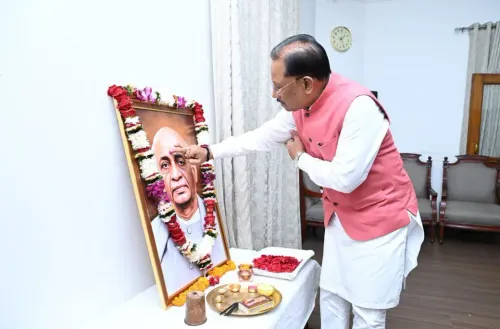
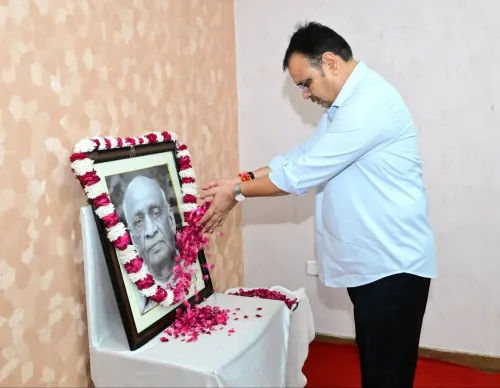
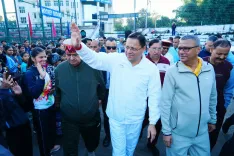
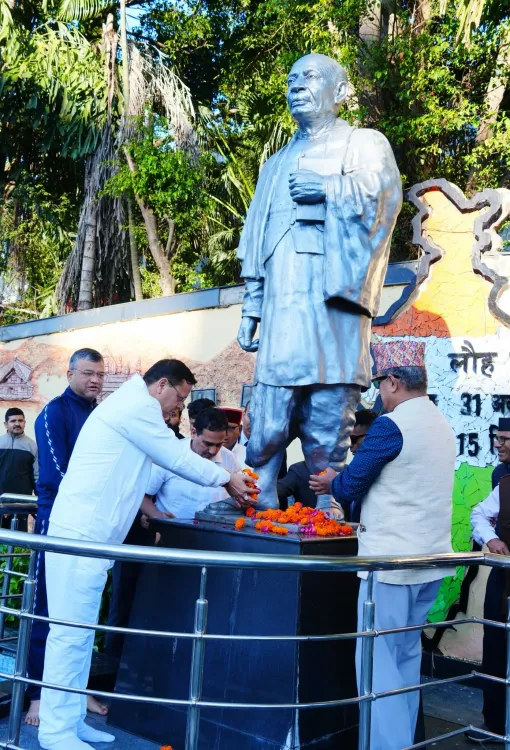
Uttarakhand Chief Minister Pushkar Singh Dhami paid floral tributes to Sardar Vallabhbhai Patel at a statue in Dehradun on National Unity Day, 31 October 2026, joined by Cabinet Minister Khajan Dass and Dehradun Mayor Saurabh Thapliyal.
Key Takeaways
CM Pushkar Singh Dhami offered floral tributes at Sardar Patel's statue in Dehradun on 31 October 2026 .
The event marked National Unity Day (Rashtriya Ekta Diwas) , instituted in 2014 to commemorate Patel's birth anniversary.
Cabinet Minister Khajan Dass and Dehradun Mayor Saurabh Thapliyal attended the ceremony.
Dhami credited Patel with integrating more than 500 princely states into the Indian Union after 1947 .
State-level tributes on this date are a recurring annual practice for BJP-led governments across India.
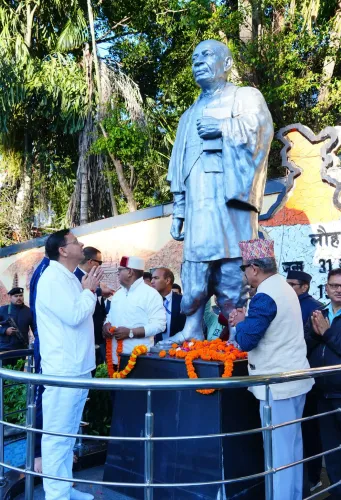
On the 131st birth anniversary of Sardar Vallabhbhai Patel — the man who stitched together a fractured subcontinent — Uttarakhand Chief Minister Pushkar Singh Dhami offered floral tributes at Patel's statue in Dehradun on Saturday, 31 October 2026, marking National Unity Day (Rashtriya Ekta Diwas) with solemn ceremony.
CM Dhami described Patel as the 'Loh Purush' (Iron Man) and 'Bharat Ratna' laureate whose 'unwavering resolve and extraordinary leadership forged the scattered princely states into a single nation, giving India's unity new strength.' He called Patel's dedication to the nation 'an enduring source of inspiration for all of us.'
Dehradun gathers to honour the Iron Man
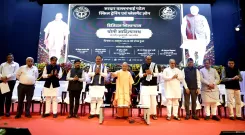
The tribute ceremony at Patel's statue in the state capital drew senior members of the Uttarakhand government. Cabinet Minister Khajan Dass and Dehradun Nagar Nigam Mayor Saurabh Thapliyal were among the dignitaries who stood alongside CM Dhami as floral wreaths were placed at the statue. The gathering reflected a cross-section of state administration uniting on a date that carries constitutional and symbolic weight across India.
Why 31 October still resonates across India
Rashtriya Ekta Diwas was instituted in 2014 to officially commemorate Patel's birth anniversary and reinforce the message of national integration. Patel's singular achievement — the integration of more than 500 princely states into the Indian Union in the months following independence in 1947 — remains one of the most consequential feats of modern statecraft. Without that integration, the map of India would look dramatically different today. The date has since become an anchor for state governments across the country to publicly reaffirm the ideal of a unified republic.
For BJP-led governments in particular, commemorations on this day carry additional resonance — Patel is frequently invoked as a symbol of decisive, unapologetic governance. CM Dhami's appearance at the Dehradun statue is part of that recurring annual pattern, lending the occasion both civic ceremony and political continuity.
As the wreaths were laid and the crowd observed a moment of quiet reflection, the message from Dehradun was straightforward: the work Patel did in 1947 is not history to be archived — it is a standard to be lived up to.
Point of View
Allowing state governments to publicly align themselves with Patel's legacy of decisive national consolidation. CM Dhami's participation in Dehradun continues a pattern of BJP-led states visibly investing in this commemoration — reinforcing the party's claim to the symbols of strong, unified governance. At the state level, such events also serve a practical purpose: they bring together the executive, municipal leadership, and civil society in a shared civic ritual that underlines continuity of administration. Over successive years, this ritual has deepened from a central government initiative into a genuinely distributed national observance.
NationPress
31 Oct 2026
Frequently Asked Questions
Why is 31 October celebrated as National Unity Day in India?
31 October is the birth anniversary of Sardar Vallabhbhai Patel , who integrated more than 500 princely states into India after independence. National Unity Day (Rashtriya Ekta Diwas) was instituted in 2014 to honour his contribution and promote national integration.
What did CM Dhami do on Sardar Patel's birth anniversary in 2026?
Uttarakhand Chief Minister Pushkar Singh Dhami offered floral tributes at Sardar Patel's statue in Dehradun on 31 October 2026 , joined by Cabinet Minister Khajan Dass and Dehradun Mayor Saurabh Thapliyal .
Who was Sardar Vallabhbhai Patel and why is he called the Iron Man of India?
Sardar Vallabhbhai Patel was India's first Deputy Prime Minister and Home Minister. He is called the 'Loh Purush' (Iron Man of India) for his decisive role in integrating more than 500 princely states into the Indian Union after 1947 . He was posthumously awarded the Bharat Ratna .
Who attended the National Unity Day event in Dehradun in 2026?
The Dehradun event was attended by CM Pushkar Singh Dhami , Cabinet Minister Khajan Dass , Dehradun Nagar Nigam Mayor Saurabh Thapliyal , and other dignitaries.
When was Rashtriya Ekta Diwas first observed in India?
Rashtriya Ekta Diwas was first observed on 31 October 2014 , when the central government instituted it to mark Sardar Patel's birth anniversary and reinforce the message of national unity.