CM Yogi Launches ₹1,725 Cr Skill-Employment Scheme in Lucknow
Synopsis
Chief Minister Yogi Adityanath inaugurated a ₹1,725 crore skill-training and employment scheme in Lucknow named after Sardar Vallabhbhai Patel, distributing job-offer letters, toolkits, and cheques to beneficiaries on Patel's birth anniversary.
Key Takeaways
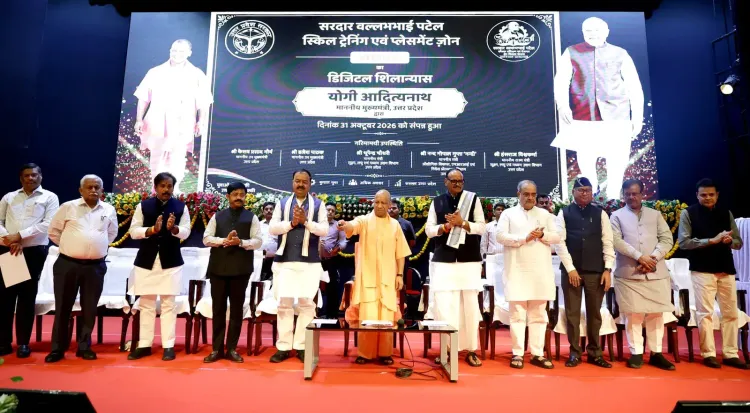
CM Yogi Adityanath inaugurated the Sardar Vallabhbhai Patel Kaushal Prashikshan Evam Rozgar Kshetra Vikas Yojana in Lucknow on 31 October 2026 .
The scheme carries a stated budget of ₹1,725 crore for skill training and employment generation targeting Uttar Pradesh youth.
At the launch event, beneficiaries received cheques, toolkits, and formal job-offer letters .
The scheme is named after Sardar Vallabhbhai Patel — India's first Deputy Prime Minister — on his birth anniversary, linking welfare delivery to national-unity symbolism.
CM Yogi framed the initiative as central to the 'Atmanirbhar Uttar Pradesh' agenda, connecting it to the broader national self-reliance policy vocabulary.
Real-world impact will depend on quarterly training infrastructure rollout and verifiable job-placement data in the months ahead.
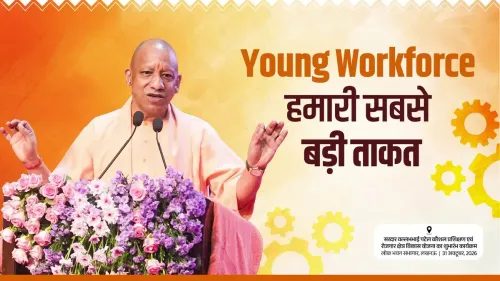
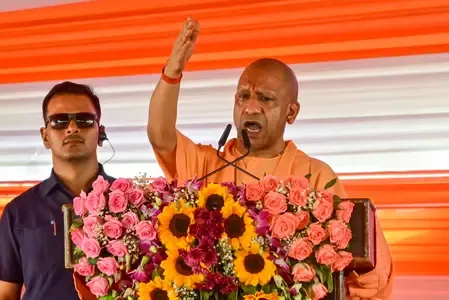
A scheme carrying both a price tag and a political lineage landed in Lucknow on Saturday, 31 October 2026 — as Chief Minister Yogi Adityanath inaugurated the Sardar Vallabhbhai Patel Kaushal Prashikshan Evam Rozgar Kshetra Vikas Yojana, a skill-training and employment-generation initiative budgeted at ₹1,725 crore, with job-offer letters, toolkits, and scheme cheques handed directly to beneficiaries at the launch event.
What the scheme promises — and who it targets
The Chief Minister's Office of Uttar Pradesh described the launch as a milestone in realising the vision of an 'Atmanirbhar Uttar Pradesh' — a self-reliant state. At the event, beneficiaries of various welfare schemes received cheques and toolkits, while youth attendees walked away with formal job-offer letters — a deliberate piece of theatre designed to signal immediacy, not aspiration.
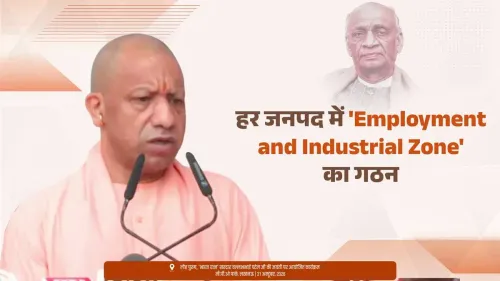
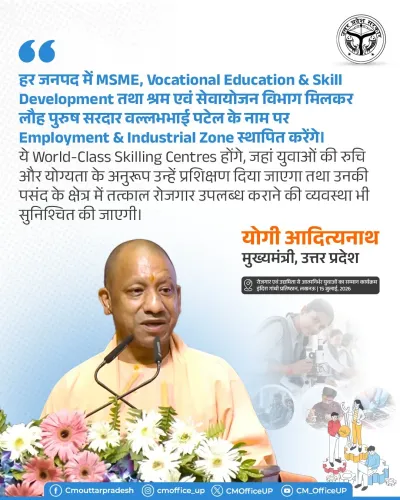
CM Yogi Adityanath framed the scheme explicitly as a tribute to Sardar Vallabhbhai Patel — India's 'Iron Man' and first Deputy Prime Minister, whose legacy of national unity is invoked on his birth anniversary, 31 October. 'This scheme,' the Chief Minister said, 'is a medium to connect youth with the values of national unity and integrity, while expressing reverence for Sardar Patel.' Skill development and employment, in his telling, are not merely economic tools — they are acts of nation-building.
Patel's name, Yogi's rollout — the symbolism is deliberate
Naming a major welfare scheme after Sardar Vallabhbhai Patel on his birth anniversary is a well-worn but potent move in Indian state politics. Uttar Pradesh governments across administrations have attached national icons to contemporary policy to anchor local programmes in a larger historical narrative. The Pradhan Mantri Kaushal Vikas Yojana, launched nationally in 2015, provided the federal template — short-term certified training linked to placement. The new state scheme follows that architecture but layers in the 'Atmanirbhar Bharat' branding that has defined the post-2020 policy vocabulary.
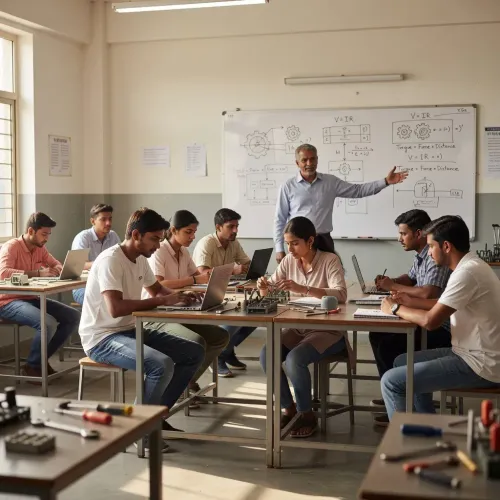
The primary stakeholders are clear: unemployed youth and skill trainees across Uttar Pradesh, a state that consistently accounts for one of the largest shares of India's working-age population. Whether the ₹1,725 crore allocation translates into sustained training infrastructure — not just a launch-day spectacle — is the harder question.
What the rollout will actually test
The real measure of the scheme will arrive in the quarters ahead: how many training centres become operational, whether the job-offer letters issued on day one convert into verified placements, and what the quarterly employment data looks like. Scheme announcements with attached budgets and beneficiary ceremonies are standard practice; delivery against those numbers is where state governments historically stumble. The Yogi administration will be watched closely to see whether the Sardar Patel brand gives this programme the political priority needed to survive beyond the inauguration cycle.
For now, Lucknow has a new scheme, a historically resonant name, and a cheque figure large enough to matter — if the infrastructure follows.
Point of View
725 crore figure is substantial enough to signal serious intent, but Uttar Pradesh's track record on translating skill-scheme allocations into verifiable placements will be the true test. Naming the scheme after Patel also ties the state government's welfare agenda to the broader Atmanirbhar Bharat vocabulary, reinforcing ideological alignment with the Centre. Analysts will watch whether quarterly placement data is published transparently — that will determine whether this scheme outlasts its inauguration moment.
NationPress
31 Oct 2026
Frequently Asked Questions
What is the Sardar Vallabhbhai Patel Kaushal Prashikshan Evam Rozgar Kshetra Vikas Yojana?
It is a new Uttar Pradesh government scheme launched by CM Yogi Adityanath in Lucknow on 31 October 2026, budgeted at ₹1,725 crore, aimed at skill training and employment generation for the state's youth.
Why is the scheme named after Sardar Vallabhbhai Patel?
CM Yogi Adityanath stated the scheme is meant to pay tribute to Sardar Patel — known as the 'Iron Man of India' — and to connect youth with values of national unity and integrity; the launch coincides with Patel's birth anniversary on 31 October.
Who will benefit from the UP skill training scheme launched in 2026?
The primary beneficiaries are unemployed youth and skill trainees across Uttar Pradesh; at the launch event, beneficiaries received cheques, toolkits, and job-offer letters.
How does this scheme relate to the Pradhan Mantri Kaushal Vikas Yojana?
The new UP scheme builds on the architecture of the national PMKVY launched in 2015, which provides short-term certified skill training and placement support, but is a state-level initiative with its own budget and branding.
What is the budget of the Sardar Patel skill scheme in Uttar Pradesh?
The scheme has been launched with a stated outlay of ₹1,725 crore, intended to create skill training and employment opportunities across the state.