CM Yogi to launch Employment Zones in every UP district
Synopsis
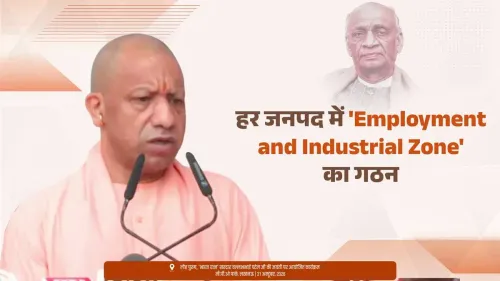
Chief Minister Yogi Adityanath has announced the launch of an 'Employment and Industrial Zone' in each of Uttar Pradesh's 75 districts, framed as a tribute to Sardar Vallabhbhai Patel on his birth anniversary, with the stated goal that no young person in the state remains unemployed.
Key Takeaways
CM Yogi Adityanath announced the launch of an 'Employment and Industrial Zone' in every district of Uttar Pradesh on 31 October 2026 .
The initiative covers all 75 districts of Uttar Pradesh, aiming at youth skilling and employment generation.
The scheme is framed as a living tribute to Sardar Vallabhbhai Patel , whose birth anniversary falls on 31 October .
The stated goal is that no young person in Uttar Pradesh should remain unemployed.
The announcement builds on the state's Industrial Investment and Employment Promotion Policy of 2017 .
Key questions remain around rollout timelines, budget allocations, and private-sector partnerships for each zone.
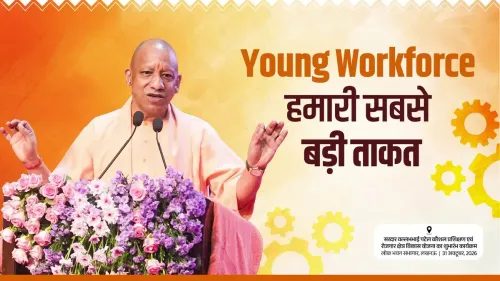
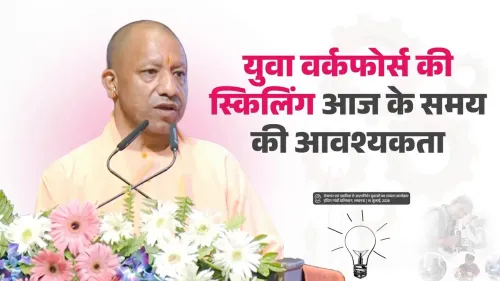
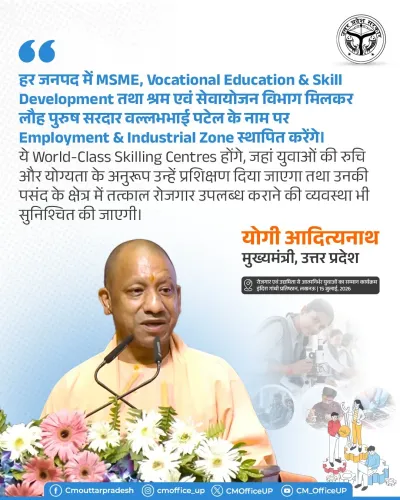
On Sardar Vallabhbhai Patel's birth anniversary, Uttar Pradesh Chief Minister Yogi Adityanath announced on Saturday, 31 October 2026 that the state government is set to formally launch the process of establishing an 'Employment and Industrial Zone' in every single district of the state — a sweeping decentralised push to ensure no young person in UP goes without work.
The Chief Minister's Office posted the announcement in Hindi, quoting CM Yogi directly: 'प्रदेश में कोई भी युवा बेरोजगार न रहे' — 'not a single young person in the state should remain unemployed.' The zones are explicitly framed as a living tribute to Sardar Patel, the Iron Man of India who unified the nation's princely states after independence and whose birth anniversary, 31 October, is observed nationally as Rashtriya Ekta Diwas (National Unity Day).
One zone per district, skilling at the centre
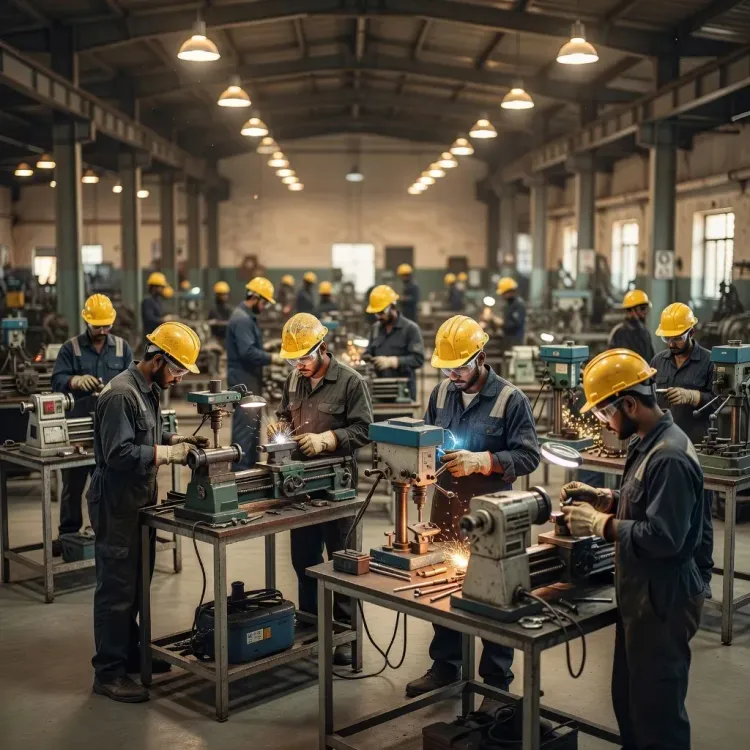
The government's stated ambition is structured and systematic. Each of Uttar Pradesh's 75 districts is to host a dedicated Employment and Industrial Zone, with the twin goals of skilling and employment generation running in parallel. The announcement signals a deliberate shift from centralised industrial corridors toward district-level economic engines — meeting youth where they live rather than pulling them toward a handful of large cities.
The move builds on a policy lineage that traces back to the Uttar Pradesh Industrial Investment and Employment Promotion Policy of 2017, introduced in the first year of the Yogi Adityanath government. That framework sought to attract private investment and create jobs across the state; the new zone initiative appears designed to deepen that architecture at the grassroots level.
The Patel frame — symbol and strategy
Linking an employment scheme to Sardar Patel is deliberate political and historical messaging. Patel is remembered for integrating 562 princely states into the Indian Union through sheer administrative will — a feat of national unification. By invoking his legacy on 31 October, the Yogi government positions the district-level zone rollout as an act of economic integration: bringing opportunity to every corner of Uttar Pradesh, not just its industrial centres.
This pattern — tying economic policy announcements to national historical figures — is a consistent feature of the current UP government's communication. It simultaneously marks a calendar moment and gives a programmatic announcement a larger symbolic weight.
What the rollout will need to prove
An announcement of this scale — 75 zones, one per district, across India's most populous state — raises immediate questions about execution. The critical variables to watch are district-level rollout timelines, budget allocations for infrastructure and skilling programmes, and whether meaningful partnerships with the private sector are secured to drive actual hiring rather than just zoning on paper.
Uttar Pradesh has historically struggled with youth unemployment, and district-level industrial development has been a long-standing policy ambition. Whether this launch marks the beginning of a credible new phase — or joins a list of announced-but-stalled initiatives — will be tested in the months ahead.
Seventy-five zones, one per district, one promise to every young person in the state. The Iron Man built a nation's unity district by district; now his name anchors an employment bet on the same geography.
Point of View
The announcement allows the Yogi government to project a jobs narrative heading into a period when youth unemployment remains a live electoral vulnerability. The credibility test, however, will be swift: 75 simultaneous zone launches demand exceptional administrative bandwidth, and the gap between announced zones and operational ones will be closely watched.
NationPress
31 Oct 2026
Frequently Asked Questions
What is the 'Employment and Industrial Zone' announced by CM Yogi?
It is a proposed district-level economic zone to be established in each of Uttar Pradesh's 75 districts, designed to generate employment through industry and structured skilling programmes for youth.
Why was this scheme announced on 31 October?
The announcement was made on 31 October , the birth anniversary of Sardar Vallabhbhai Patel , observed nationally as Rashtriya Ekta Diwas. The scheme is explicitly framed as a tribute to Patel's legacy.
How many districts in UP will get an Employment and Industrial Zone?
All 75 districts of Uttar Pradesh are to receive an Employment and Industrial Zone under this initiative.
What is the main goal of the UP Employment and Industrial Zone scheme?
The stated goal, as quoted by Chief Minister Yogi Adityanath, is that no young person in Uttar Pradesh should remain unemployed, with a focus on both skilling and direct employment generation.
What is the policy background behind this UP employment initiative?
The initiative builds on the Uttar Pradesh Industrial Investment and Employment Promotion Policy of 2017 , which was introduced to attract investments and create jobs across the state under the Yogi Adityanath government.