CM Yogi Plans Employment Zones in Every UP District
Synopsis
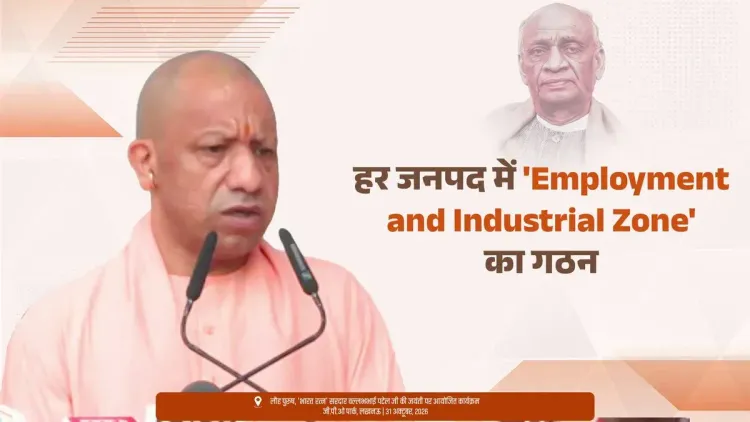
Chief Minister Yogi Adityanath announced on Rashtriya Ekta Diwas that Uttar Pradesh will form one Employment and Industrial Zone in each of its 75 districts, framing the initiative as a tribute to Sardar Patel and a direct drive to expand youth employment across the state.
Key Takeaways
The Chief Minister's Office of Uttar Pradesh announced one 'Employment and Industrial Zone' per district across all 75 districts of the state.
CM Yogi Adityanath framed the initiative as a tribute to Sardar Vallabhbhai Patel on his birth anniversary, 31 October 2026 .
The stated primary objective is to expand employment opportunities for the youth of Uttar Pradesh.
The announcement builds on the state's 2017 Industrial Investment and Employment Promotion Policy and the 2018 One District One Product scheme .
Operational details including land allocation, incentives, and timelines have not yet been made public .
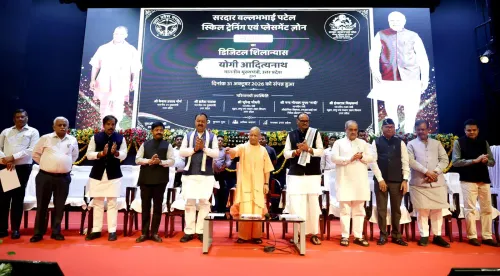
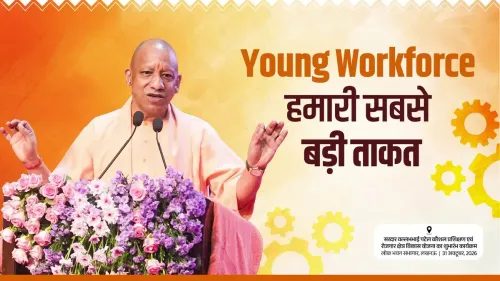
On Sardar Vallabhbhai Patel's birth anniversary, Uttar Pradesh is moving to stamp the Iron Man's legacy onto the state's economic map — one industrial zone per district, 75 districts in all. The Chief Minister's Office of Uttar Pradesh announced on Saturday, 31 October 2026 that Chief Minister Yogi Adityanath is pushing forward the formation of an 'Employment and Industrial Zone' in every district of the state, framing the initiative as both a tribute to Sardar Patel and a direct answer to the state's youth unemployment challenge.
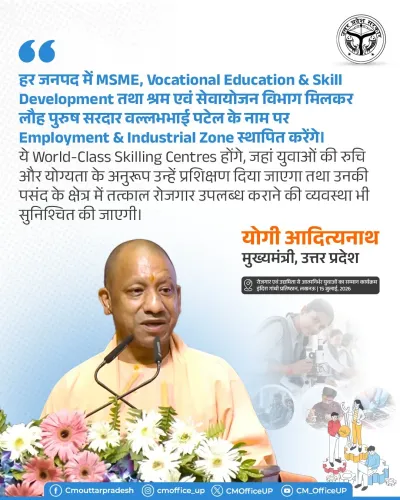
The official post stated: 'प्रदेश सरकार लौह पुरुष सरदार वल्लभभाई पटेल जी की स्मृति को जीवंत बनाए रखने और उनके प्रति श्रद्धासुमन अर्पित करने के लिए हर जनपद में एक Employment and Industrial Zone के गठन की कार्यवाही को आगे बढ़ाने जा रही है।' In translation: 'The state government is proceeding with the formation of one Employment and Industrial Zone in every district to keep alive the memory of the Iron Man Sardar Vallabhbhai Patel and to pay floral tribute to him. Its objective is to provide more employment opportunities to the youth of the state.'
Patel's legacy as an economic catalyst in UP
Sardar Vallabhbhai Patel, India's first Deputy Prime Minister, is celebrated as the architect of national integration — the statesman who unified more than 500 princely states into the Indian Union after 1947. Naming district-level industrial zones after his memory is not merely ceremonial. It is a deliberate act of political branding that ties an economic deliverable to a figure revered across party lines, ensuring the initiative carries both historical weight and wide public legitimacy.
Uttar Pradesh is India's most populous state, and persistent youth unemployment has been a structural pressure on every administration in Lucknow. The Yogi government has repeatedly anchored its economic pitch on district-level delivery — most notably through the One District One Product (ODOP) scheme launched in 2018, which promoted local manufacturing clusters tied to each district's traditional strengths. The new Employment and Industrial Zones appear to extend that philosophy from product promotion to full industrial infrastructure.
A district-by-district industrial push
The move builds on the Uttar Pradesh Industrial Investment and Employment Promotion Policy of 2017, which set the template for using targeted incentives to attract capital and create jobs at scale. If one zone is established across each of UP's 75 districts, the scheme would represent one of the most geographically distributed industrial pushes the state has attempted. The sheer spread is the point — bringing investable infrastructure closer to where the job-seeking population actually lives, rather than concentrating growth in existing urban corridors like Noida, Lucknow, or Kanpur.
Precise operational guidelines, funding mechanisms, and rollout timelines for the zones have not yet been made public, and the announcement signals intent rather than a finalised programme. What to watch next: land allocation specifics, incentive structures, and whether the zones align with any upcoming investor summit on the UP government's calendar.
Why the timing matters
October 31 is observed as Rashtriya Ekta Diwas — National Unity Day — the birth anniversary of Sardar Patel, and major schemes have previously been announced or flagged on this date by governments at both the Centre and state level. Linking the industrial zone announcement to this day ensures maximum visibility and ideological resonance. For CM Yogi, it also reinforces a pattern: pairing high-profile national commemorations with concrete — or at least concrete-sounding — economic commitments that keep the governance narrative moving.
The real test will come in the follow-through. A zone on paper in every district is a headline; a zone with roads, power, water, and investors is a job. UP's youth, and the investors the state courts, will be watching for both.
Point of View
Ensuring the scheme inherits Sardar Patel's cross-partisan prestige. Structurally, it extends the district-level delivery logic of ODOP from product promotion to industrial infrastructure — a logical next step but one that raises serious questions about administrative capacity across 75 districts simultaneously. The move also signals that youth employment will remain the central economic battleground for the UP government heading into the next electoral cycle. Whether the zones materialise as operational investment destinations or remain aspirational announcements will determine whether this becomes a genuine policy milestone or another footnote in UP's long list of district-level schemes.
NationPress
31 Oct 2026
Frequently Asked Questions
What is the Employment and Industrial Zone announced by CM Yogi?
It is a proposed industrial and employment cluster that the Uttar Pradesh government plans to establish in each of the state's 75 districts, aimed at generating jobs for youth. The announcement was made on 31 October 2026, Sardar Patel's birth anniversary.
Why is the zone named after or linked to Sardar Vallabhbhai Patel?
The UP government announced the initiative on Rashtriya Ekta Diwas — the birth anniversary of Sardar Patel — as a tribute to the Iron Man of India, linking the economic scheme to his legacy of national integration and unity.
How many districts will get an Employment and Industrial Zone in Uttar Pradesh?
The announcement covers all districts of Uttar Pradesh, which numbers 75, meaning one zone is planned for each district across the state.
What is the difference between the new zones and the One District One Product scheme?
The One District One Product (ODOP) scheme launched in 2018 promotes a specific traditional product from each district. The new Employment and Industrial Zones are broader industrial infrastructure units aimed at attracting varied investment and creating jobs, building on but extending beyond ODOP's product-focus.
When will the Employment and Industrial Zones be operational in UP?
Specific timelines have not yet been announced. The government has indicated it is 'proceeding with the formation' of the zones, but operational guidelines, funding details, and rollout schedules are yet to be made public.