Dr. Jitendra Singh pays tribute to Sardar Patel at IIPA meet
Synopsis
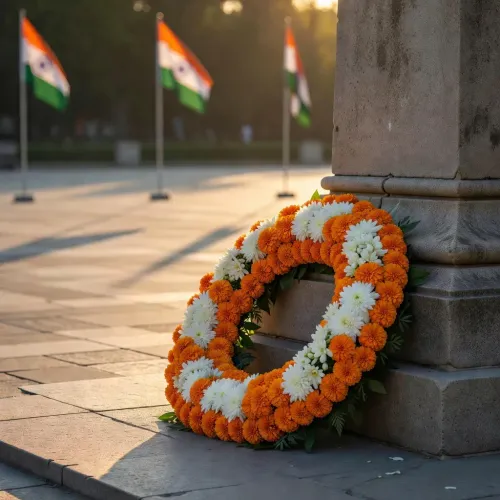
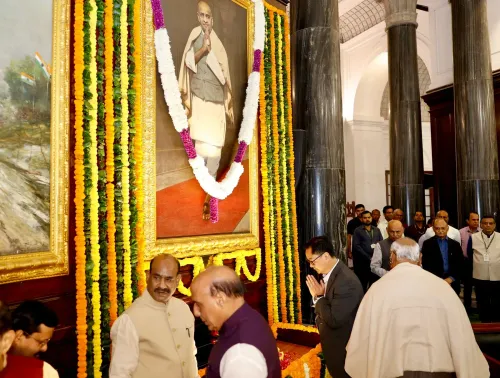
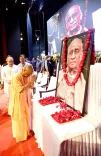
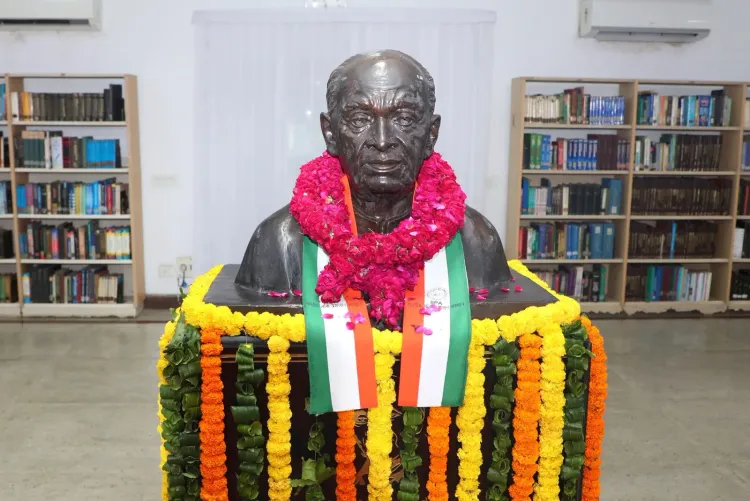
Union Minister Dr. Jitendra Singh and Vice President C.P. Radhakrishnan paid floral tributes to Sardar Vallabhbhai Patel on his birth anniversary at the 72nd IIPA Annual General Body Meeting in New Delhi, honouring his legacy of national integration and All India Services.
Key Takeaways
Jitendra Singh and Vice President Thiru C.P.
Radhakrishnan jointly paid floral tributes to Sardar Vallabhbhai Patel on his birth anniversary, 31 October .
The tribute took place before the 72nd Annual General Body Meeting of the IIPA in New Delhi .
Sardar Patel integrated over 500 princely states after independence and championed the constitutional framework for All India Services under Article 312 .
The IIPA , established in 1954 , advances training and research in public administration, directly rooted in the Patel-era civil-service vision.
The joint presence of the Vice President and a Union Minister signals continued political emphasis on Patel's administrative legacy at the annual forum.
On Sardar Vallabhbhai Patel's birth anniversary, 31 October, Union Science and Technology Minister Dr. Jitendra Singh paid floral tributes to the 'Iron Man of India' alongside Vice President Thiru C.P. Radhakrishnan — a moment that set the tone for the 72nd Annual General Body Meeting of the Indian Institute of Public Administration (IIPA) in New Delhi.
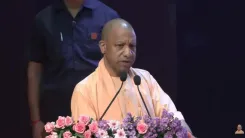
Dr. Singh noted that Sardar Patel's 'unwavering commitment to national integration and vision for All India Services continues to inspire generations of Indians' — a framing that connects a foundational figure of the republic directly to the institutional gathering at hand.
Why Patel's name echoes in every IIPA hall
Sardar Vallabhbhai Patel — India's first Deputy Prime Minister and Home Minister — is inseparable from the idea of a unified Indian administrative state. He oversaw the integration of over 500 princely states in the years immediately after independence, a logistical and diplomatic feat that remains unmatched in modern history. His advocacy for a steel-frame civil service found constitutional expression in Article 312, which provides for All India Services — the very cadre of officers the IIPA was set up to train, research, and support.
The IIPA, established in 1954, has carried that legacy forward as the country's foremost institution for public administration training and governance research. Its annual general body meetings have long served as a checkpoint for civil-service reform conversations — making Patel's birth anniversary the fitting calendar anchor for the gathering.
The 72nd meeting and the civil-services conversation it opens
The presence of both the Vice President and a Union Cabinet Minister at the tribute underscores the political weight attached to this year's meeting. The 72nd Annual General Body is expected to deliberate on civil-services and administrative governance matters — a tradition that aligns squarely with the Patel legacy invoked at the outset.
For civil servants and administrators in the room, the symbolism is pointed: the architect of their own service structure was honoured before a single agenda item was tabled. That sequencing is not accidental — it is a statement about continuity, purpose, and the enduring idea that a unified administrative cadre is the sinew of a unified nation.
Seven decades after Patel shaped India's administrative backbone, the institution he inspired still gathers every year to ask the same essential question — how do you make the state work better for its people? That question has never gone out of date.
Point of View
Steel-frame administration, ministers frame current governance priorities — from lateral entry debates to federal administrative coordination — as extensions of a founding ideal rather than departures from it.
NationPress
31 Oct 2026
Frequently Asked Questions
Why is Sardar Vallabhbhai Patel called the Iron Man of India?
Sardar Patel earned the title 'Iron Man of India' for his decisive role in integrating over 500 princely states into the Indian Union after independence, a feat of unmatched political and diplomatic resolve.
What is the IIPA and what does it do?
The Indian Institute of Public Administration (IIPA), established in 1954, is India's premier institution for research, training, and education in public administration and governance, closely linked to the All India Services framework championed by Sardar Patel.
What is Sardar Patel's connection to All India Services?
Sardar Patel was the principal advocate for a unified All India Services to hold the new republic together administratively. His push led to the constitutional provision under Article 312 that established these services.
What happened at the 72nd IIPA Annual General Body Meeting?
Union Minister Dr. Jitendra Singh and Vice President C.P. Radhakrishnan paid floral tributes to Sardar Patel before the 72nd IIPA Annual General Body Meeting in New Delhi on 31 October 2026, Patel's birth anniversary.
When is Sardar Vallabhbhai Patel's birth anniversary observed?
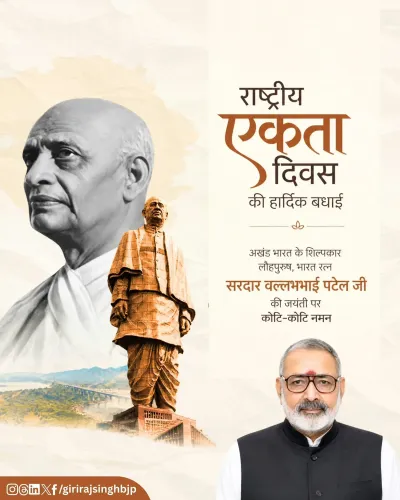
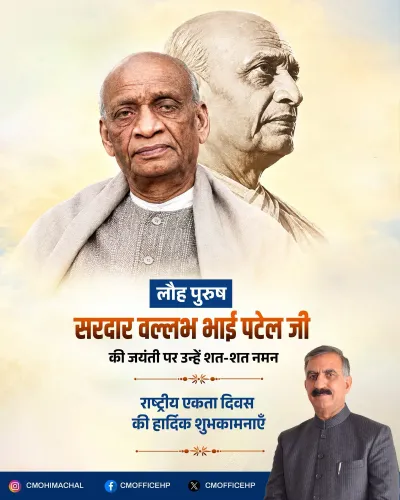
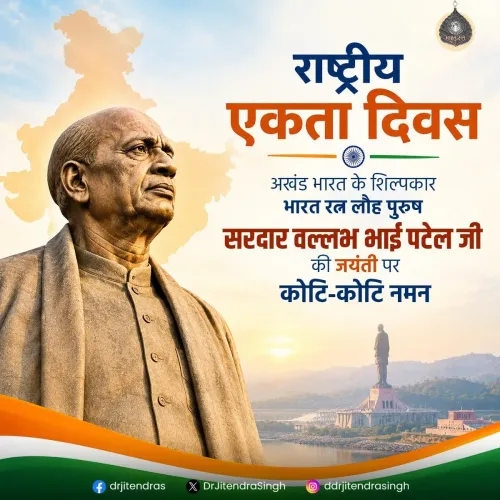
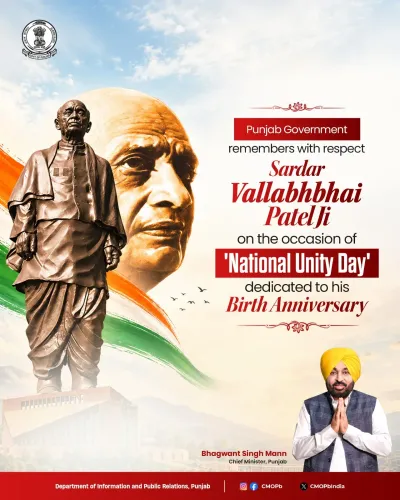
Sardar Vallabhbhai Patel's birth anniversary falls on 31 October and is observed nationally as Rashtriya Ekta Diwas (National Unity Day) to commemorate his contributions to India's integration.