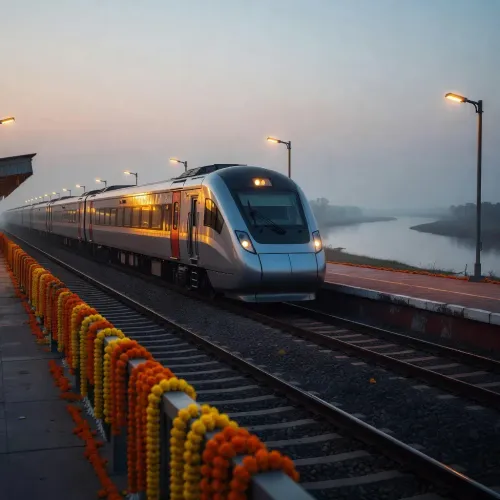
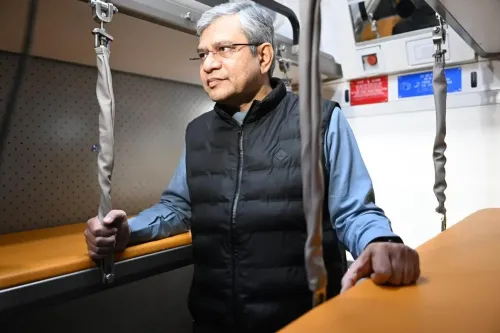
CM Yogi joins launch of Vande Bharat Sleeper on Varanasi-Delhi route
Synopsis
Uttar Pradesh CM Yogi Adityanath and Union Railway Minister Ashwini Vaishnaw inaugurated the Varanasi–New Delhi Vande Bharat Sleeper Express and two new intra-UP rail services in Varanasi on 31 October 2026, deepening rail connectivity across the state's religious and commercial corridors.
Key Takeaways
The Varanasi–New Delhi Vande Bharat Sleeper Express was launched on 31 October 2026 in Varanasi.
Two additional rail services — Varanasi City–Rajatalab and Banaras–Prayagraj Rambag — were also inaugurated at the same event.
Union Railway Minister Ashwini Vaishnaw and UP CM Yogi Adityanath jointly presided over the launch.
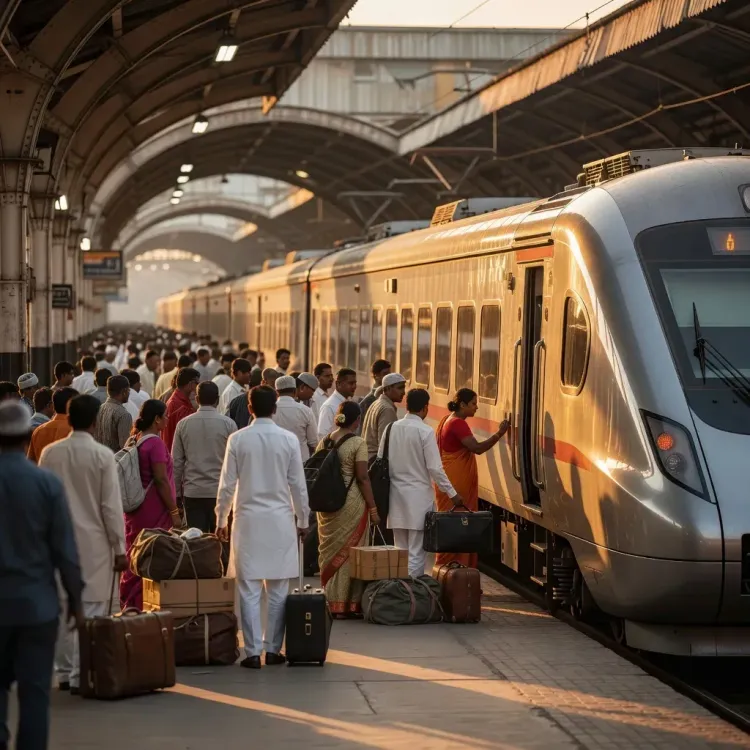
The Vande Bharat Sleeper is the overnight variant of Indian Railways' flagship semi-high-speed train, designed for long-distance intercity travel.
The Varanasi–New Delhi corridor hosted the very first Vande Bharat Express in 2019 , making this sleeper launch a symbolic milestone on the same route.
Uttar Pradesh continues to be a focal point of India's Vande Bharat network expansion, connecting pilgrimage, heritage, and commercial cities.
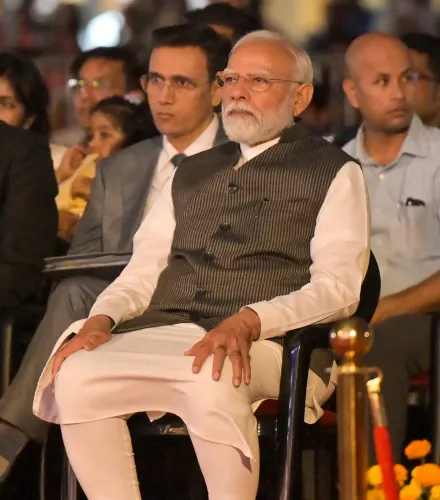
A new chapter in Uttar Pradesh's rail connectivity opened on Saturday, 31 October 2026, as Uttar Pradesh Chief Minister Yogi Adityanath joined Union Railway Minister Ashwini Vaishnaw in Varanasi for the inauguration of the Varanasi–New Delhi Vande Bharat Sleeper Express alongside two new regional rail services linking Varanasi City–Rajatalab and Banaras–Prayagraj Rambag.
CM Yogi posted about his participation in the launch event, noting the presence of Union Minister Ashwini Vaishnaw and the commencement of the new services. The occasion marks another milestone in the ongoing push to weave Uttar Pradesh's religious and commercial cities more tightly into India's modern rail network.
Sleeper variant arrives on the Delhi–Varanasi corridor
The Vande Bharat Sleeper Express is the overnight variant of Indian Railways' flagship semi-high-speed train programme. It brings the speed and modern amenities of the Vande Bharat family to the long-distance overnight traveller — a segment that the daytime chair-car version could not address. The Varanasi–New Delhi corridor is one of the country's most-travelled intercity routes, connecting India's spiritual capital with the national capital and carrying an enormous volume of pilgrims, students, and business travellers year-round.
The original Vande Bharat Express made its debut in 2019 on precisely this route, making today's sleeper launch a symbolic full circle — the same corridor that introduced the train to the nation now receives its next evolution.
Two new intra-UP services expand local reach
Beyond the marquee Delhi service, the event also flagged off two shorter regional trains. The Varanasi City–Rajatalab service addresses suburban and peri-urban connectivity around Varanasi, while the Banaras–Prayagraj Rambag link directly ties two of Uttar Pradesh's most prominent pilgrimage cities. For passengers travelling between these centres — particularly the millions who make the Ganga corridor a near-constant movement — a direct rail option cuts dependence on road transport and reduces travel time on a route that sees surge demand around religious festivals.
Uttar Pradesh has emerged as one of the most active states in India's railway expansion story, receiving multiple new Vande Bharat services and corridor upgrades over recent years as Indian Railways prioritises linking religious and commercial hubs across the country's most populous state.
What the Varanasi launches signal for UP's rail map
The combination of a premium overnight express and two regional links reflects a layered strategy: connect UP's cities to the national capital at speed, while simultaneously deepening local rail density within the state. For Varanasi — simultaneously a UNESCO-recognised heritage city, a major tourist destination, and a busy trade hub — improved rail access has direct implications for the local economy, tourism revenue, and ease of pilgrimage access.
With the sleeper variant now entering service on high-demand corridors, the next metric to watch is passenger uptake and whether the overnight Vande Bharat can meaningfully shift travellers away from road and conventional overnight trains on the Delhi–Varanasi axis.
Point of View
Co-presenting with the Union Railway Minister underlines the Centre–state coordination story the ruling party has consistently projected ahead of electoral cycles. More broadly, the pairing of a flagship intercity service with two local link trains signals a maturing rail strategy — one that addresses both aspirational connectivity and everyday commuter needs rather than relying on marquee launches alone. Whether ridership data validates the demand assumptions on these routes will determine whether the model is replicated across other UP corridors.
NationPress
31 Oct 2026
Frequently Asked Questions
What is the Vande Bharat Sleeper Express launched at Varanasi?
The Vande Bharat Sleeper Express is the overnight, sleeper-class variant of Indian Railways' semi-high-speed Vande Bharat train family. The Varanasi–New Delhi Vande Bharat Sleeper was inaugurated on 31 October 2026 in Varanasi by Union Railway Minister Ashwini Vaishnaw and UP CM Yogi Adityanath.
Which new train services were launched in Varanasi on 31 October 2026?
Three services were launched: the Varanasi–New Delhi Vande Bharat Sleeper Express, the Varanasi City–Rajatalab train, and the Banaras–Prayagraj Rambag train. All three were flagged off at an event in Varanasi attended by CM Yogi Adityanath and Railway Minister Ashwini Vaishnaw.
When was the first Vande Bharat Express launched and on which route?
The first Vande Bharat Express was inaugurated in 2019 on the New Delhi–Varanasi route, the same corridor on which the new Vande Bharat Sleeper variant was launched in 2026.
What is the Banaras–Prayagraj Rambag train service?
The Banaras–Prayagraj Rambag is a new regional rail link connecting two of Uttar Pradesh's major pilgrimage cities. It was launched on 31 October 2026 as part of a broader rail expansion event in Varanasi.
Why is Uttar Pradesh receiving so many new Vande Bharat train services?
Uttar Pradesh is India's most populous state and hosts several major pilgrimage, heritage, and commercial centres. Indian Railways has prioritised connecting these hubs — including Varanasi, Prayagraj, and Lucknow — as part of its national Vande Bharat expansion and broader railway modernisation drive.