CM Rekha Gupta hails Vande Bharat Sleeper on Delhi-Kashi route

Synopsis
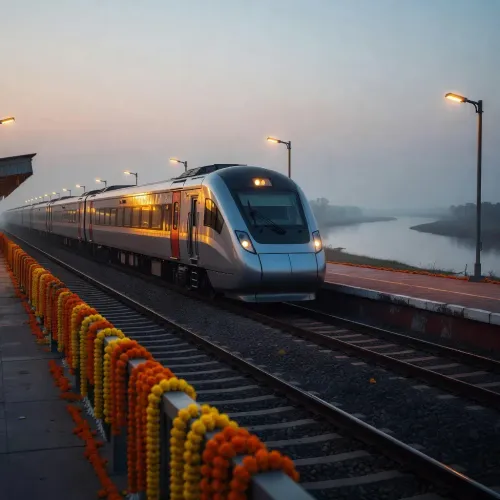
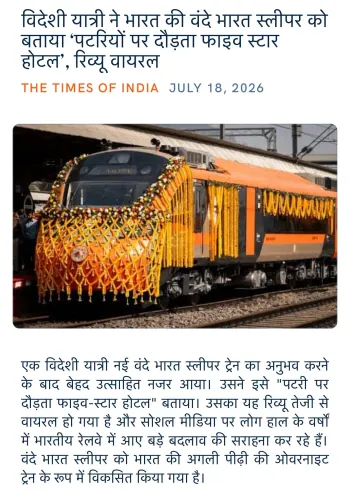
Delhi Chief Minister Rekha Gupta has welcomed the launch of the Vande Bharat Sleeper train on the Delhi–Kashi corridor, praising PM Narendra Modi and Railway Minister Ashwini Vaishnaw for the modern, amenity-rich service that promises faster, more comfortable travel to one of India's holiest cities.
Key Takeaways
Delhi CM Rekha Gupta publicly welcomed the Vande Bharat Sleeper train launch on the Delhi–Kashi route on 31 October 2026 .
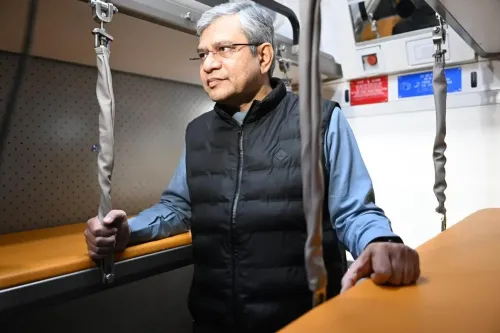
The train is equipped with modern amenities and advanced safety systems, promising time savings for passengers.
The Vande Bharat programme began in 2019 with its first service on the New Delhi–Varanasi corridor.
The sleeper variant extends the Vande Bharat family to overnight travel, replacing older rolling stock on key intercity routes.
CM Gupta credited PM Narendra Modi and Railway Minister Ashwini Vaishnaw for the launch.
The Delhi–Varanasi corridor is one of northern India's busiest, serving millions of pilgrims and long-distance travellers annually.
The ancient pilgrimage corridor between Delhi and Kashi (Varanasi) just got a high-speed, sleeper-class upgrade. Delhi Chief Minister Rekha Gupta on Saturday, 31 October 2026 welcomed the launch of the Vande Bharat Sleeper train on the Delhi–Kashi route, calling it a matter of immense pride for every resident of the capital.
What the new sleeper service means for Delhi–Kashi travellers
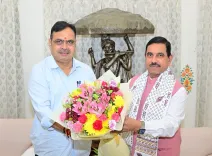
In her post, CM Gupta described the journey between Delhi and the city of Baba Vishwanath as now being 'more convenient, safer, and more pleasant.' She credited the launch to the leadership of Prime Minister Narendra Modi and expressed heartfelt gratitude to Union Railway Minister Ashwini Vaishnaw for the rollout. The train, she noted, is equipped with modern amenities and advanced safety systems — promising passengers both time savings and greater comfort on a route that lakhs of pilgrims, tourists, and daily travellers depend on year-round.
The Vande Bharat family of semi-high-speed trains was first introduced in 2019, with the inaugural service running between New Delhi and Varanasi — making that corridor the symbolic birthplace of the programme. The sleeper-coach variant takes that legacy a step further, enabling overnight travel with the same modern engineering DNA: lighter aluminium body, distributed traction, and onboard safety networks.
The Delhi–Varanasi corridor's outsized significance
Kashi is not just any destination. As one of Hinduism's holiest cities, Varanasi draws millions of pilgrims annually, and the rail link from the national capital is among the most-travelled long-distance routes in northern India. An upgraded sleeper service on this corridor speaks directly to both the government's infrastructure priorities and its focus on pilgrimage tourism in Uttar Pradesh.
The broader Vande Bharat rollout is part of Indian Railways' flagship effort to phase out ageing coaches and replace them with indigenously manufactured, air-conditioned stock across major intercity routes. Each new launch reinforces the 'Make in India' manufacturing narrative that has been central to the government's rail modernisation pitch.
Rekha Gupta's political framing of the launch
By publicly welcoming the service on behalf of 'all Delhi residents,' CM Gupta positions herself — and the BJP government in Delhi — as a direct beneficiary and amplifier of central government infrastructure wins. The political geometry is deliberate: a state leader visibly sharing credit for a Union ministry project reinforces the narrative of seamless Centre-state coordination under a single-party alignment at both levels.
For millions of Delhiites who make the Delhi–Varanasi journey for religious occasions, family travel, or weekend getaways, the promise of a modern sleeper option on a route that has historically been served by older overnight trains is tangible and immediate. That is the kind of delivery that outlasts a news cycle.
Point of View
Creating a unified political narrative around visible public goods. The choice of Varanasi — PM Modi's own constituency — as the destination is hardly incidental; it keeps the city at the centre of both spiritual and infrastructure symbolism. Watch whether subsequent Vande Bharat Sleeper route announcements follow a similar pattern of linking the capital to other high-footfall religious destinations.
NationPress
31 Oct 2026
Frequently Asked Questions
What is the Vande Bharat Sleeper train?
The Vande Bharat Sleeper is a sleeper-coach variant of India's indigenously built semi-high-speed Vande Bharat train family, designed for overnight intercity travel with modern amenities and advanced onboard safety systems.
Which route is the Vande Bharat Sleeper running on?
The train runs between Delhi and Kashi (Varanasi) , one of northern India's busiest and most significant rail corridors, connecting the national capital with a major Hindu pilgrimage centre.
What did Delhi CM Rekha Gupta say about the Vande Bharat Sleeper launch?
CM Gupta called the launch a matter of immense joy and pride for all Delhi residents, saying the journey to Kashi will now be 'more convenient, safer, and more pleasant,' and thanked PM Modi and Railway Minister Ashwini Vaishnaw.
When was the first Vande Bharat train launched?
The first Vande Bharat Express was launched in 2019 , with its inaugural service running between New Delhi and Varanasi .
Who is responsible for the Vande Bharat Sleeper launch?
The launch falls under the purview of Union Railway Minister Ashwini Vaishnaw and is part of the broader rail modernisation programme led by the central government under PM Narendra Modi .