Stalin: Tamil Nadu Women Ring a Wake-Up Call on Prices and Safety
Synopsis
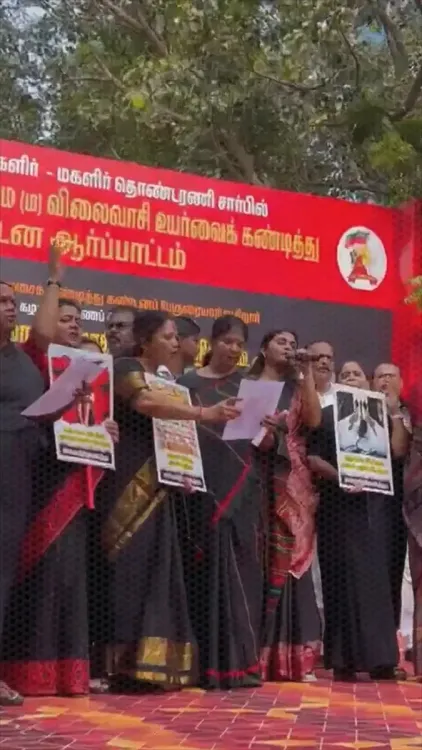
DMK president M. K. Stalin says non-partisan women swelled a statewide DMK Women's Wing protest on 31 October 2026, demanding the Tamil Nadu government address soaring electricity bills, grocery prices, and rising crimes against women ahead of upcoming by-elections.
Key Takeaways
31 October 2026 : DMK Women's Wing held statewide protests across Tamil Nadu, with non-party women also participating.
Stalin cited electricity bills and grocery bills as the immediate triggers for women's anger at the current government.
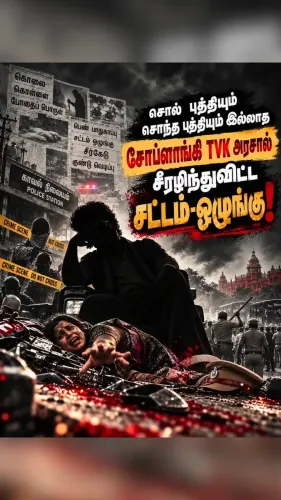
Rising crimes against women and a breakdown in law and order were cited alongside economic grievances.
Stalin accused the Chief Minister of focusing on targeting critics and electioneering in by-election constituencies rather than governance.
The post explicitly calls the protests a #WakeUpCall and declares it the government's duty to listen.
The protest carries clear electoral signalling , with by-elections in multiple constituencies serving as the political backdrop.
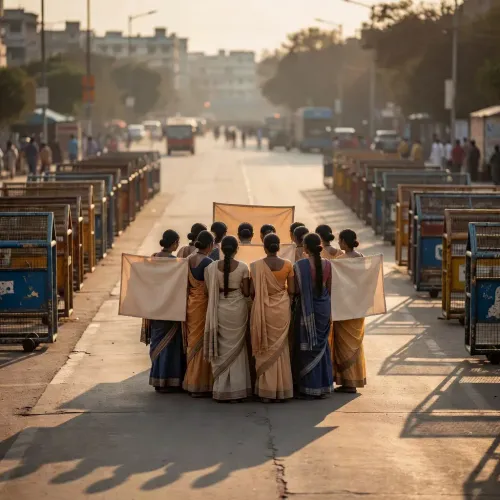
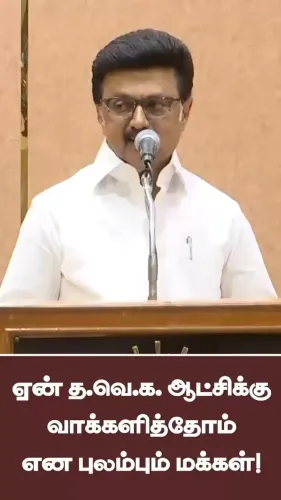
Electricity bills, grocery bills, and a daily fear of sending children outside to play — DMK president M. K. Stalin says Tamil Nadu's women have had enough, and on Saturday, 31 October 2026, they showed it. Statewide protests organised by the DMK Women's Wing drew not just party members but a large number of non-partisan women, publicly voicing anger over price rise and deteriorating law and order.
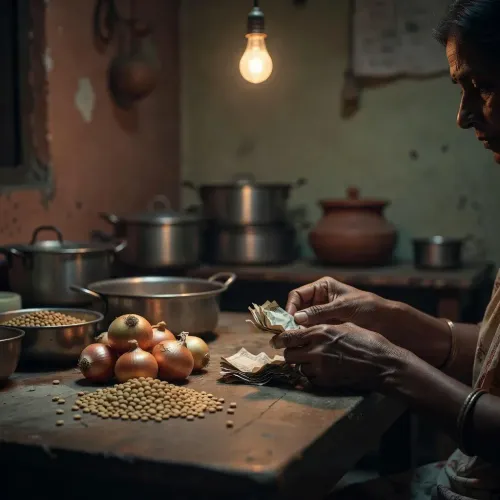
Posting in Tamil on X, Stalin framed the agitation in pointed, kitchen-table terms: 'தங்கள் வீடுகளின் EB Bill-ஐயும் மளிகை Bill-ஐயும் பார்த்து' — 'looking at their electricity bills and grocery bills' — women, he wrote, are seething with anger at the present government. 'The poor are left stunned by rising prices,' he added, before sharpening the attack on crime: women watch news every day reporting crimes against them, and they are now afraid to let their own children play outside.
Two Bills and a Safety Crisis Driving the Protests
The twin grievances — runaway household costs and worsening public safety — are not new in Tamil Nadu politics, but Stalin's framing deliberately grounds them in daily lived experience rather than abstract policy. Household electricity costs and grocery prices serve as a visceral, undeniable index of governance quality that cuts across caste and party lines.
The participation of non-party women in a party-organised protest is the detail Stalin chose to lead with — a signal, his post implies, that discontent has outgrown DMK's own base. The DMK Women's Wing has run similar statewide agitations historically, including during opposition campaigns between 2018 and 2019, but the explicit inclusion of independent women is being positioned as evidence of broader public anger rather than partisan mobilisation.
By-Election Shadow Looms Over Stalin's Warning
The post carries a sharp political undercurrent. Stalin wrote that the Chief Minister's attention — devoted, he alleged, to 'hunting down critics' and 'putting on a show in constituencies where by-elections are due' — must instead be directed at actual governance. The pointed reference to upcoming by-elections ties the protest to an immediate electoral context, with the DMK positioning women's economic and safety anxieties as the defining ballot issue.
Tamil Nadu's Dravidian parties have long used coordinated protest campaigns on inflation, utility bills, and crime to consolidate women's votes, particularly ahead of electoral cycles. Stalin's use of the English hashtags #WakeUpCall, #TVKFails, #PriceRise, and #LawAndOrder suggests a campaign designed for cross-platform amplification, beyond Tamil-language audiences.
Stalin's Demand: The Government Must Listen
Stalin closed with a direct enjoinder to the state government: 'It is the duty of the government to heed their wake-up call.' The formulation is deliberate — positioning the protests not as political theatre but as a civic obligation the administration is failing to meet. Whether the ruling dispensation responds with policy action or dismisses the agitation as opposition grandstanding will itself become part of the narrative heading into the by-elections.
Tamil Nadu's women have put their grievances in black and white — quite literally, on utility bills. The government's next move will say as much about its political instincts as its governance record.
Point of View
The DMK attempts to recast a partisan protest as a citizen uprising, a framing that is far harder for the ruling party to dismiss. The dual thrust on price rise and law-and-order is strategically potent ahead of by-elections, since both issues historically swing women's votes in Tamil Nadu. The hashtag architecture — mixing Tamil political sentiment with English-language labels like #WakeUpCall and #TVKFails — signals a campaign calibrated for urban, digitally active audiences as much as for ground-level mobilisation.
NationPress
31 Oct 2026
Frequently Asked Questions
Why did DMK Women's Wing hold protests across Tamil Nadu on 31 October 2026?
The DMK Women's Wing organised statewide protests on 31 October 2026 to demand government action on rising electricity bills, high grocery prices, and increasing crimes against women in Tamil Nadu.
What did M. K. Stalin say about the Tamil Nadu protests?
DMK president M. K. Stalin said that non-partisan women joined the party-led protests, driven by anger over their electricity and grocery bills, and fear over deteriorating law and order and crimes against women.
What is #TVKFails trending about?
The hashtag #TVKFails was used by Stalin's post to frame the Tamil Nadu government's alleged failures in controlling price rise, ensuring women's safety, and focusing on governance over electoral maneuvering.
How does the protest relate to Tamil Nadu by-elections?
Stalin directly alleged that the Chief Minister is focused on 'putting on a show' in by-election constituencies rather than governing, positioning women's economic and safety grievances as the key issue ahead of those polls.
What is the DMK Women's Wing?
The DMK Women's Wing is the women's organisation of the Dravida Munnetra Kazhagam party, which has historically organised agitations on inflation, utility costs, and women's safety issues across Tamil Nadu.