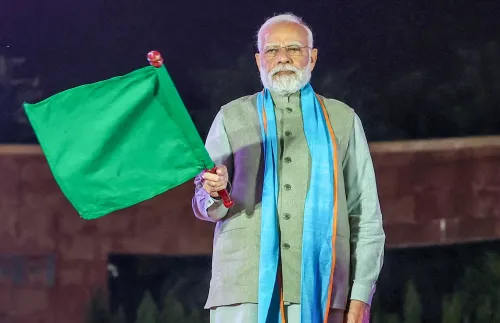
PM Modi flags Vande Bharat Sleeper on Kashi–Delhi route
Synopsis
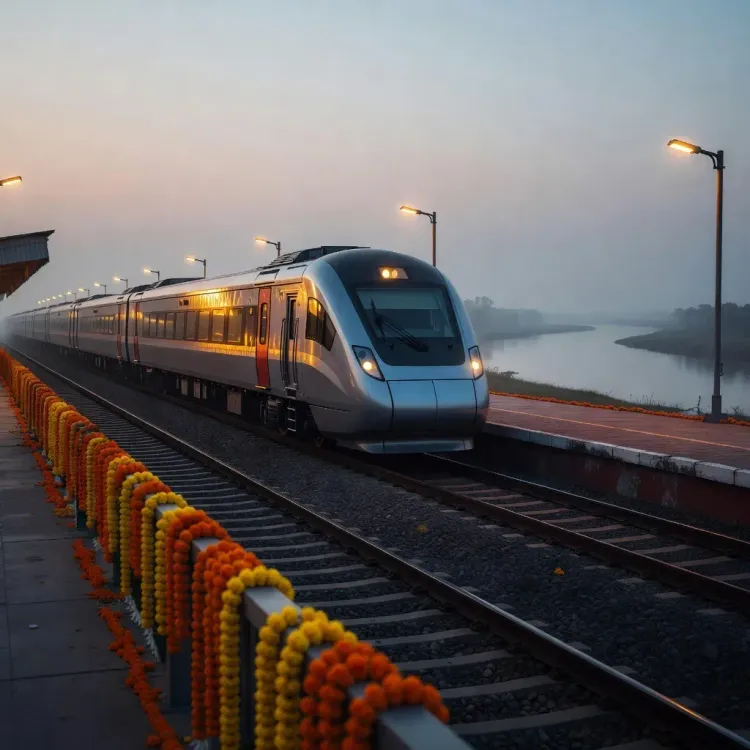
Prime Minister Narendra Modi announced a Vande Bharat Sleeper train linking Kashi, Prayagraj, Kanpur Central, and Delhi — promising modern overnight travel for pilgrims, traders, and tourists on one of Uttar Pradesh's busiest rail corridors.
Key Takeaways
PM Modi announced a Vande Bharat Sleeper train on the Kashi–Prayagraj–Kanpur Central–Delhi corridor on 31 October 2026 .
The route connects two of India's most significant pilgrimage cities — Varanasi (Kashi) and Prayagraj — with the national capital via Kanpur Central .
The Sleeper variant extends the Vande Bharat brand, first launched in 2019 , to overnight travel segments previously served only by conventional express trains.
The train is expected to benefit millions of pilgrims, tourists, students, and business travellers on this high-demand UP corridor.
Specific launch date and train number remain to be officially announced by Indian Railways .
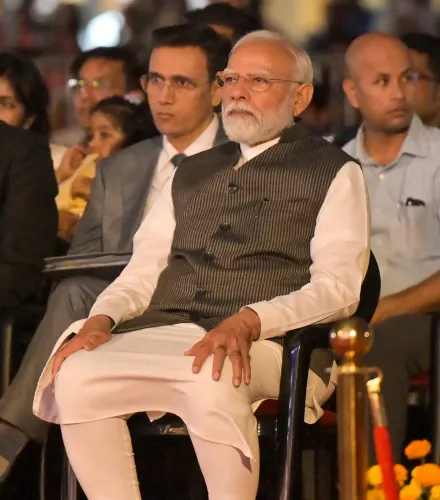
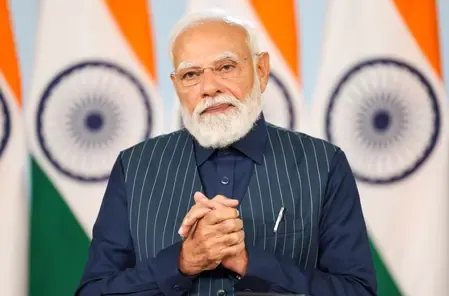
From the ghats of Kashi to the confluence at Prayagraj and through the industrial heartland of Kanpur Central, a new overnight rail link is set to transform how millions of pilgrims, tourists, students, and traders move across Uttar Pradesh and into the capital. Prime Minister Narendra Modi announced on Saturday, 31 October 2026 that a Vande Bharat Sleeper train will run on the Kashi–Prayagraj–Kanpur Central–Delhi corridor, calling it a bridge between faith and opportunity, between tradition and modernity.
What PM Modi said — and why this route matters
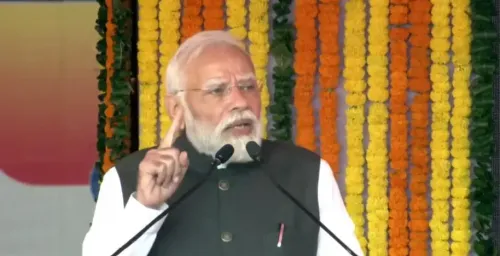
Posting in Hindi, the Prime Minister wrote: 'काशी से प्रयागराज, कानपुर सेंट्रल होते हुए दिल्ली तक चलने वाली वंदे भारत स्लीपर ट्रेन लाखों श्रद्धालुओं, पर्यटकों, युवाओं और व्यापारियों की यात्रा को सुगम बनाएगी।' — 'The Vande Bharat Sleeper train running from Kashi to Prayagraj, via Kanpur Central to Delhi, will ease the journey of millions of devotees, tourists, youth, and traders.'
He added that whether the journey is for darshan at Baba Vishwanath's temple or a pilgrimage to the Sangam, this train will connect 'faith with opportunity and tradition with modernity.' The phrasing is deliberate — it ties one of India's most politically and spiritually resonant corridors to a concrete infrastructure upgrade.
The sleeper variant: overnight travel gets the Vande Bharat treatment
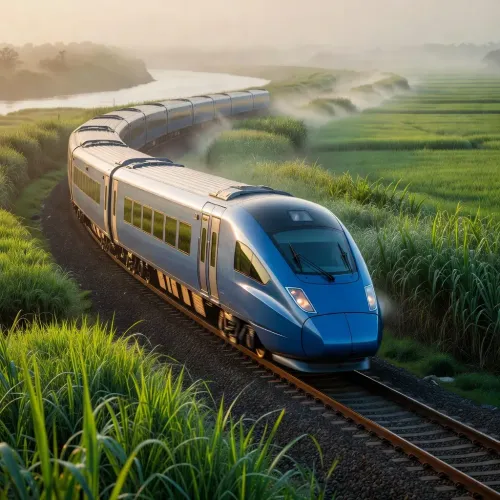
Vande Bharat trains are Indian Railways' flagship semi-high-speed, indigenously built coaches, first launched in 2019 on the New Delhi–Varanasi route. That inaugural run was, tellingly, on the same Kashi axis — and the Sleeper variant now extends that modernisation logic to overnight and long-haul travel segments that chair-car trains cannot serve.
The broader expansion has been systematic: Indian Railways has progressively added Vande Bharat services on high-demand corridors, cutting journey times and improving comfort on routes where legacy express trains had dominated for decades. The Sleeper version targets a different traveller — one who needs to arrive rested, not just quickly. For the Kashi–Delhi stretch, which sees enormous year-round pilgrim traffic and spikes during festivals, that is a meaningful upgrade.
Pilgrims, traders, and the Kanpur Central equation
Prayagraj, home to the Triveni Sangam and the periodic Kumbh Mela, draws tens of millions of visitors in peak religious cycles. Kashi — Varanasi — is among the holiest cities in Hinduism, anchored by the Kashi Vishwanath Temple. Routing the train through Kanpur Central, Uttar Pradesh's largest industrial city, signals that the line is not just a pilgrimage shuttle — it is an economic artery linking manufacturing and commerce to the national capital.
That combination of devotional, tourist, and business traffic on a single premium overnight service is precisely the kind of utilisation rate Indian Railways needs to justify the Sleeper rollout at scale. Specific schedules and launch dates have not yet been tabled officially, but the Prime Minister's post signals the route is cleared at the highest level.
Faith as infrastructure — Modi's recurring frame
The language Modi chose is worth noting: 'आस्था को अवसर से और परंपरा को आधुनिकता से जोड़ेगी' — 'connecting faith to opportunity, tradition to modernity.' It is a formulation he has used consistently around projects in Varanasi, a constituency he represents in Lok Sabha, and around the Prayagraj corridor ahead of major religious gatherings. Infrastructure spending here carries dual weight — civic and electoral.
For the millions who make this journey every year on ageing overnight expresses, the promise is simpler: a faster, cleaner, air-conditioned berth from the temple towns of Uttar Pradesh to New Delhi. When the timetable lands, that promise will be put to the test.
Point of View
And attaching Vande Bharat's premium brand to an overnight sleeper service here is a calculated deepening of the modernisation narrative Modi has built around Varanasi since 2014. The Sleeper variant addresses a genuine gap — semi-high-speed comfort on long-haul overnight routes — and its rollout on a pilgrimage-heavy corridor maximises visibility and footfall. Routing through Kanpur Central broadens the economic case beyond devotional travel, though occupancy data on the sleeper fleet will ultimately determine whether the expansion is financially viable at scale. The timing, ahead of potential religious season peaks, keeps the political and the infrastructural firmly intertwined.
NationPress
31 Oct 2026
Frequently Asked Questions
What is the Vande Bharat Sleeper train announced by PM Modi?
It is a sleeper-class variant of the indigenously built Vande Bharat semi-high-speed train, announced to run between Kashi (Varanasi), Prayagraj, Kanpur Central, and Delhi to serve overnight and long-distance travellers on this corridor.
When will the Vande Bharat Sleeper on the Kashi–Delhi route start?
PM Modi announced the train on 31 October 2026, but Indian Railways has not yet officially released the launch date or timetable for this specific service.
What is the difference between Vande Bharat Express and Vande Bharat Sleeper?
Vande Bharat Express runs as a chair-car day service for shorter or same-day journeys, while the Sleeper variant is designed for overnight travel, offering berths for longer distances where passengers need to sleep on board.
Why does the Vande Bharat Sleeper stop at Kanpur Central?
Kanpur Central is Uttar Pradesh's largest industrial city and a major railway junction, making it a critical stop that broadens the train's utility beyond pilgrimage travel to include business and commercial passengers.
When was the first Vande Bharat train launched?
The first Vande Bharat Express was inaugurated in 2019 on the New Delhi–Varanasi route, the same Kashi axis that the new Sleeper service will now serve in an extended overnight format.