CM Sawant Flags Off Run for Unity at Panaji on Rashtriya Ekta Diwas
Synopsis
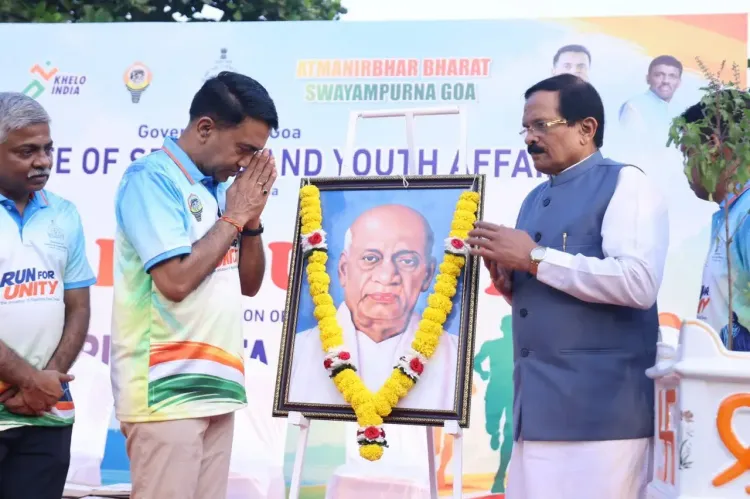
Goa Chief Minister Pramod Sawant and Union Minister Shripad Naik flagged off the Run for Unity at Campal Indoor Stadium, Panaji on 31 October 2026, marking Rashtriya Ekta Diwas and honouring Sardar Vallabhbhai Patel's legacy of national integration.
Key Takeaways
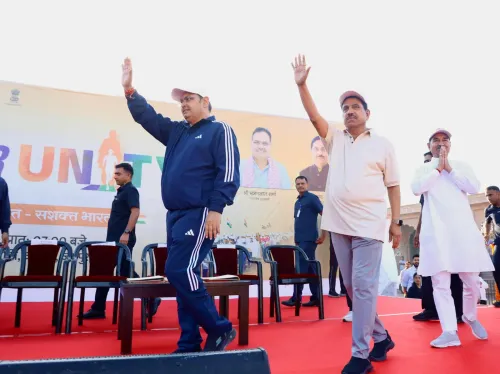
Goa CM Pramod Sawant flagged off the Run for Unity at Campal Indoor Stadium, Panaji on 31 October 2026 .
Union Minister Shripad Naik participated alongside CM Sawant and other dignitaries.
Participants took the National Unity Pledge at the event.
Rashtriya Ekta Diwas was instituted by the Government of India in 2014 to mark Patel's birth anniversary on 31 October .
Sardar Patel integrated more than 500 princely states into the Indian Union after 1947 .
The event is part of a national template of runs and pledges conducted across all states on this date each year.
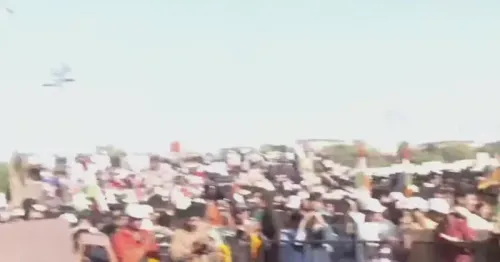
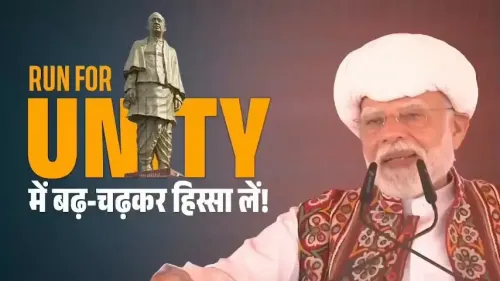
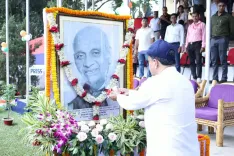
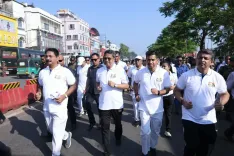
On the 131st birth anniversary of Sardar Vallabhbhai Patel, Goa Chief Minister Pramod Sawant flagged off the Run for Unity at the Indoor Stadium, Campal, Panaji on Saturday, 31 October 2026 — joining citizens in a public reaffirmation of the values the Iron Man of India gave his life to build.
Pledge on the track at Campal
Union Minister Shripad Naik, a Goa MP and frequent presence at state-level national events, stood alongside CM Sawant as dignitaries and participants took the National Unity Pledge together. The run, routed through Panaji's Campal grounds, drew residents across age groups in a collective sprint that is equal parts civic ritual and political statement.
Sawant described the moment as one of 'reaffirming our commitment to the unity, integrity and security of our nation' — three words the BJP-led government has consistently placed at the heart of Rashtriya Ekta Diwas observances since the day was instituted.
Why 31 October carries this weight
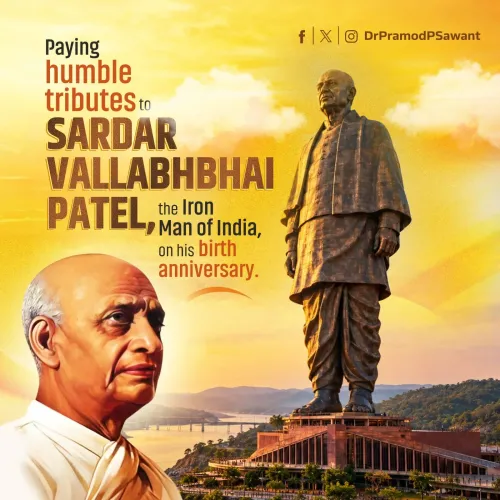
The date is not coincidental. Sardar Vallabhbhai Patel, born on 31 October 1875, served as India's first Deputy Prime Minister and, crucially, as its iron-willed architect of territorial consolidation — persuading or pressuring more than 500 princely states to accede to the Indian Union in the months after independence in 1947. Without that exercise, the map of modern India would look very different.
In 2014, the Government of India formally instituted Rashtriya Ekta Diwas — National Unity Day — on this date, pairing it with a National Unity Pledge and the Run for Unity format that has since been replicated in every state. Goa's Campal event is one node in that national grid, given local texture by the presence of an elected Chief Minister and a Union Minister on the same stage.
Patel's legacy and Goa's own integration story
For Goa, the resonance runs a shade deeper. The state was liberated from Portuguese rule only in 1961 — a full fourteen years after independence — making the idea of national integration less abstract here than in most of the country. Sawant invoked Patel's 'historic contribution in uniting the princely states and laying the foundation of a united India,' calling his 'vision, leadership and commitment to national integration' a source of inspiration across generations.
That framing lands differently in a state whose accession to India came late and hard-won. 'One Nation. One Spirit. One Unity' — the closing line in Sawant's post — echoes a sentiment Goa has lived, not merely inherited.
Point of View
Co-hosting with Union Minister Shripad Naik signals tight coordination between state and central BJP machinery, especially in a small but electorally competitive state. Invoking Patel in Goa also carries a distinct local charge: the state's late accession in 1961 makes integration themes personally resonant for many residents. The 'One Nation' framing, repeated annually, functions less as commemoration and more as a standing policy signal on sovereignty and territorial integrity.
NationPress
31 Oct 2026
Frequently Asked Questions
What is Rashtriya Ekta Diwas and why is it celebrated on 31 October?
Rashtriya Ekta Diwas, or National Unity Day, is observed on 31 October every year to mark the birth anniversary of Sardar Vallabhbhai Patel. The Government of India instituted it in 2014 to honour Patel's role in uniting more than 500 princely states into the Indian Union.
What happened at the Run for Unity in Panaji on 31 October 2026?
Goa Chief Minister Pramod Sawant and Union Minister Shripad Naik flagged off the Run for Unity at the Campal Indoor Stadium, Panaji , where participants also took the National Unity Pledge in honour of Sardar Patel's birth anniversary.
Who is Sardar Vallabhbhai Patel and what did he do for India?
Sardar Vallabhbhai Patel was India's first Deputy Prime Minister , credited with integrating more than 500 princely states into the Indian Union after independence in 1947, earning him the title 'Iron Man of India.'
Who is Shripad Naik?
Shripad Naik is a Union Minister of State from Goa who regularly participates in state-level national events alongside the Chief Minister.
Why does Rashtriya Ekta Diwas have special significance for Goa?
Goa was liberated from Portuguese rule only in 1961 , fourteen years after Indian independence, making the theme of national integration especially resonant for the state and its residents.