Pakistan mineral diplomacy with US masks deep contradictions: Report
Synopsis
A new report lays bare the contradiction at the heart of Pakistan's latest mineral pitch to Washington: vast resources, repeated promises, and a track record of underdelivery — now complicated by military-backed governance bodies, a 34% FDI slump, and US diplomatic engagement in Khyber Pakhtunkhwa that immediately preceded the imposition of governor's rule.
Key Takeaways
Pakistan's foreign direct investment fell nearly 34 per cent in FY2025-26 despite promises from the military-backed SIFC to accelerate capital inflows.
The multibillion-dollar Reko Diq mining project faces renewed delays over security concerns.
The Special Investment Facilitation Council (SIFC) , established in 2023 , is positioning Pakistan's military as the primary intermediary between foreign investors and strategic resources.
US Charge d'Affaires Natalie Baker met KP officials in June, July and August 2026 on critical minerals — immediately before governor's rule was imposed in October 2026 .
Pakistan's Eighteenth Constitutional Amendment grants provinces authority over most solid minerals, creating a constitutional clash with any federal or military expansion of mineral licensing.
Pakistan's renewed mineral diplomacy with Washington reflects a familiar contradiction — the promise of economic transformation against a persistent record of overpromising and under-delivery, according to a new report. As Pakistan's vast untapped mineral wealth emerges as a fresh pillar of its relationship with the United States, analysts are questioning whether this latest pivot will fare any differently from previous attempts.
A Sector That Has Consistently Underperformed
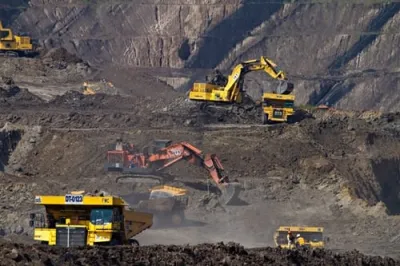
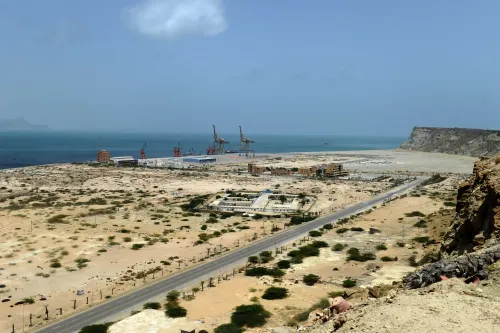
Despite decades of Chinese investment, sweeping infrastructure projects, and repeated claims of enormous mineral reserves, mining remains a marginal contributor to Pakistan's national output, the report argues. Gwadar has struggled to fulfil its commercial potential, and the multibillion-dollar Reko Diq project faces renewed delays over security concerns. Meanwhile, foreign direct investment declined by nearly 34 per cent in FY2025-26, even as the military-backed Special Investment Facilitation Council (SIFC) — established in 2023 — promised to accelerate foreign capital inflows. The gap between official projections and on-ground results is not new; it is structural.
Military's Growing Role in Economic Governance
Pakistan's military establishment's expanding commercial influence increasingly overlaps with economic policymaking and foreign investment decisions. The report argues that the military is becoming a principal intermediary between foreign investors and the country's strategic resources. The SIFC was created specifically to fast-track investment in sectors including mining, agriculture, energy, and technology — a mandate that critics say consolidates institutional power outside civilian oversight. 'Washington's interest in securing alternative critical mineral supplies is creating new opportunities for Pakistan, but it could also strengthen institutions that operate with limited civilian oversight,' the report warns.
US Engagement and the Khyber Pakhtunkhwa Question
Washington's interest in Khyber Pakhtunkhwa (KP)'s mineral wealth was underscored by a series of high-level diplomatic engagements. US Charge d'Affaires Natalie Baker held meetings with Governor Faisal Karim Kundi in June and July 2026, followed by discussions with KP Assembly Speaker Babar Saleem Swati in August 2026 on critical minerals, energy, and security cooperation. These engagements took on added significance when governor's rule was imposed in KP in October 2026. 'These engagements preceded the October imposition of governor's rule, raising questions about the convergence of American strategic interests, military-backed economic governance and diminishing provincial autonomy,' the report notes.
Constitutional Fault Lines Over Mineral Rights
Pakistan's Eighteenth Constitutional Amendment strengthened provincial autonomy, including authority over most solid minerals. Any expansion of federal or military influence over mineral licensing therefore carries direct constitutional and political implications, the report cautions. These concerns are particularly acute in Khyber Pakhtunkhwa, where control over mineral resources was already a source of political and constitutional disagreement before the emergency. The displacement of ordinary provincial executive authority during governor's rule raises pointed questions about how mining concessions, regulatory approvals, and resource-related investment decisions will be managed in the interim, according to the report.
What This Means for Pakistan-US Ties
This is not the first time Pakistan has attempted to leverage its resource base to attract Western investment and shore up a strained relationship with Washington. What makes the current moment distinct is the convergence of US interest in de-risking critical mineral supply chains — accelerated by geopolitical competition with China — and Pakistan's own economic desperation. The risk, the report suggests, is that American strategic interest may inadvertently entrench governance arrangements that undermine the civilian institutions Washington publicly says it supports. How Islamabad and Washington navigate the constitutional, commercial, and security dimensions of this emerging partnership will determine whether it marks a genuine turning point or another chapter in a long history of unfulfilled potential.
Point of View
And not necessarily the civilian government in Islamabad. The timing of US diplomatic outreach to Khyber Pakhtunkhwa — just weeks before governor's rule — deserves more scrutiny than it has received. If American strategic interest in Pakistan's minerals ends up buttressing military-dominated economic governance, it will contradict Washington's stated commitment to civilian democratic norms, and hand Beijing a useful propaganda point. The Reko Diq delays and the 34% FDI drop are not anomalies; they are symptoms of a governance architecture that has historically prioritised security control over commercial credibility.
NationPress
31 Oct 2026
Frequently Asked Questions
What is Pakistan's mineral diplomacy with the United States about?
Pakistan is seeking to position its vast untapped mineral reserves — particularly in Khyber Pakhtunkhwa — as a strategic asset for the United States, which is looking to diversify critical mineral supply chains away from China. The push is being coordinated partly through the military-backed Special Investment Facilitation Council (SIFC), established in 2023.
Why is Pakistan's track record on mining investment a concern?
Despite decades of Chinese investment and repeated claims of enormous mineral wealth, Pakistan's mining sector remains a marginal contributor to national output. The Reko Diq project faces renewed delays, Gwadar has not fulfilled its commercial promise, and FDI fell nearly 34 per cent in FY2025-26.
What role does Pakistan's military play in its mineral sector?
The military establishment, through bodies like the SIFC, is increasingly acting as the primary intermediary between foreign investors and Pakistan's strategic resources. Critics warn this arrangement operates with limited civilian oversight and raises constitutional questions, particularly given the Eighteenth Amendment's grant of mineral authority to provinces.
Why is Khyber Pakhtunkhwa central to this story?
KP is believed to hold significant critical mineral deposits, and US diplomats engaged KP officials on minerals and energy cooperation in mid-2026. The subsequent imposition of governor's rule in October 2026 has raised questions about whether federal and military authorities are consolidating control over a province where mineral governance was already politically contested.
What constitutional issues does Pakistan's mineral push raise?
Pakistan's Eighteenth Constitutional Amendment grants provinces authority over most solid minerals. Any expansion of federal or military control over mineral licensing directly conflicts with that devolution, creating legal and political complications that could undermine investor confidence and provincial stability.