What Challenges Lie Ahead for Pakistan’s Rare Earth Deal with the US?

Synopsis
Explore the complexities of Pakistan's rare earth deal with the US, highlighting the monumental challenges it faces amidst ambitious economic goals. Can this partnership truly reshape global supply chains, or is it merely a political gesture? Dive into the reality behind the headlines.
Key Takeaways
Pakistan's rare earth deal with the US symbolizes economic hope.
Major challenges include political instability and lack of trust.
China remains a significant player in mineral refining.
Legal complexities hinder foreign investment.
Long-term success is uncertain without technological upgrades.
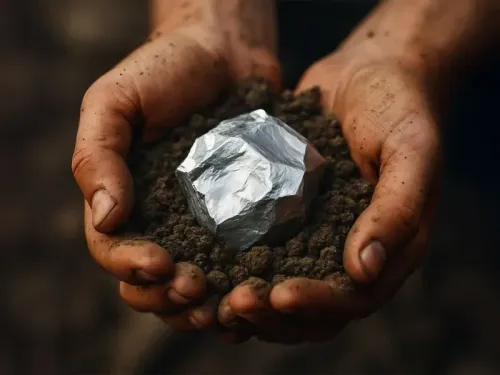
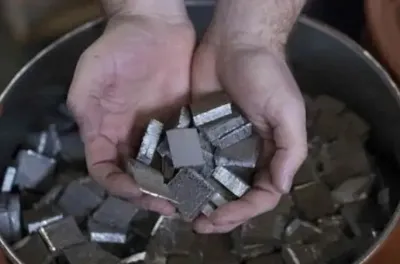
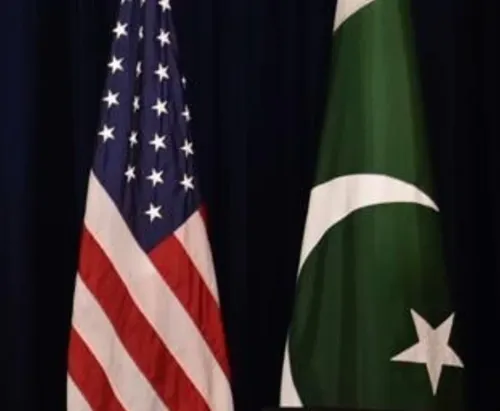
Mumbai, Jan 17 (NationPress) Pakistan’s inaugural shipment of rare earth minerals to the United States in October 2025 was intended to herald a new era of economic collaboration. Supported by a $500 million agreement and a vision to enhance mining by 2028, this deal sparked optimism that Pakistan could emerge as a vital player in global mineral supply networks.
Nevertheless, beneath the surface of enthusiasm lurks a complex reality. Significant structural, political, environmental, and security challenges continue to cast substantial doubt on whether Pakistan can genuinely translate its extensive mineral reserves into enduring economic prosperity, according to a Geopolitical Mirror report.
In October 2025, Pakistan dispatched its first consignment of rare earth minerals to the United States, marking what both nations hailed as a pivotal advancement.
This shipment was not merely transactional; it bore a symbolic weight, aiming to demonstrate that Pakistan could assist the US in diminishing its reliance on unstable and China-centered mineral supply chains.
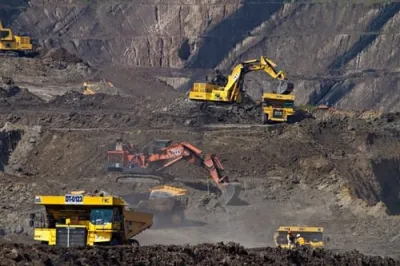
A comprehensive three-step strategy was unveiled to amplify mining operations by 2028. Yet, in spite of the robust political messaging, Pakistan’s mineral sector narrates a very contrasting tale.
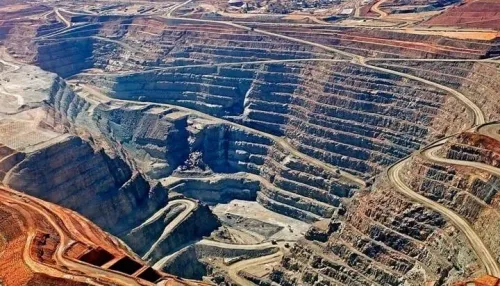
The government asserts that the nation possesses mineral reserves valued at nearly $6 trillion across a vast expanse. However, these figures remain unverified by internationally recognized standards like JORC or NI 43-101, which are globally employed for assessing mineral resources transparently and reliably.
In the absence of such validation, investors grapple with trusting official claims. This lack of credible data raises concerns about whether Pakistan’s mineral wealth is genuinely as extensive and lucrative as claimed.
This uncertainty partially elucidates why Pakistan’s mining sector contributes a mere 3.2 percent to its GDP and a mere 0.1 percent to global mineral exports, despite years of economic pressure to tap into these resources.
China’s longstanding involvement in Pakistan’s economy further underscores these limitations. Via the China-Pakistan Economic Corridor, Beijing has invested approximately $65 billion, yet Pakistan’s rare earth and mining industries remain underdeveloped.
Numerous Chinese-backed mining initiatives have faced scrutiny. For instance, the Saindak copper mine has been accused of lacking transparency, offering limited local advantages, and causing environmental harm, including water contamination and diminished agricultural yields.
Ironically, even if Pakistan successfully extracts rare earth minerals with US assistance, it will face another significant obstacle: refining.
China dominates the global mineral refining landscape. Consequently, raw materials from Pakistan would likely still rely on Chinese processing, leaving the US vulnerable to the same supply challenges it seeks to evade.
Although China temporarily lifted export restrictions on certain rare earth minerals in a deal with the US, this relief is only fleeting.
Once the suspension concludes, Washington could again encounter pressure. Even under optimal conditions, experts estimate it would take at least a decade before Pakistani minerals could substantially impact global supply chains.
Pakistan’s outdated mining technology further undermines its standing. The country continues to rely on inefficient extraction techniques and predominantly exports raw minerals instead of processed products, forfeiting a significant share of potential revenue.
Legal and political obstacles also obstruct progress. Following the 18th Constitutional Amendment in 2010, provinces gained authority over their natural resources.
This shift means the federal government cannot effortlessly assure mineral access to foreign partners without provincial approval. Any disputes can delay or even halt projects.
Considering these realities, many analysts believe the US-Pakistan mineral partnership may be more about political signaling than tangible results.
Point of View
It is essential to recognize that while the US-Pakistan mineral partnership presents an optimistic front, the underlying challenges must not be overlooked. Political maneuvering may overshadow practical outcomes, and without addressing the structural issues within Pakistan's mining sector, this collaboration risks falling short of its potential.
NationPress
6 Oct 2026
Frequently Asked Questions
What is the significance of Pakistan's rare earth shipment to the US?
The shipment represents a potential shift in economic collaboration, aiming to lessen US dependence on China for mineral resources.
What challenges does Pakistan face in its mining sector?
Pakistan contends with structural issues, lack of international verification of mineral reserves, and outdated technology.
How does China's involvement affect Pakistan's mining industry?
China's extensive investment in Pakistan through the China-Pakistan Economic Corridor has highlighted the underdevelopment of its rare earth and mining industries.
What are the implications of China's control over mineral refining?
China's dominance in mineral refining could leave Pakistan's raw materials vulnerable to the same supply risks the US is trying to avoid.
What is the projected timeline for Pakistan's minerals to impact global supply chains?
Experts suggest that under ideal conditions, it could take at least a decade before Pakistani minerals significantly influence global supply chains.