Puri hails Delhi-Kashi Vande Bharat Sleeper launch

Synopsis
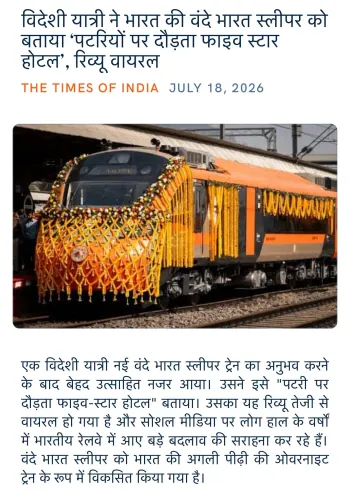
Union Petroleum Minister Hardeep Singh Puri hailed the Delhi-Kashi Vande Bharat Sleeper Train as a milestone linking ancient spiritual heritage with modern connectivity, crediting PM Modi's vision for Varanasi's ongoing transformation.
Key Takeaways
Union Petroleum Minister Hardeep Singh Puri celebrated the launch of the Delhi-Kashi Vande Bharat Sleeper Train on 31 October 2026 .
The new service extends overnight connectivity between New Delhi and Varanasi , targeting pilgrims, tourists and everyday rail passengers.
The New Delhi-Varanasi corridor was where India's first Vande Bharat Express ran in 2019 , making this sleeper variant a generational upgrade on the same route.
Puri framed the launch under the BJP's #VikasBhiVirasatBhi philosophy — development alongside heritage preservation.
The launch follows the Kashi Vishwanath Dham corridor project, inaugurated in 2019 , as part of Varanasi's broader infrastructure and heritage reinvention.
Sleeper Vande Bharat services are being prioritised on religious-tourism corridors across India, reflecting a convergence of political and commercial rail strategy.
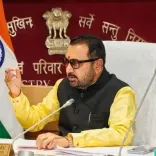
Ancient faith and modern speed are converging on one rail line. Union Petroleum Minister Hardeep Singh Puri on Saturday, 31 October 2026, celebrated the launch of the Delhi-Kashi Vande Bharat Sleeper Train, calling it a new chapter in connectivity for one of India's most sacred cities — and a living proof of Prime Minister Modi's promise to marry heritage with development.
Posting in Hindi, Puri wrote: 'दिव्य काशी, भव्य काशी, नव्य काशी' — 'Divine Kashi, Grand Kashi, New Kashi' — framing the new overnight service not merely as a rail link but as 'a strengthening bond between faith, tourism, culture and development.' The hashtag #VikasBhiVirasatBhi — Development Too, Heritage Too — anchored the message squarely in the BJP's signature governance philosophy.From the first Vande Bharat to a sleeper on the same corridor
Varanasi holds a particular symbolic weight in this story. It was on the New Delhi-Varanasi corridor that India's very first Vande Bharat Express ran when the service was inaugurated in 2019 — a deliberate political and logistical choice given that Varanasi is Prime Minister Narendra Modi's own parliamentary constituency. That chair-car service was fast; a sleeper variant takes the proposition further, opening the route to overnight passengers who can board in the capital and wake up at the ghats. The original Vande Bharat was part of Indian Railways' broader modernisation push — semi-high-speed, indigenously built, pitched as a marker of 'Make in India' manufacturing ambition. Sleeper variants, designed for longer inter-city runs, have been a stated goal of successive railway budgets, extending the network's reach to pilgrimage corridors that attract millions of visitors annually.Kashi's decade-long reinvention as backdrop
The train launch lands inside a much larger transformation arc for the city. The Kashi Vishwanath Dham corridor, inaugurated in 2019, physically reconnected the ancient temple with the riverfront ghats, redrawing Varanasi's spiritual topography and drawing record footfall from devotees and tourists alike. Puri explicitly linked the new service to that momentum — noting that 'pilgrims, tourists and travellers will get a faster, safer and more comfortable journey.' For the BJP, Varanasi is never just an infrastructure story. Every bridge built, every train launched on this corridor doubles as a statement about cultural continuity — ancient India and modern India moving, quite literally, on the same track.What the sleeper service changes for passengers
The practical impact is straightforward and significant. An overnight sleeper connection eliminates the need for a separate hotel night for pilgrims making a short visit, reducing trip cost and time. It also opens the route to elderly and mobility-impaired travellers for whom a seated day journey is a barrier. Puri's post stressed 'fast, safe and comfortable travel' — the three levers that determine whether a new service actually shifts passenger behaviour on a high-demand corridor. The pattern is clear and repeating: as Vande Bharat sleeper services roll out, religious-tourism corridors are getting early priority, signalling where the political and commercial logic of Indian Railways currently intersects most powerfully. Whether utilisation data after launch bears out the demand is the next number to watch.Point of View
With Varanasi — Modi's own constituency — serving as the showcase for both. Puri's endorsement signals that the Petroleum Ministry's senior ranks remain invested in amplifying the government's infrastructure messaging even beyond their direct portfolio. The strategic sequencing is deliberate: the same corridor that debuted Vande Bharat in 2019 now gets its sleeper upgrade, reinforcing continuity of vision ahead of any electoral cycle. The real test, however, lies in whether passenger demand and operational reliability match the political symbolism.
NationPress
31 Oct 2026
Frequently Asked Questions
What is the Delhi-Kashi Vande Bharat Sleeper Train?
It is a newly launched overnight sleeper variant of the Vande Bharat Express connecting New Delhi and Varanasi (Kashi), designed to offer faster, safer and more comfortable travel for pilgrims, tourists and regular passengers on one of India's most-travelled corridors.
When was the first Vande Bharat Express launched on the Varanasi route?
The first Vande Bharat Express in India was launched in 2019 on the New Delhi-Varanasi route, making Varanasi a historic starting point for the semi-high-speed train programme.
Why is Varanasi central to India's infrastructure development projects?
Varanasi is Prime Minister Narendra Modi's parliamentary constituency and holds immense religious and cultural significance, making it a focus for combined heritage restoration and modern infrastructure upgrades including the Kashi Vishwanath Dham corridor and rail connectivity improvements.
What does #VikasBhiVirasatBhi mean?
'VikasBhiVirasatBhi' translates to 'Development Too, Heritage Too' — a BJP campaign phrase arguing that modern infrastructure and ancient cultural heritage can and should advance together.
What is the Kashi Vishwanath Dham corridor?
The Kashi Vishwanath Dham corridor is a major redevelopment project inaugurated in 2019 that physically reconnected the ancient Kashi Vishwanath temple with the riverfront ghats in Varanasi, significantly boosting pilgrim access and tourist footfall.