Rijiju leads Rashtriya Ekta Diwas tribute to Sardar Patel
Synopsis
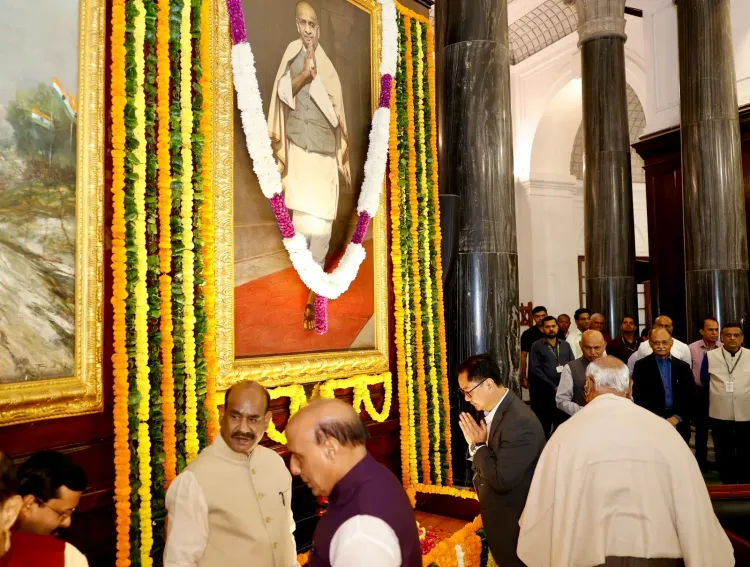
Union Parliamentary Affairs Minister Kiren Rijiju joined Lok Sabha Speaker Om Birla, Defence Minister Rajnath Singh, and other senior leaders at Samvidhan Sadan on 31 October 2026 to pay floral tributes to Sardar Vallabhbhai Patel on Rashtriya Ekta Diwas, his 131st birth anniversary.
Key Takeaways
Kiren Rijiju led a cross-institutional tribute to Sardar Vallabhbhai Patel at Samvidhan Sadan, New Delhi on 31 October 2026 .
Senior attendees included Lok Sabha Speaker Om Birla , Rajya Sabha Deputy Chairman Harivansh , Defence Minister Rajnath Singh , BJP National President Nitin Nabin , and JP Nadda .
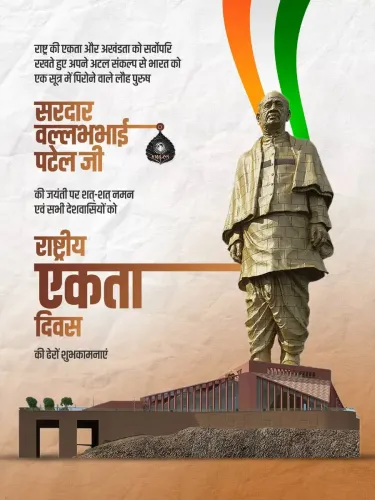
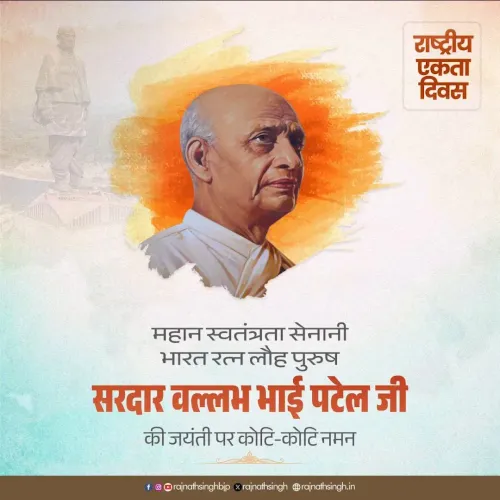
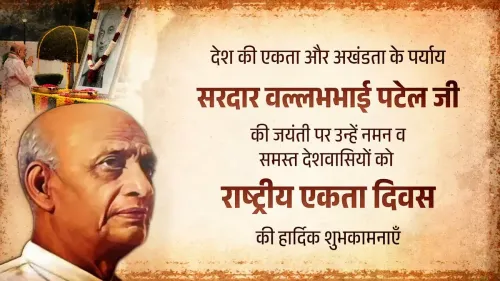
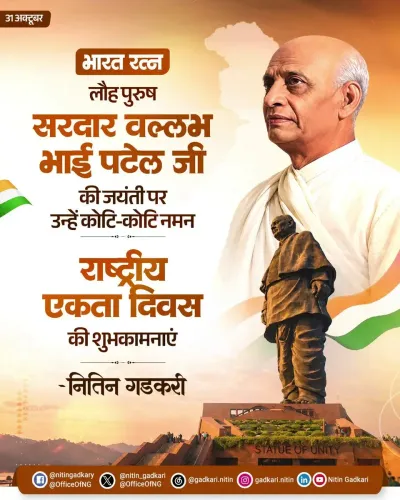
Rashtriya Ekta Diwas was instituted by the central government in 2014 and is observed every 31 October to honour Patel's legacy of national integration.
Sardar Patel oversaw the integration of over 500 princely states into the Indian Union after Independence as the country's first Deputy Prime Minister and Home Minister.
The observance at Samvidhan Sadan underscores the constitutional and territorial significance of Patel's role in defining independent India's borders.
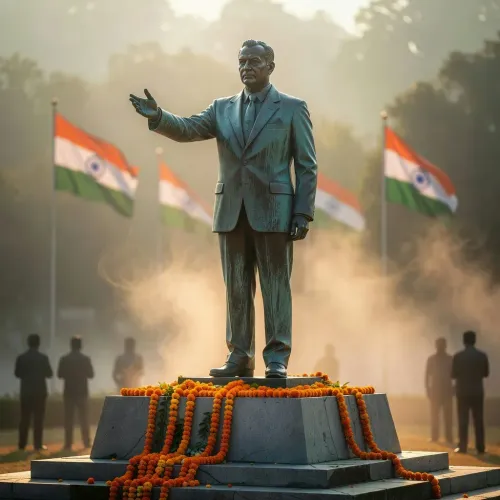
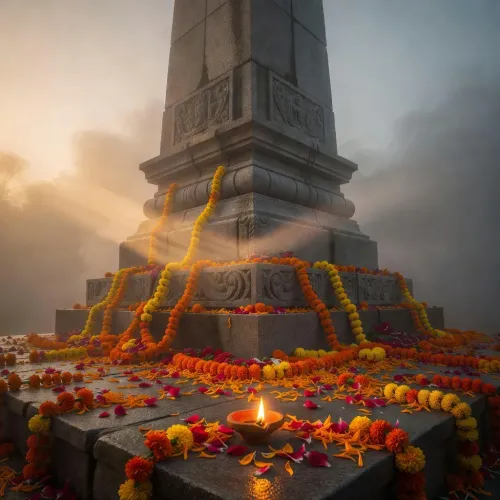
On the 131st birth anniversary of Sardar Vallabhbhai Patel, Union Parliamentary Affairs Minister Kiren Rijiju joined a gathering of the country's most senior constitutional office-bearers at Samvidhan Sadan, New Delhi, on Saturday, 31 October 2026, to pay floral tributes to the man who stitched together a fractured subcontinent into a single republic.
Rijiju described Patel as the 'Iron Man of India' whose 'vision, resolve and dedication played a defining role in uniting our nation.' The tribute was attended by Lok Sabha Speaker Om Birla, Deputy Chairman of the Rajya Sabha Harivansh, Union Defence Minister Rajnath Singh, BJP National President Nitin Nabin, and Union Minister JP Nadda, among other senior colleagues — a rare assembly of legislative and executive leadership under one roof on a single occasion.
Why Samvidhan Sadan holds this moment
The choice of Samvidhan Sadan — the seat of India's constitutional memory — as the venue is deliberate and loaded with symbolism. It is here, at a building that once housed the proceedings framing the Republic's foundational law, that Patel's contribution to that very Republic is remembered annually. The Iron Man never lived to see the Constitution fully operational; he died in December 1950. Yet his integration of over 500 princely states made the Constitution's territorial jurisdiction possible in the first place.
Rashtriya Ekta Diwas at twelve years
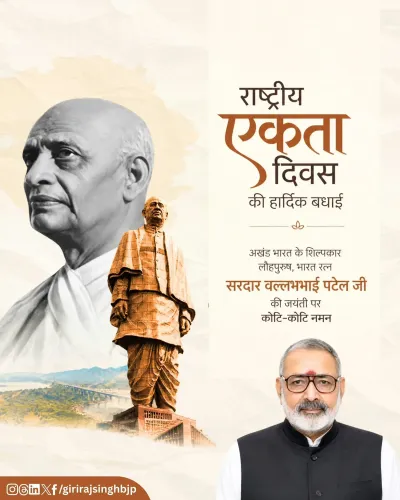
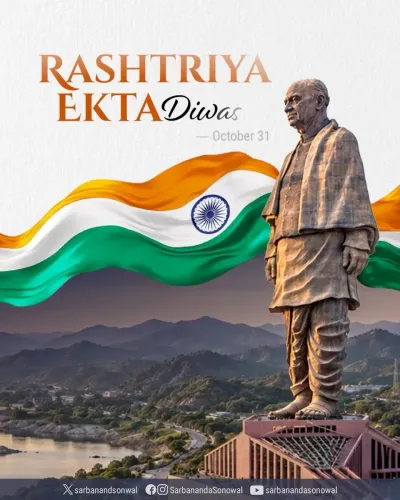
Rashtriya Ekta Diwas — National Unity Day — was instituted by the central government in 2014 to mark Patel's birth anniversary and anchor a nationwide conversation around integration and unity. In the years since, the observance has grown from a ceremonial date into a fixture of the political calendar, with Run for Unity events, constitutional pledges, and cross-party tributes held from Parliament House to district headquarters.
Rijiju's invocation of #RashtriyaEktaDiwas and Patel's 'enduring legacy' frames the day explicitly as a call to 'reaffirm our commitment to the unity, integrity and strength of Bharat' — language that echoes the constitutional guarantee of national sovereignty and territorial integrity that Patel himself made real on the ground.
Twelve years on, the day serves a dual purpose: honouring a historical giant and keeping his integrationist mandate legible for a generation that inherited the unified map without witnessing the diplomatic and, at moments, military effort required to draw it.
Point of View
The cabinet, and the party apparatus — signals a deliberate effort to present Patel's integrationist legacy as a consensus national value rather than a partisan claim. For the BJP, invoking Patel consistently since 2014 has also served to widen the ideological tent by centering a Congress-era leader who prioritised strong central authority — a policy instinct the current government openly shares. The ceremony at Samvidhan Sadan, a constitutionally resonant venue, adds a layer of institutional gravitas that amplifies the message well beyond social media.
NationPress
31 Oct 2026
Frequently Asked Questions
What is Rashtriya Ekta Diwas and why is it celebrated on 31 October?
Rashtriya Ekta Diwas, or National Unity Day, is observed every 31 October — the birth anniversary of Sardar Vallabhbhai Patel . The central government instituted it in 2014 to honour Patel's role in integrating over 500 princely states into the Indian Union and to promote national unity and integrity.
Who is Sardar Vallabhbhai Patel and why is he called the Iron Man of India?
Sardar Vallabhbhai Patel was India's first Deputy Prime Minister and Home Minister. He earned the title 'Iron Man of India' for his resolute diplomatic and, where necessary, military campaign that integrated more than 500 princely states into the newly independent Union of India between 1947 and 1950.
What is Samvidhan Sadan in New Delhi?
Samvidhan Sadan is a venue in New Delhi associated with India's parliamentary and constitutional heritage. It serves as a location for important commemorative and constitutional functions, and has become a regular site for Rashtriya Ekta Diwas tributes.
Who attended the Rashtriya Ekta Diwas tribute at Samvidhan Sadan in 2026?
According to Kiren Rijiju's post, the tribute was attended by Lok Sabha Speaker Om Birla , Rajya Sabha Deputy Chairman Harivansh , Defence Minister Rajnath Singh , BJP National President Nitin Nabin , and Union Minister JP Nadda , among other senior colleagues.
When did the government start observing Rashtriya Ekta Diwas?
The central government instituted Rashtriya Ekta Diwas in 2014 , making 31 October — Sardar Patel's birth anniversary — a day of national observance focused on unity, integrity, and integration.