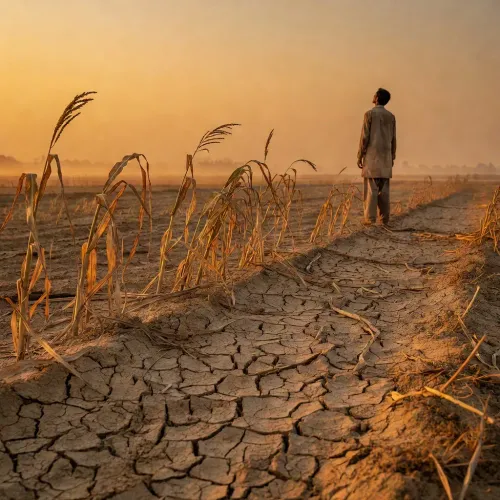
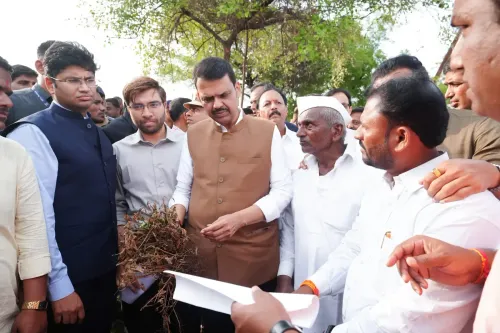
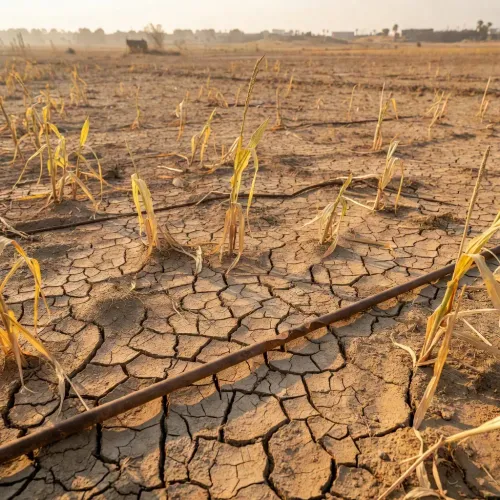
Maharashtra sets up CMRF cells, health committees in 265 drought-hit talukas
Synopsis
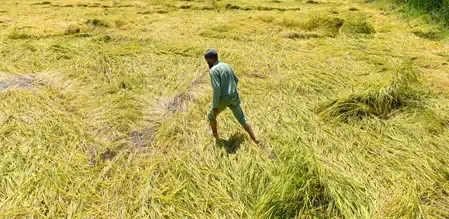
Maharashtra has responded to its worst Kharif drought declaration — covering 265 talukas — by building a full administrative health infrastructure from scratch: CMRF cells in every Panchayat Samiti office, two-tier committees chaired by MLAs and Guardian Ministers, and a daily reporting chain straight to the Mantralaya. The scale signals that the state is treating drought health management as a governance priority, not just an emergency afterthought.
Key Takeaways
The Maharashtra Relief and Rehabilitation Department ordered CMRF cells and health committees across 265 drought-hit talukas on 6 November 2026 .
Cells will operate from every Panchayat Samiti office, linking patients to Ayushman Bharat , Mahatma Jyotirao Phule Jan Arogya Yojana , and other government schemes.
A two-tier committee structure — Taluka (chaired by MLAs) and District (chaired by Guardian Ministers) — will oversee healthcare delivery, with mandatory meetings at least twice a month .
Committees must organise medical camps, deploy mobile units, and manage waterborne and heat-related diseases .
Priority groups include women, children, senior citizens , and patients with chronic illnesses like diabetes and hypertension .
Taluka cells will submit daily reports that escalate to the CM's Relief Fund Cell at Mantralaya .
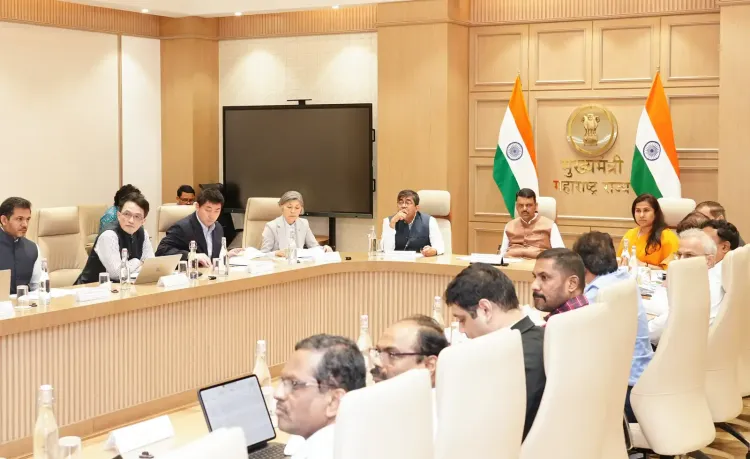
The Maharashtra State Relief and Rehabilitation Department on 6 November 2026 directed the establishment of Chief Minister's Relief Fund (CMRF) cells at the taluka level and two-tier health committees across 265 drought-affected talukas, following Trigger-1 activation under the 2026 Kharif season drought declaration. The move is aimed at ensuring uninterrupted healthcare access and financial assistance for vulnerable citizens in affected regions of Maharashtra.
CMRF Cells at Taluka Level
Under the Government Resolution (GR), a dedicated CMRF cell will be established in every Panchayat Samiti office within the affected talukas. These cells will serve as the first point of contact to connect patients with existing government health schemes, including Ayushman Bharat, Mahatma Jyotirao Phule Jan Arogya Yojana, Labour Department health welfare schemes, and charitable hospital benefits.
Patients who do not qualify for standard government schemes will be guided in submitting online applications to affiliated hospitals for direct financial aid under the Chief Minister's Relief Fund. Each taluka-level CMRF cell will be headed by a dedicated Medical Officer appointed by the District Collector, supported by clerical and data-entry staff assigned by the Block Development Officer (BDO).
Two-Tier Health Committee Structure
The state has instituted a two-tier oversight framework comprising a Taluka-Level Health Committee and a District-Level Health Committee. The Taluka-Level Health Committee will be chaired by the respective Member of Legislative Assembly (MLA), with the Sub-Divisional Officer (Revenue) as Co-Chairperson and the head of the Taluka CMRF Cell as Member Secretary.
Members will include the Tehsildar, BDO, Chief Officer of the Municipal Council or Nagar Panchayat, Taluka Health Officer (THO), Medical Superintendent of the Sub-District or Rural Hospital, two non-official social workers, and representatives from the Indian Medical Association (IMA) and the Maharashtra State Chemists and Druggists Association.
The District-Level Health Committee will be chaired by the Guardian Minister of the district, with the District Collector as Co-Chairperson and the District Health Officer (DHO) as Member Secretary. Its members include the Chief Executive Officer of the Zilla Parishad, Municipal Commissioner, Dean of the Government Medical College, District Civil Surgeon, Joint or Deputy Charity Commissioner, Assistant Commissioner (FDA), District Coordinators for Jan Arogya Yojana and MUHS, IMA and druggist association representatives, two social workers, and the head of the District CMRF Cell. Both committees are required to hold review meetings at least twice a month.
Key Responsibilities and Priority Groups
According to the GR, the committees are mandated to organise medical check-up camps, deploy mobile medical units, ensure the availability of specialist doctors, and manage heat-related and waterborne diseases arising from drought conditions. Special emphasis has been placed on reaching women, children, senior citizens, and patients with chronic conditions such as diabetes and hypertension.
Notably, this directive addresses not just immediate relief but also the secondary health crisis that typically follows prolonged drought — a pattern well documented in Maharashtra's drought history spanning districts like Marathwada and Vidarbha.
Reporting and Accountability Chain
Taluka-level CMRF cells are required to submit daily work reports and health camp updates to district cells, which will consolidate the data and forward it directly to the Chief Minister's Relief Fund Cell at the Mantralaya in Mumbai. This real-time reporting chain is designed to prevent the administrative delays that have historically slowed drought relief disbursal in the state.
With the drought affecting 265 talukas across the state, the effectiveness of this two-tier mechanism will be closely watched as the 2026 Kharif season distress deepens in the coming weeks.
Point of View
But the state has a long history of drought-relief structures that work better in GRs than on the ground — particularly in Marathwada and Vidarbha, where healthcare access collapses precisely when it is most needed. Chaining the committee chairmanship to sitting MLAs introduces a political variable: in constituencies where the MLA is inactive or in opposition to the district machinery, coordination could stall. The real accountability test is whether the daily reporting chain to Mantralaya triggers corrective action fast enough to matter, or whether it becomes another data-collection exercise. With 265 talukas in distress, execution at scale — not the structure itself — is what will determine outcomes.
NationPress
6 Nov 2026
Frequently Asked Questions
Why has Maharashtra set up CMRF cells in drought-affected talukas?
The Maharashtra government set up Chief Minister's Relief Fund (CMRF) cells in 265 drought-hit talukas to ensure timely healthcare access and financial assistance following the Trigger-1 drought declaration in the 2026 Kharif season. The cells connect patients to existing government health schemes and facilitate direct financial aid for those who do not qualify for standard programmes.
How many talukas are covered under Maharashtra's 2026 drought declaration?
A total of 265 talukas across Maharashtra have been declared drought-affected following Trigger-1 activation in the 2026 Kharif season. CMRF cells and health committees are being set up across all these talukas.
Who chairs the taluka and district health committees formed under this directive?
The Taluka-Level Health Committee is chaired by the Member of Legislative Assembly (MLA) of the respective constituency, while the District-Level Health Committee is chaired by the Guardian Minister of the district. District Collectors serve as Co-Chairpersons at the district level.
Which health schemes will CMRF cells connect drought-affected patients to?
CMRF cells will primarily link patients to Ayushman Bharat, Mahatma Jyotirao Phule Jan Arogya Yojana, Labour Department health welfare schemes, and charitable hospital benefits. Those ineligible for these schemes will be assisted in applying directly to affiliated hospitals for financial aid under the Chief Minister's Relief Fund.
Which groups are prioritised for healthcare under Maharashtra's drought relief measures?
The directive places special emphasis on women, children, senior citizens, and patients with chronic illnesses such as diabetes and hypertension. The committees are also mandated to manage heat-related and waterborne diseases, which are common secondary health crises during drought conditions.