Maharashtra water scarcity: Minister orders war-footing action across 265 drought talukas
Synopsis
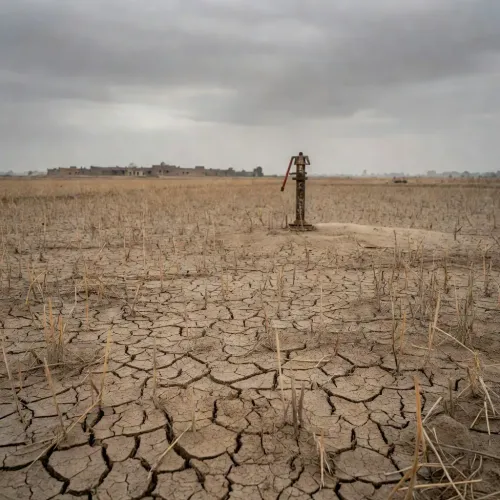
With drought conditions biting across 265 talukas, Maharashtra's Water Minister hasn't just issued advisories — he's set a hard deadline of October 15 for district-level action plans, ordered an immediate crackdown on water theft, and demanded that near-complete water schemes be switched on now. The goal: eliminate tanker dependency through permanent infrastructure before the April-June peak shortage season.
Key Takeaways
Maharashtra Water Minister Gulabrao Patil directed officials on 30 September 2026 to implement emergency water conservation measures across 265 drought-affected talukas .
All districts must finalise water scarcity action plans by 15 October 2026 , with separate operational plans for three periods: October–December , January–March , and April–June .
Water supply schemes with 75% or more completion and viable water sources must be commissioned immediately.
Funding to be converged from DPC , CSR , DMF , Jal Jeevan Mission , Gram Panchayats , and the Irrigation Department .
A crackdown on unauthorised water extraction has been ordered in the Nashik division ; District Collectors to form inspection teams.
Successful models such as the Shirpur pattern and Satara district conservation practices are to be documented and replicated statewide.
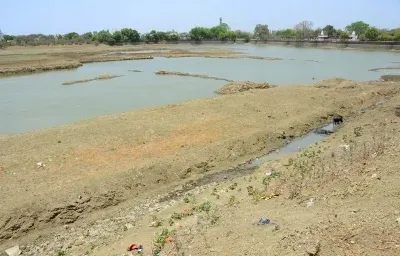
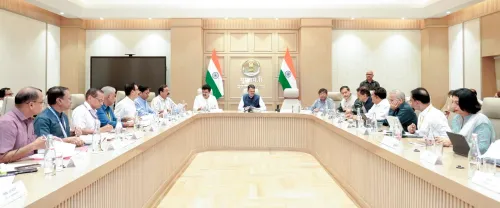
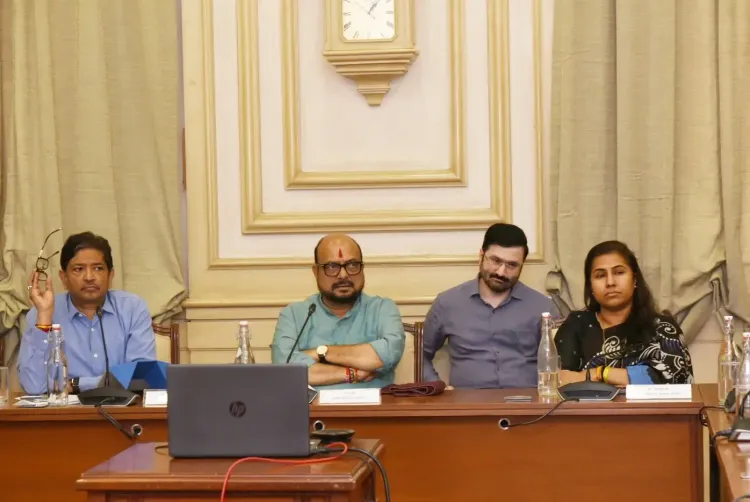
Maharashtra Water Supply and Sanitation Minister Gulabrao Patil on Wednesday, 30 September 2026, directed state officials to implement permanent solutions to the water crisis gripping more than 265 talukas across the state, prioritising an end to dependency on water tankers. The directives were issued during a review meeting covering the Chhatrapati Sambhajinagar, Nashik, and Pune divisions.
Key Directives Issued
Minister Patil outlined a multi-pronged action framework centred on immediate and long-term water security. Water supply schemes that have achieved 75 per cent or higher completion and have viable water sources must be commissioned without delay. Officials have been asked to coordinate directly with District Collectors to clear administrative, technical, and infrastructural bottlenecks — including tap connections, pipeline laying, and tank site approvals.
In scarcity-prone areas, priority must be given to stream deepening, desilting, constructing check dams, soak pits, recharge shafts, well repairs, borewell drilling, and expanding overall water storage capacity. Farm pond creation and desilting of existing reservoirs are also mandated wherever feasible.
Funding and Coordination Channels
The Minister directed that funds for water conservation be converged from multiple sources, including the District Planning Committee (DPC), Corporate Social Responsibility (CSR) funds, District Mineral Foundation (DMF), Jal Jeevan Mission, Gram Panchayats, and the Irrigation Department. Inter-departmental coordination meetings, headed by District Collectors and involving the water supply, agriculture, Viksit Bharat Guarantee for Rozgar and Ajeevika Mission (formerly MGNREGA), and water resources departments, must be convened regularly.
October 15 Deadline and Period-wise Planning
All districts have been asked to finalise their water scarcity action plans by 15 October. District authorities must additionally prepare separate operational plans for three distinct periods: October to December, January to March, and April to June, ensuring that funds, human resources, and equipment are allocated in advance for each phase. Planning for vulnerable villages must account for rainfall data, groundwater levels, current storage, active tankers, and the condition of local water bodies.
Field officers have been directed to visit villages directly, identify localised issues, and report them to the District Collector or Zilla Parishad CEO for immediate resolution. An immediate crackdown on unauthorised water extraction — particularly in the Nashik division — has also been ordered, with District Collectors tasked to form inspection teams and take strict legal action against illegal connections or unauthorised pumping.
Replicating Successful Models
Minister Patil called for the documentation and statewide replication of proven conservation models, specifically citing the Shirpur pattern in the Chhatrapati Sambhajinagar division and water conservation initiatives in Satara district in the Pune division. The meeting highlighted additional regional interventions, including special source-strengthening in the Pune division, recharge shafts and desilting projects in Sangli, and period-wise targeted planning for vulnerable talukas in Solapur.
'Rather than reacting after a scarcity situation arises, proactive planning based on projected shortages is crucial,' Minister Patil stated, adding that 'providing timely water supply to citizens during periods of scarcity is our highest priority.' He stressed that managing available water is a collective responsibility of all administrative bodies — not just Gram Panchayats — and that the government's core objective is to establish permanent infrastructure so that the need for tankers is eliminated altogether.
Point of View
Often with similar ministerial reviews and similar directives. What stands out this time is the explicit push to eliminate tanker dependency through permanent infrastructure rather than reactive relief, which, if followed through, would represent a meaningful policy shift. The October 15 action-plan deadline and the three-period operational planning framework signal intent, but intent and execution have frequently diverged in past drought responses. The real test will be whether the converged funding mechanism — spread across DPC, CSR, DMF, and Jal Jeevan Mission — avoids the inter-departmental delays that have historically stalled similar initiatives.
NationPress
30 Sept 2026
Frequently Asked Questions
Which areas of Maharashtra are facing water scarcity in 2026?
Drought conditions are affecting more than 265 talukas across Maharashtra, with the review meeting focusing specifically on the Chhatrapati Sambhajinagar, Nashik, and Pune divisions. Regions including Sangli, Solapur, and Satara district have been flagged for targeted interventions.
What is the October 15 deadline set by Minister Gulabrao Patil?
All districts in Maharashtra must finalise their water scarcity action plans by 15 October 2026. These plans must cover rainfall data, groundwater levels, current storage, active tankers, and local water body conditions, with separate operational plans for three distinct periods through June 2027.
What is the Shirpur pattern mentioned in the Maharashtra water scarcity review?
The Shirpur pattern is a water conservation model from the Chhatrapati Sambhajinagar division that has been cited as a successful practice. Minister Patil directed officials to document it — along with Satara district's conservation initiatives — so that the approach can be replicated across other drought-prone districts in Maharashtra.
How will Maharashtra fund its water conservation measures?
Funds are to be converged from multiple channels including the District Planning Committee (DPC), Corporate Social Responsibility (CSR) contributions, District Mineral Foundation (DMF), Jal Jeevan Mission, Gram Panchayats, and the Irrigation Department. The Minister emphasised effective utilisation of available funds before the crisis intensifies.
What action is being taken against unauthorised water extraction in Maharashtra?
Minister Patil ordered an immediate crackdown on unauthorised water extraction, particularly in the Nashik division. District Collectors have been directed to form field inspection teams and take strict legal action against illegal connections or unauthorised pumping from natural and artificial water sources.