RMSCE maiden course concludes with 10-nation Indo-Pacific participants
Synopsis
India and the UK's jointly established Regional Maritime Security Centre of Excellence completed its first-ever training course on 5 November 2026, drawing delegates from 10 Indo-Pacific nations. From East Africa to Southeast Asia, the breadth of participation signals that India's maritime diplomacy is quietly building a multilateral security architecture — one course at a time.
Key Takeaways
The RMSCE's maiden short course concluded on 5 November 2026 at the National Maritime Foundation , New Delhi .
Participants came from 10 countries : Indonesia, Kenya, Malaysia, Maldives, Mauritius, Seychelles, Singapore, Sri Lanka, Tanzania, and Thailand.
The curriculum covered Maritime Domain Awareness , Ocean Governance, PIML, and Combined Operations.
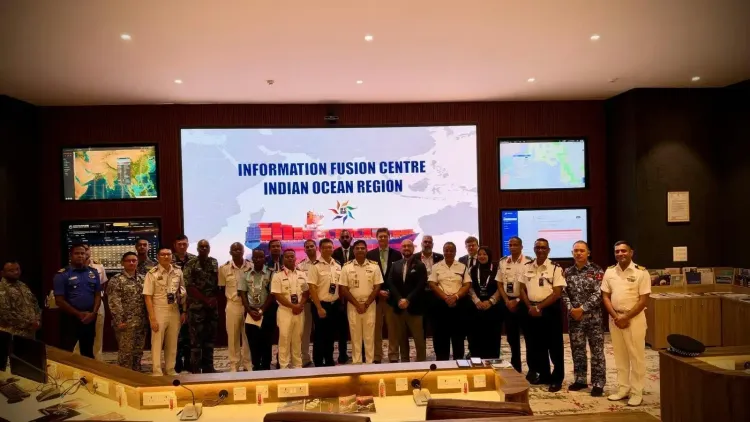
Participants visited the IFC-IOR and were briefed on its maritime information-sharing capabilities.
The RMSCE was jointly set up by India and the UK under IPOI; the founding MoU was signed between King's College London and NMF in June 2026 .
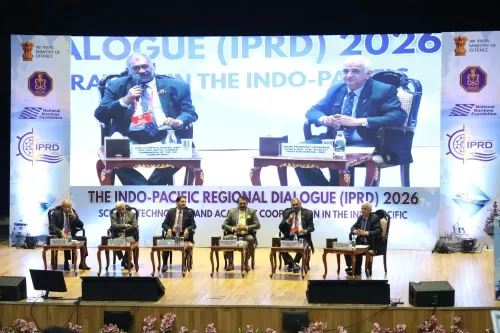
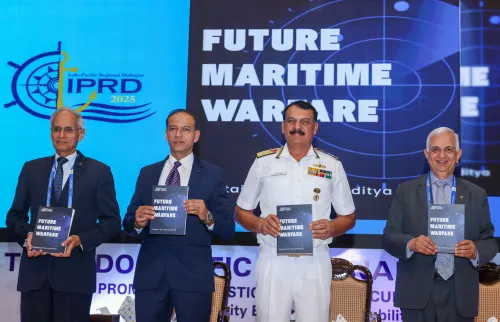
The inaugural short course at the Regional Maritime Security Centre of Excellence (RMSCE) under the Indo-Pacific Oceans Initiative (IPOI) concluded on 5 November 2026 at the National Maritime Foundation (NMF) in New Delhi, with participants drawn from 10 partner countries, the Ministry of External Affairs (MEA) announced. The milestone marks the operational debut of a jointly established India-UK maritime capacity-building initiative designed to strengthen regional cooperation across the Indo-Pacific.
Participating Nations and Course Focus
Delegates from Indonesia, Kenya, Malaysia, Maldives, Mauritius, Seychelles, Singapore, Sri Lanka, Tanzania, and Thailand participated in the course. According to the MEA, the curriculum covered Maritime Domain Awareness, Ocean Governance, PIML (Provision of Information on Maritime Logistics), and Combined Operations.
Participants also visited the Information Fusion Centre – Indian Ocean Region (IFC-IOR), where they were briefed on its operational capabilities and its role in real-time information sharing on incidents at sea. The IFC-IOR is India's principal hub for maritime situational awareness in the Indian Ocean.
India-UK Partnership Behind the Centre
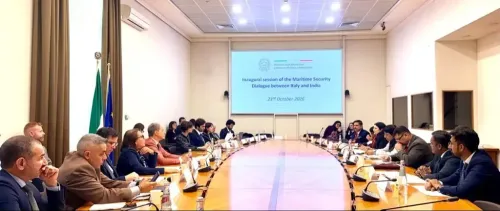
The RMSCE has been jointly instituted by India and the United Kingdom under the Maritime Security pillar of the IPOI. The formal foundation was laid in June 2026, when a Memorandum of Understanding (MoU) between King's College London and the National Maritime Foundation was exchanged during the visit of UK Foreign Secretary Yvette Cooper to India.
The MoU exchange was followed by formal acknowledgement at the 25th India-UK Defence Consultative Group (DCG) Meeting held in New Delhi in August 2026, where both sides recognised the growing maritime security collaboration in the Indo-Pacific, specifically citing the establishment of the RMSCE.
Strategic Significance
The RMSCE is positioned as a key instrument for regional capacity building, enabling partner nations to develop shared frameworks for maritime surveillance, governance, and operational coordination. This comes amid heightened focus on Indo-Pacific security architecture, with India increasingly anchoring multilateral naval and maritime engagement through IPOI — a framework that spans seven pillars including fisheries, disaster risk reduction, and maritime ecology.
Notably, the involvement of East African nations such as Kenya, Tanzania, and Seychelles alongside Southeast and South Asian partners reflects India's expanding maritime diplomacy well beyond its immediate neighbourhood.
What Comes Next
With the maiden course complete, the RMSCE is expected to institutionalise regular short courses for Indo-Pacific partner nations, deepening interoperability and information-sharing frameworks. The Centre's academic grounding through King's College London lends it a research and training dimension that could evolve into a standing regional maritime knowledge hub.
Point of View
Academically credentialled maritime training centre at NMF, India is embedding itself as the region's default maritime security educator — a role China has actively sought to fill in parts of Southeast Asia and Africa. The 10-nation participant list, stretching from Tanzania to Thailand, is not accidental; it maps almost precisely onto the Indian Ocean Rim countries India has prioritised for strategic outreach. The real test will be whether the RMSCE becomes a standing institution with regular cohorts, or whether — like several earlier India-led multilateral initiatives — it stalls after the inaugural edition.
NationPress
6 Nov 2026
Frequently Asked Questions
What is the RMSCE and who established it?
The Regional Maritime Security Centre of Excellence (RMSCE) is a joint initiative of India and the United Kingdom, set up under the Maritime Security pillar of the Indo-Pacific Oceans Initiative (IPOI). It is institutionally grounded in a Memorandum of Understanding between King's College London and the National Maritime Foundation, New Delhi, signed in June 2026.
Which countries participated in the RMSCE's maiden course?
Ten countries participated: Indonesia, Kenya, Malaysia, Maldives, Mauritius, Seychelles, Singapore, Sri Lanka, Tanzania, and Thailand. The diverse geography — spanning South Asia, Southeast Asia, and East Africa — reflects the broad Indo-Pacific scope of the initiative.
What did the RMSCE course cover?
The course covered Maritime Domain Awareness, Ocean Governance, PIML (Provision of Information on Maritime Logistics), and Combined Operations. Participants also received a briefing at the Information Fusion Centre – Indian Ocean Region (IFC-IOR) on its role in sea-incident information sharing.
What is the Indo-Pacific Oceans Initiative (IPOI)?
The Indo-Pacific Oceans Initiative is a framework launched by India to promote a free, open, and rules-based Indo-Pacific. It operates across seven pillars including maritime security, maritime ecology, maritime resources, capacity building, disaster risk reduction, science and technology, and trade and connectivity. The RMSCE falls under its Maritime Security pillar.
When was the formal foundation of the RMSCE laid?
The founding MoU between King's College London and the National Maritime Foundation was exchanged in June 2026 during UK Foreign Secretary Yvette Cooper's visit to India. The collaboration was further endorsed at the 25th India-UK Defence Consultative Group Meeting in August 2026.