Kishan Reddy Hails UPI Crossing ₹1 Lakh Crore Daily Transactions
Synopsis
Union Minister G. Kishan Reddy has highlighted UPI crossing ₹1 lakh crore in average daily transactions, crediting PM Modi's Digital India push. The milestone marks a decade-long journey from UPI's 2016 launch to becoming one of the world's largest real-time payments networks.
Key Takeaways
UPI has crossed ₹1 lakh crore (₹1 trillion) in average daily transactions, according to Union Minister G.
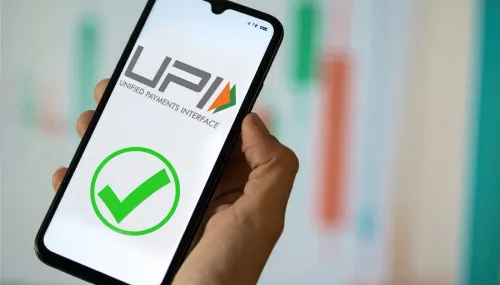
NPCI launched UPI in August 2016 as a real-time inter-bank mobile payment system under the broader Digital India programme.
The growth reflects compounding tailwinds: Aadhaar-linked accounts, rising rural mobile penetration, and a thriving fintech sector.
Minister Reddy linked the milestone directly to PM Narendra Modi's digital and financial inclusion agenda.
International UPI linkages are the next frontier, with NPCI having already piloted corridors in several countries.
The next quarterly NPCI data release will be a key indicator of whether the daily-average benchmark holds and grows.
A decade after its quiet launch, India's homegrown payments network just crossed a threshold that would have seemed implausible in the cash-dominated economy of 2016 — UPI has surged past ₹1 lakh crore in average daily transactions, a milestone that Union Coal and Mines Minister G. Kishan Reddy flagged on Friday, November 6, 2026, calling it a 'powerful new benchmark for financial empowerment and inclusion nationwide.'
From ₹0 to ₹1 Lakh Crore: The Ten-Year Arc of UPI
When the National Payments Corporation of India (NPCI) rolled out the Unified Payments Interface in August 2016, the promise was deceptively simple: let any two bank accounts settle money in seconds over a mobile phone. The ambition, however, was enormous — drag hundreds of millions of Indians out of a purely cash economy and into the formal financial system. What followed was a growth curve that few payments networks anywhere in the world have matched.
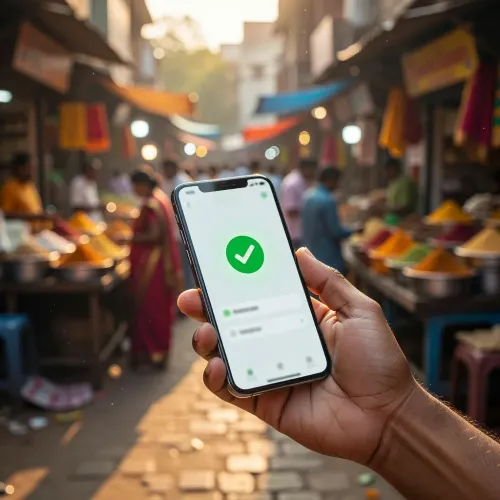
The ecosystem got its single biggest jolt from the demonetisation of November 2016, which forced an entire country to find digital workarounds overnight. QR codes appeared on vegetable carts. Auto-rickshaw drivers began quoting UPI handles. By the mid-2020s, UPI had become so embedded in daily commerce that the question was no longer whether India would go digital — but how fast.
What ₹1 Lakh Crore a Day Actually Means
Put the number in perspective: ₹1 lakh crore is roughly ₹1 trillion — moving, every single day, through a free, real-time rail that runs on a smartphone. That is not a monthly aggregate or a festival-week spike; it is the daily average. For context, that daily figure comfortably exceeds the annual GDP of several smaller nations.
The scale reflects two compounding forces. First, the sheer breadth of Digital India — the flagship programme launched in July 2015 — which pushed connectivity and Aadhaar-linked accounts into districts that had never seen a bank branch. Second, a fintech boom that layered merchant apps, credit products, and cross-border corridors on top of UPI's open architecture, turning a utility into an entire economy of its own.
Kishan Reddy's Signal and What Comes Next
Minister Reddy's post credits Prime Minister Narendra Modi's 'visionary leadership' for the milestone — standard political framing, but the underlying data point is a genuine policy outcome, not a rhetorical one. The government has consistently linked UPI's growth to inclusion metrics: Jan Dhan account penetration, rural mobile data adoption, and the formalisation of micro-enterprises.
The next frontier is international. NPCI has already piloted UPI linkages with payment systems in several countries, and each new corridor adds both transaction volume and geopolitical heft to India's argument that it has built a payments model the world should study. The next quarterly NPCI data release will show whether the daily-average figure is a plateau or a launching pad.
India built the rails. The trains are running at full speed. The only real question now is how many more countries want a ticket.
Point of View
Quantifiable outcome of the Digital India narrative ahead of any electoral cycle. For the broader policy arc, the number signals that UPI has moved beyond a government scheme into critical national infrastructure, making its governance, resilience, and international interoperability genuinely consequential. The challenge now shifts from adoption to deepening — ensuring the volume reflects genuine financial inclusion among the bottom quartile, not just urban transaction frequency. NPCI's international push adds a soft-power dimension: if UPI becomes an exportable model, it recasts India from a technology consumer to a global financial-infrastructure exporter.
NationPress
6 Nov 2026
Frequently Asked Questions
What is UPI and who operates it?
UPI (Unified Payments Interface) is a real-time inter-bank payment system operated by the National Payments Corporation of India (NPCI) . It was launched in August 2016 and allows instant money transfers between bank accounts via mobile phones.
What is the UPI ₹1 lakh crore daily transaction milestone?
According to Union Minister G. Kishan Reddy , UPI has crossed ₹1 lakh crore (approximately ₹1 trillion) in average daily transactions , marking a new record for India's digital payments ecosystem.
What is Digital India and how is it linked to UPI's growth?
Digital India is a flagship government programme launched in July 2015 to expand digital infrastructure and e-governance. It created the connectivity and Aadhaar-linked banking penetration that underpinned UPI's mass adoption.
Is UPI available in other countries?
NPCI has piloted UPI linkages with payment systems in several countries, expanding India's digital payments network internationally. This is considered the next major growth frontier for UPI.
Why did G. Kishan Reddy post about UPI?
G. Kishan Reddy , Union Minister of Coal and Mines and BJP Telangana president, posted on November 6, 2026 to highlight the UPI milestone and credit PM Narendra Modi's digital leadership, framing it as a benchmark for financial empowerment nationwide.