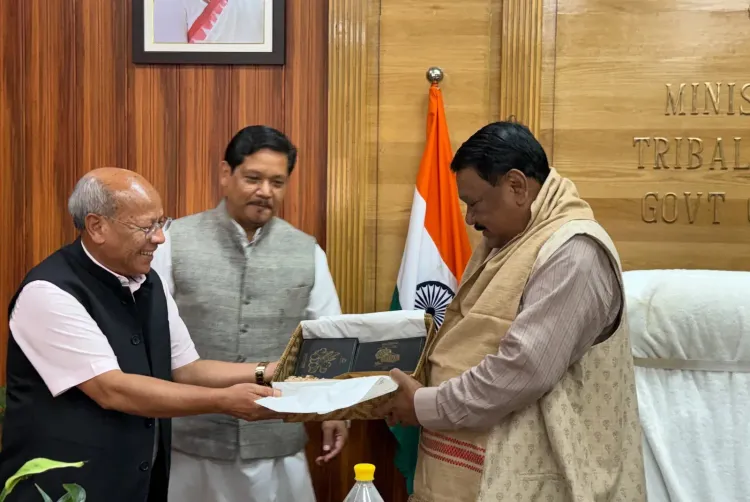
CM Conrad Sangma meets Union Tribal Affairs Minister Jual Oram
Synopsis
Meghalaya CM Conrad Sangma met Union Tribal Affairs Minister Jual Oram on October 31 to discuss welfare initiatives for the state's tribal communities. With over 85 per cent of Meghalaya's population from Scheduled Tribes, central funding under SCA to TSS and Article 275(1) is critical to the state's development agenda.
Key Takeaways
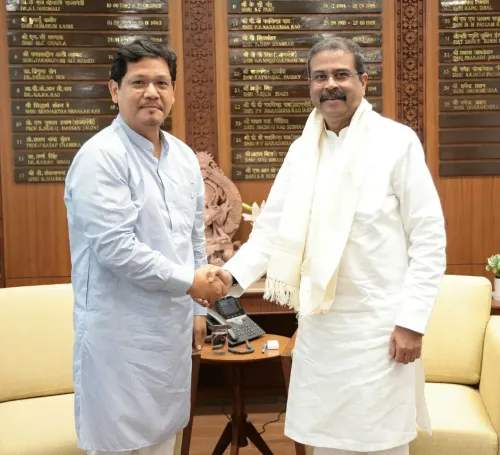
Meghalaya Chief Minister Conrad Sangma met Union Minister for Tribal Affairs Jual Oram on October 31, 2026 .
Sangma expressed gratitude for Oram's support towards tribal welfare initiatives in Meghalaya.
Over 85% of Meghalaya's population belongs to Scheduled Tribes, making central tribal funding critical to the state.
Meghalaya's tribal areas are governed under the Sixth Schedule through autonomous district councils covering Khasi, Garo and Jaintia communities.
Central funding for tribal welfare flows through SCA to TSS and Article 275(1) grants, a framework active since the 1970s.
Sangma is also the national president of the National People's Party (NPP) , a constituent of the NDA at the centre.
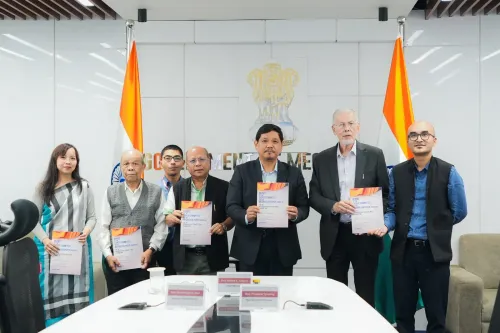
Meghalaya Chief Minister Conrad Sangma met Union Minister for Tribal Affairs Jual Oram on Saturday, October 31, in a centre-state engagement aimed at advancing welfare initiatives for the tribal communities of Meghalaya.
Sangma posted on X, 'Pleased to meet Shri Jual Oram ji, Hon'ble Union Minister for Tribal Affairs. Grateful for his support towards initiatives in the interest of tribal communities in Meghalaya.' The meeting underscores the active coordination between Shillong and New Delhi on a constituency that is anything but peripheral — over 85 per cent of Meghalaya's population belongs to Scheduled Tribes, making the state one of the most tribal-concentrated in the country.
Why the Tribal Affairs Ministry matters for Meghalaya
Meghalaya's tribal communities — the Khasi, Garo and Jaintia peoples — live under a unique constitutional arrangement. The state's districts are administered through Sixth Schedule autonomous district councils, which carry significant powers over land, forest and customary law. Central funding routed through the Ministry of Tribal Affairs underpins education, health and livelihood programmes across these councils, with allocations flowing under instruments such as Special Central Assistance to the Tribal Sub-Scheme (SCA to TSS) and Article 275(1) grants — a framework that has been in place since the 1970s.
Jual Oram, a veteran tribal-affairs administrator who previously held the same portfolio in an earlier NDA government, brings institutional familiarity to the role — a factor that northeastern chief ministers have historically found useful when pressing for scheme approvals and revised fund allocations.
Routine coordination with high stakes
Meetings between northeastern chief ministers and the Union Tribal Affairs Minister are a standard feature of centre-state governance, often timed around budget cycles or scheme review windows. For Meghalaya, the timing matters: the next Union Budget will determine fresh allocations under SCA to TSS and Article 275(1), directly shaping how much capital flows into tribal development infrastructure across the state's three hill regions.
With Conrad Sangma also serving as the national president of the National People's Party (NPP) — a constituent of the NDA alliance at the centre — the meeting carries both administrative and political undertones, though the stated agenda remains squarely on community welfare.
The proof of the meeting's impact will arrive in black and white: in the next budget line items for Meghalaya's tribal sub-plan.
Point of View
Where tribal welfare is not a niche concern but the central axis of governance, keeping the Ministry of Tribal Affairs aligned is a high-priority administrative task. The NPP's position inside the NDA coalition gives Sangma a structural advantage in such engagements — access that purely opposition-ruled states in the Northeast do not enjoy. The real test will come when Union Budget allocations under Article 275(1) and SCA to TSS are announced, revealing whether diplomatic goodwill translated into rupees on the ground.
NationPress
31 Oct 2026
Frequently Asked Questions
Why did Conrad Sangma meet Jual Oram?
Meghalaya Chief Minister Conrad Sangma met Union Tribal Affairs Minister Jual Oram to discuss welfare initiatives for Meghalaya's tribal communities and to seek continued central support for schemes benefiting Khasi, Garo and Jaintia peoples.
What is Jual Oram's role as Union Tribal Affairs Minister?
Jual Oram, as Union Minister for Tribal Affairs, oversees policies, schemes and central funding for Scheduled Tribe welfare across India, including allocations under SCA to TSS and Article 275(1) grants that are vital for states like Meghalaya.
What percentage of Meghalaya's population is tribal?
Over 85 per cent of Meghalaya's population belongs to Scheduled Tribes, making it one of the most tribally concentrated states in India and heavily dependent on central tribal welfare funding.
What is the Sixth Schedule and how does it apply to Meghalaya?
The Sixth Schedule of the Indian Constitution provides for autonomous district councils in tribal-majority areas of the Northeast. In Meghalaya, it grants these councils significant powers over land, forest use and customary law, with central grants supplementing local governance.
What central schemes fund tribal welfare in Meghalaya?
The primary central instruments are Special Central Assistance to the Tribal Sub-Scheme (SCA to TSS) and Article 275(1) grants, both channelled through the Ministry of Tribal Affairs, which have funded education, health and livelihood projects in Meghalaya since the 1970s.